Jaishankar meets UAE FM Al-Nahyan in Abu Dhabi, pushes multilateral reform
Synopsis
EAM Jaishankar's Abu Dhabi visit went beyond routine diplomacy — meeting UAE Deputy PM Al-Nahyan at the Raisina Dialogue, he pushed for multilateral reform through stronger minilateralism and called the India-UAE decade a model for navigating a rapidly shifting global order. The backdrop: an intensifying Middle East conflict and a rescued Indian crew off the Ras Al Khaimah coast.
Key Takeaways
Jaishankar arrived in Abu Dhabi on 15 October 2026 for an official visit to the UAE .
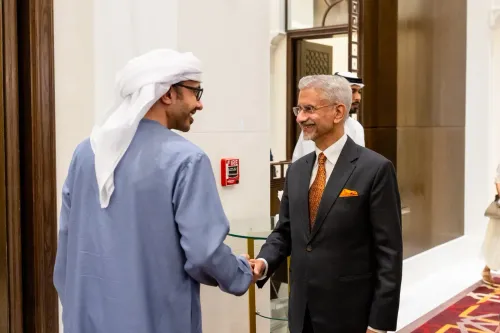
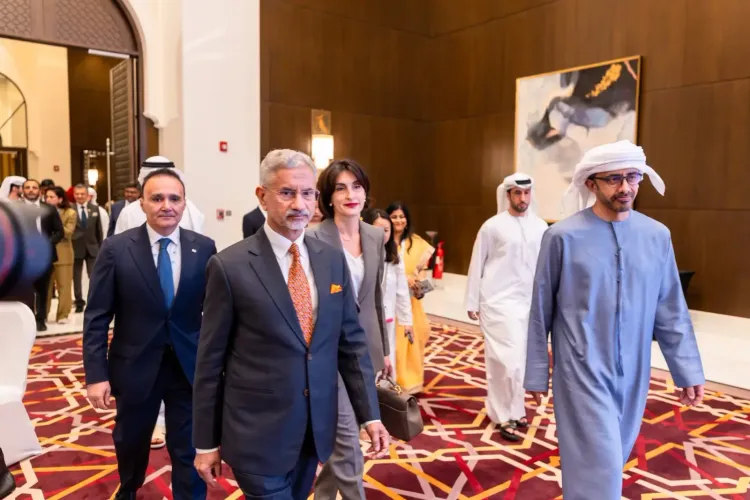
He held talks with UAE Deputy PM and FM Abdullah Bin Zayed Al-Nahyan , reviewing bilateral ties under the Comprehensive Strategic Partnership .
Both leaders participated in the Raisina Dialogue's Middle East session on global power and multilateralism.
Jaishankar called for 'reform of multilateralism' supported through 'stronger minilateralism.' All 22 Indian crew members of tanker MT Gem No.
2 were rescued safely off the Ras Al Khaimah coast .
Jaishankar also met Georgian FM Maka Botchorishvili on the sidelines to discuss expanding bilateral cooperation.
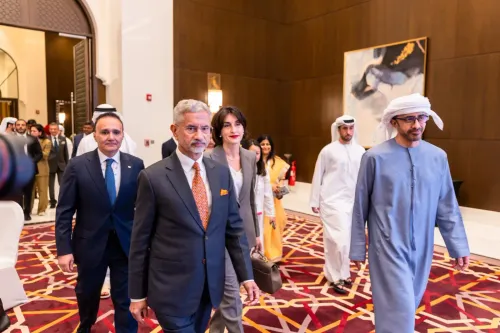
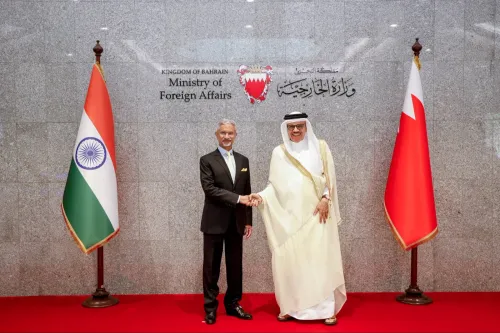
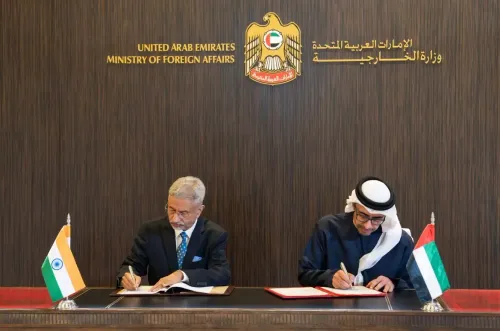
External Affairs Minister S. Jaishankar arrived in Abu Dhabi on 15 October 2026 on an official visit to the United Arab Emirates (UAE), holding substantive talks with his counterpart and UAE Deputy Prime Minister Abdullah Bin Zayed Al-Nahyan. The two leaders reviewed the full spectrum of India-UAE bilateral ties and exchanged views on pressing global developments under the framework of the Comprehensive Strategic Partnership.
What the Two Ministers Discussed
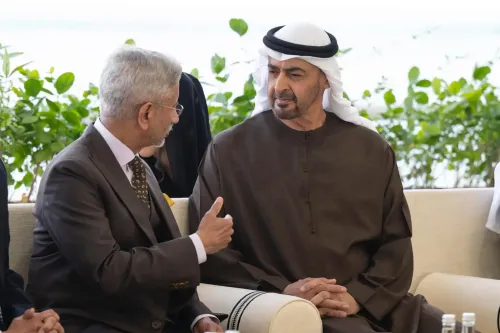
Jaishankar and Al-Nahyan met on the sidelines of the Raisina Dialogue's Middle East session themed 'The World Ahead: Power, Purpose & Possibility' in Abu Dhabi. Both leaders stressed the accelerating pace of change in the global order and underscored the importance of multilateralism while also endorsing stronger minilateral groupings as a complement to multilateral reform.
In posts on X, Jaishankar described the meeting as 'warm and productive,' adding: 'Exchanged perspectives on bilateral and global issues in the spirit of our Comprehensive Strategic Partnership.' He further noted that it 'is important to recognise the increasing pace of change in the global order. Reflects both long term trends and immediate shocks.'
India-UAE Partnership: A Decade of Deepening Ties
Jaishankar characterised the India-UAE partnership of the past decade as a 'great example of our two nations responding to the changing global environment.' He described the relationship as one that involves 'going beyond traditional comfort zones and developing sharper strategic awareness.' The two sides discussed ways to strengthen cooperation across multiple sectors, with officials signalling readiness to explore new partnership formats.
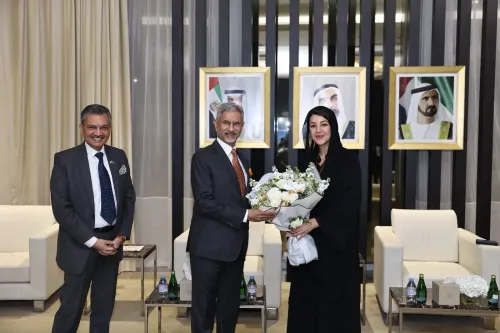
Jaishankar was welcomed on arrival by UAE Minister Reem Al Hashimy, reflecting the high diplomatic protocol extended to the visit.
Regional Tensions Form the Backdrop
The visit comes at a particularly charged moment for the Middle East. The broader region remains under strain from the ongoing conflict involving Iran and a sharp escalation between Saudi Arabia and the Houthis in Yemen. Against this backdrop, India's engagement with the UAE carries added strategic weight, given New Delhi's deep economic and diaspora interests in the Gulf.
This comes amid a separate incident on Sunday when the Consulate General of India in Dubai confirmed that all 22 Indian crew members aboard crude oil tanker MT Gem No. 2 were rescued safely following an accident off the Ras Al Khaimah coast. The consulate stated it is 'extending all possible assistance and support to the Indian seafarers' and remains in contact with UAE authorities.
Separately, Captain Smit Machchhar, the Indian pilot of flydubai flight FZ1073 who reportedly helped save 174 people onboard after confronting an attacking co-pilot, is currently recovering at a hospital in Abu Dhabi.
India-Georgia Talks on the Sidelines
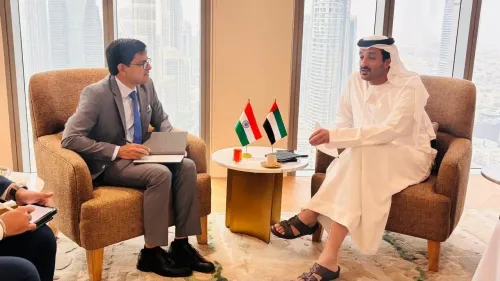
On the margins of the Raisina Dialogue, Jaishankar also met Georgian Foreign Minister Maka Botchorishvili. He noted that India-Georgia ties 'including in trade, tourism & education, have been expanding,' and that both sides discussed 'deepening cooperation in business, connectivity, culture & people-to-people domains,' as well as current regional developments.
What to Watch Next
With the Raisina Dialogue providing a multilateral forum and bilateral engagements running in parallel, Jaishankar's Abu Dhabi visit signals India's intent to stay actively engaged in Gulf diplomacy at a time of heightened regional uncertainty. Further outcomes from the visit — including any joint statements or sector-specific agreements — are expected to emerge in the coming days.
Point of View
Now a decade old, is increasingly being framed as a template rather than a one-off. What is underplayed in standard coverage is how the Middle East's current volatility — Iran tensions, the Saudi-Houthi escalation — gives India's Gulf diplomacy real urgency: with over nine million Indians in the UAE alone, any regional deterioration has direct domestic consequence. The sideline rescue of 22 Indian seafarers is a reminder that this is not abstract geopolitics.
NationPress
15 Oct 2026
Frequently Asked Questions
Why did EAM Jaishankar visit Abu Dhabi on 15 October?
Jaishankar travelled to Abu Dhabi for an official visit to the UAE, where he met UAE Deputy Prime Minister and Foreign Minister Abdullah Bin Zayed Al-Nahyan to review bilateral ties and global issues under the framework of the Comprehensive Strategic Partnership. The visit also coincided with the Raisina Dialogue's Middle East session.
What is the India-UAE Comprehensive Strategic Partnership?
It is the highest tier of diplomatic relationship between India and the UAE, established over the past decade to deepen cooperation across trade, investment, energy, technology, and people-to-people ties. Jaishankar described it as a 'great example' of how both nations have adapted to a changing global environment.
What did Jaishankar say about multilateralism at the Raisina Dialogue?
Jaishankar argued that the 'reform of multilateralism is urgent' and can be 'supported through stronger minilateralism.' He stressed that countries must 'go beyond traditional comfort zones and develop sharper strategic awareness' as the pace of change in the global order accelerates.
What happened to the 22 Indian crew members off Ras Al Khaimah?
All 22 Indian crew members aboard crude oil tanker MT Gem No. 2 were rescued safely after an accident off the Ras Al Khaimah coast. The Consulate General of India in Dubai confirmed the rescues and stated it is in contact with UAE authorities to provide all possible assistance.
Did Jaishankar meet any other foreign ministers during the Abu Dhabi visit?
Yes, on the sidelines of the Raisina Dialogue, Jaishankar also met Georgian Foreign Minister Maka Botchorishvili. The two discussed expanding bilateral cooperation in trade, tourism, education, business, connectivity, culture, and people-to-people relations, as well as current regional developments.