India-Uganda ties reaffirmed as High Commissioner bids farewell to President Museveni
Synopsis
India's outgoing High Commissioner to Uganda wrapped up his tenure with a farewell call on President Museveni, spotlighting a relationship that has quietly deepened — from a BRICS sideline summit between Modi and Uganda's Vice President to a forensic science university campus in Jinja. The Kampala Principles, born from Modi's 2018 Africa visit, continue to frame India's distinctly demand-driven approach to the continent.
Key Takeaways
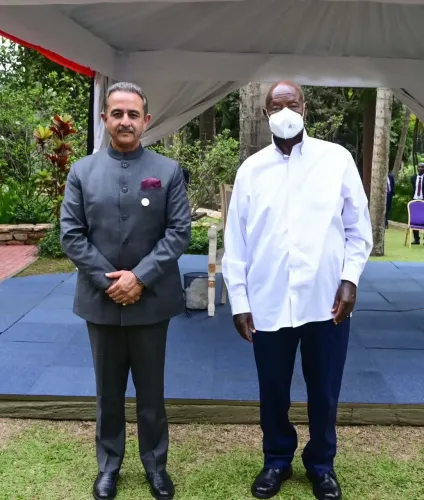
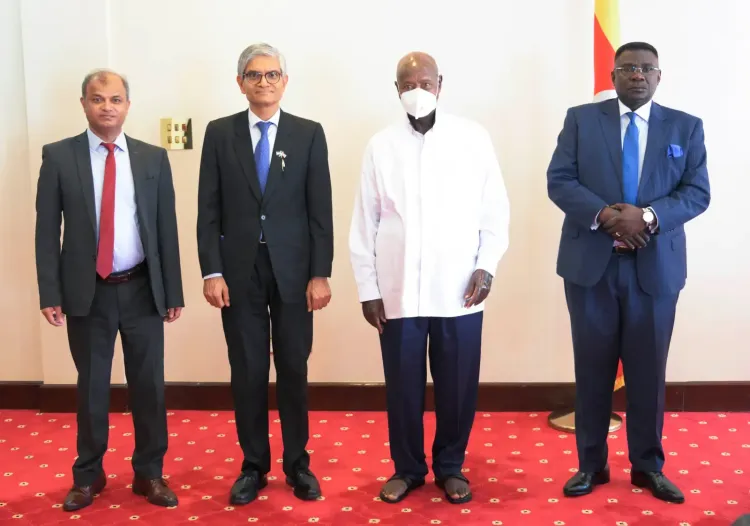
India's High Commissioner Upendra Singh Rawat paid a farewell call on Ugandan President Yoweri Museveni on 21 September 2026 in Kampala .
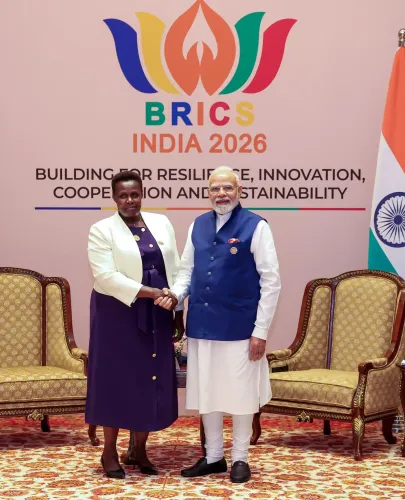
Prime Minister Narendra Modi and Ugandan Vice President Jessica Alupo met on 13 September at the 18th BRICS Summit in New Delhi.
India reaffirmed support for Uganda's long-term development plan, 'Vision 2040' .
The Kampala Principles , established during Modi's 2018 Uganda visit, continue to guide India's Africa engagement.
Key cooperation areas identified include healthcare, agriculture, digital technologies, capacity building , and private-sector collaboration .
India's High Commissioner to Uganda, Upendra Singh Rawat, on Monday, 21 September 2026, paid a farewell courtesy call on Ugandan President Yoweri Museveni in Kampala, reaffirming the enduring strength of the India-Uganda bilateral partnership. The meeting, confirmed by the High Commission of India in Uganda, highlighted recent diplomatic milestones that have given fresh momentum to ties between the two countries.
Key Diplomatic Milestones Cited
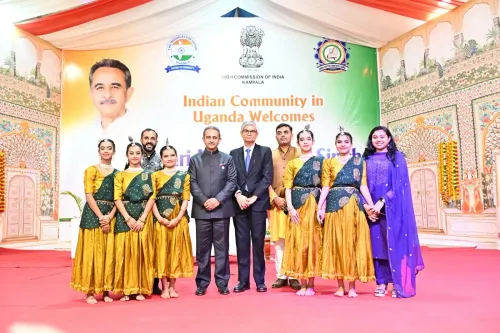
The High Commission noted two recent high points in the relationship: Vice President Jessica Alupo's participation in the BRICS Summit and the convocation ceremony at the National Forensic Sciences University's Jinja Campus in Uganda. Both events were cited as evidence of the growing institutional depth of the partnership.
Modi-Alupo Meeting at BRICS Summit
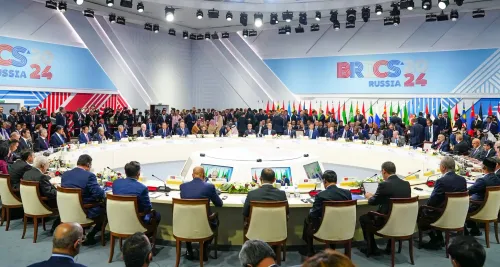
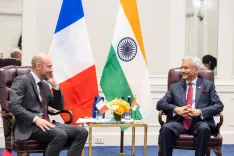
On 13 September, Prime Minister Narendra Modi and Ugandan Vice President Jessica Rose Epel Alupo met on the sidelines of the 18th BRICS Summit in New Delhi. According to a statement issued by the Ministry of External Affairs (MEA), the two leaders called for closer bilateral engagement to champion the voice of the Global South.
'They emphasised the need to enhance cooperation in key priority areas through technology partnerships, capacity building, knowledge sharing, investment facilitation, and private-sector collaboration between the two countries,' the MEA statement read. It added that the development partnership between India and Uganda is 'a source of strength for both countries.'
Prime Minister Modi also reaffirmed India's support for Uganda's 'Vision 2040' — the country's long-term development blueprint for a transformed and prosperous Uganda.
Kampala Principles and India's Africa Engagement
Modi recalled his 2018 visit to Uganda, describing it as 'memorable', and noted that the Kampala Principles continue to guide India's broader engagement with the African continent. In a post on X, the Prime Minister wrote: 'Recalled my memorable visit to Uganda in 2018 and the Kampala Principles that continue to guide India's engagement with Africa. We discussed ways to deepen cooperation in healthcare, agriculture, digital technologies and capacity building.'
He added: 'India and Uganda will keep working closely to advance bilateral ties and ensure a stronger voice for the Global South.'
Broader Context: India-Africa Ties
This comes amid India's intensified diplomatic outreach to the African continent, with the BRICS Summit providing a platform to engage multiple African leaders simultaneously. Uganda's participation at BRICS — through its Vice President — signals Kampala's interest in aligning with emerging multilateral frameworks where India plays a leading role. Notably, the Kampala Principles, articulated during Modi's 2018 Africa tour, emphasise demand-driven development cooperation, capacity building, and local ownership — a framework that continues to differentiate India's Africa policy from that of other major powers.
As High Commissioner Rawat concludes his tenure, both sides appear keen to ensure that institutional ties — from forensic science education to digital technology — carry the partnership forward regardless of personnel changes.
Point of View
In agricultural technology transfer, and in trade volumes. India's 'Global South' framing at BRICS is rhetorically powerful, but Uganda's development partnership will ultimately be judged by outcomes, not communiqués. The transition between high commissioners is a moment to assess whether the institutional architecture is robust enough to outlast individual envoys.
NationPress
21 Sept 2026
Frequently Asked Questions
Why did India's High Commissioner to Uganda meet President Museveni?
High Commissioner Upendra Singh Rawat paid a farewell courtesy call on President Yoweri Museveni on 21 September 2026 as Rawat concluded his diplomatic tenure in Uganda. The meeting reaffirmed the India-Uganda bilateral partnership and acknowledged recent milestones including the BRICS Summit participation by Uganda's Vice President.
What was discussed between PM Modi and Uganda's Vice President at the BRICS Summit?
Prime Minister Narendra Modi and Ugandan Vice President Jessica Alupo met on 13 September at the 18th BRICS Summit in New Delhi, discussing deeper cooperation in technology partnerships, capacity building, investment facilitation, and private-sector collaboration. They also emphasised championing the voice of the Global South through closer bilateral engagement.
What are the Kampala Principles?
The Kampala Principles are a framework for India's engagement with Africa, articulated during Prime Minister Modi's visit to Uganda in 2018. They emphasise demand-driven development cooperation, local ownership, capacity building, and technology transfer as the pillars of India's Africa partnership.
What is Uganda's Vision 2040?
Uganda's Vision 2040 is the country's long-term national development blueprint aimed at transforming Uganda into a prosperous and modern society. Prime Minister Modi reaffirmed India's support for this plan during his meeting with Vice President Alupo at the BRICS Summit.
What is the National Forensic Sciences University Jinja Campus?
The National Forensic Sciences University Jinja Campus is an Indian-assisted educational institution in Jinja, Uganda, cited as one of the recent milestones in the India-Uganda bilateral relationship. Its convocation ceremony was highlighted by the High Commission as evidence of growing institutional cooperation between the two countries.