India-UK AI and tech collaboration: CETA to unlock new opportunities

Synopsis
Days before the India-UK CETA formally takes effect on 15 July, New Delhi and London are already mapping how the trade deal can accelerate cooperation in AI, emerging technologies, and critical minerals. The Kumaran-Mian meeting in London signals that the technology track is being built in tandem with the trade framework — a strategic pairing that goes well beyond a standard bilateral commerce deal.
Key Takeaways
India's High Commissioner P.
Kumaran met UK DSIT Permanent Secretary Emran Mian in London on 19 June 2026 to advance AI and tech collaboration.
The India-UK CETA will formally enter into force on 15 July 2026 , as announced by PM Narendra Modi at the G7 Summit in Evian .
Modi said the agreement will benefit Indian farmers, workers, MSMEs, startups, and innovators and support Viksit Bharat 2047 .
Jaishankar and UK Foreign Secretary Yvette Cooper met in New Delhi on 4 June , covering trade, defence, clean energy, AI, and critical minerals.
The bilateral framework is anchored in the India-UK Comprehensive Strategic Partnership and a Vision 2035 roadmap.
India and the United Kingdom held high-level discussions on 19 June 2026 to advance bilateral cooperation in Artificial Intelligence (AI), emerging technologies, research, and innovation — with both sides also exploring how the landmark India-UK Comprehensive Economic and Trade Agreement (CETA) can be leveraged to generate shared economic growth. The talks signal a deepening of the two nations' strategic and technological partnership ahead of CETA's formal entry into force.
Key Meeting in London
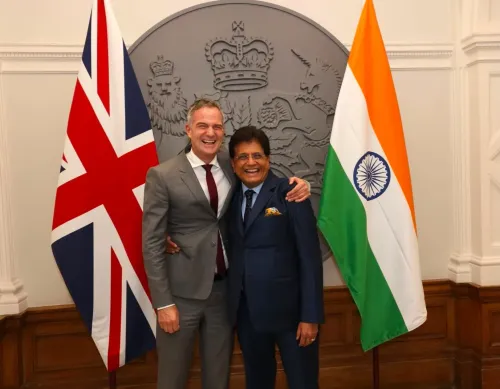
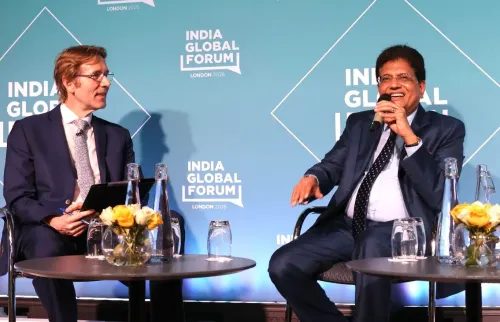
The discussions took place during a meeting in London between India's High Commissioner to the UK, P. Kumaran, and Emran Mian, Permanent Secretary of the UK's Department for Science, Innovation and Technology (DSIT). The High Commission of India in London confirmed the meeting, describing it as 'constructive' and noting that both sides discussed unlocking new opportunities through the trade agreement to foster innovation and drive economic growth.
CETA Set to Enter Force on 15 July
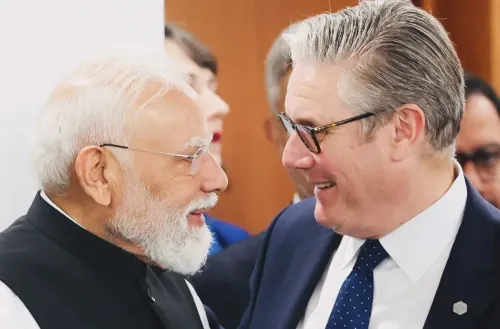
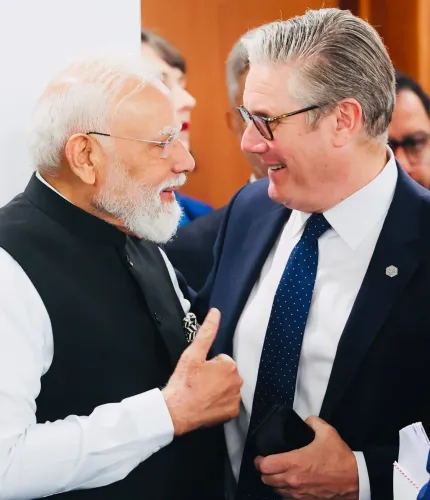
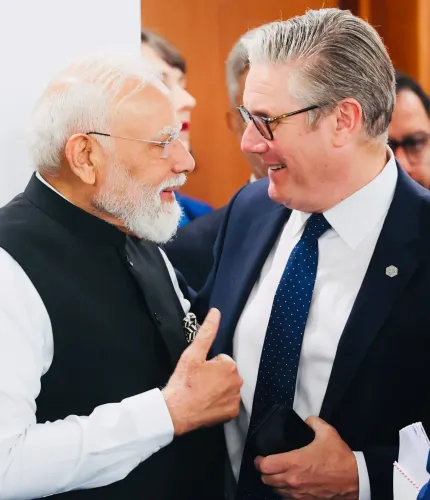
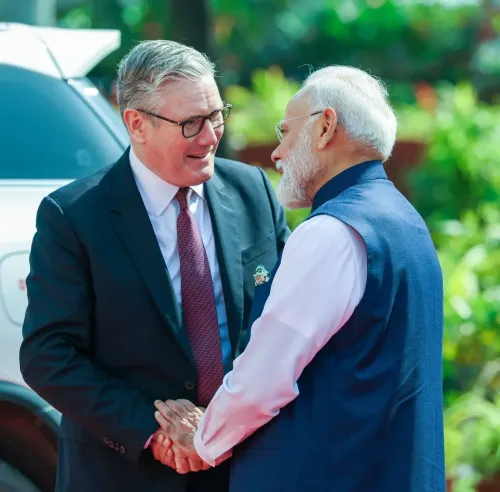
The bilateral momentum follows Prime Minister Narendra Modi's announcement on Wednesday that the India-UK CETA will formally enter into force on 15 July 2026 — a development he described as a 'historic milestone' in bilateral relations. Modi, who was attending the G7 Summit in Evian alongside UK Prime Minister Keir Starmer, said the agreement would 'significantly boost bilateral trade and investment.' He added that the deal would 'unlock numerous opportunities for Indian farmers, workers, MSMEs, startups and innovators' and contribute to the realisation of Viksit Bharat 2047.
Jaishankar-Cooper Meeting Laid the Groundwork
The London talks build on earlier diplomatic groundwork. On 4 June, External Affairs Minister S. Jaishankar met UK Foreign Secretary Yvette Cooper in New Delhi — Cooper's first visit to India in her current role. The two leaders reviewed bilateral cooperation across trade, technology, supply chains, defence, climate, education, and people-to-people ties, while also discussing global developments including those in Ukraine, West Asia, and the Indo-Pacific. Jaishankar described the India-UK partnership as a 'forward-looking highway of shared economic ambitions and high-technology,' and flagged new opportunities in clean energy, AI, and critical minerals.
Why This Matters
The convergence of a major trade agreement with focused technology diplomacy represents a qualitative shift in the India-UK relationship. This comes amid a broader global scramble to secure AI supply chains and technology partnerships, with both nations seeking to reduce dependence on a narrow set of technology providers. Notably, AI and critical minerals have emerged as recurring themes across India's recent bilateral engagements — from the Quad to its talks with the European Union — underscoring how technology sovereignty is now central to Indian foreign policy. The India-UK Comprehensive Strategic Partnership, guided by a Vision 2035 roadmap, provides the institutional framework within which these technology discussions are advancing.
What Comes Next
With CETA set to take effect on 15 July 2026, both governments are expected to operationalise sector-specific working groups covering AI, semiconductors, clean energy, and critical minerals. The Kumaran-Mian meeting suggests that the technology track is being actively prepared in parallel with the trade framework's implementation. Further diplomatic engagements are anticipated in the weeks ahead.
Point of View
IP frameworks, and supply-chain integration — or remain aspirational language in a diplomatic communiqué.
NationPress
18 Sept 2026
Frequently Asked Questions
What did India and the UK discuss in their 19 June 2026 meeting?
India's High Commissioner P. Kumaran and UK DSIT Permanent Secretary Emran Mian held a constructive meeting in London on 19 June 2026, focusing on advancing collaboration in AI, emerging technologies, research, and innovation. They also discussed leveraging the India-UK CETA to unlock new economic opportunities.
When does the India-UK CETA enter into force?
The India-UK Comprehensive Economic and Trade Agreement will formally enter into force on 15 July 2026, as announced by PM Narendra Modi at the G7 Summit in Evian. Modi described it as a 'historic milestone' for bilateral relations.
What did PM Modi say about the India-UK trade deal?
PM Modi said the CETA will 'significantly boost bilateral trade and investment' and unlock opportunities for Indian farmers, workers, MSMEs, startups, and innovators. He also said the deal will contribute to the realisation of Viksit Bharat 2047.
What areas did EAM Jaishankar and UK Foreign Secretary Cooper cover?
During their 4 June meeting in New Delhi, Jaishankar and Cooper reviewed cooperation in trade, technology, supply chains, defence, climate, education, and people-to-people ties. They also discussed global developments in Ukraine, West Asia, and the Indo-Pacific, and identified new opportunities in clean energy, AI, and critical minerals.
What is the India-UK Vision 2035 framework?
Vision 2035 is the strategic roadmap underpinning the India-UK Comprehensive Strategic Partnership, providing the long-term institutional framework for bilateral cooperation across trade, technology, defence, and other sectors. The CETA and the current AI diplomacy track both operate within this broader framework.