India-US trade deal could boost bilateral trade, says TCC chief
Synopsis
Despite optimistic diplomatic signals from both New Delhi and Washington, the head of the Trade and Economic Council says the two sides are still speaking in 'diplomatic language' — with little clarity on whether the hard issues have actually been resolved. Add India's Russian oil imports to the mix, and a quick, comprehensive deal looks anything but certain.
Key Takeaways
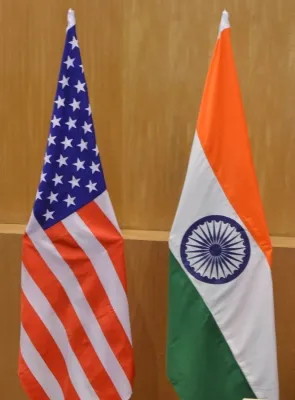
TCC President John Kavulich said a potential India-US trade deal could significantly expand bilateral commerce worth hundreds of billions of dollars annually.
Both governments are signalling progress, but Kavulich cautioned that diplomatic language obscures whether major contentious issues have been resolved.
He warned negotiations often stall when moving from broad consensus to specific provisions on tariffs, IP, and market access.
India 's imports and re-export of refined Russian crude oil have emerged as a political flashpoint, drawing scrutiny from US Congress , Ukraine , and the EU .
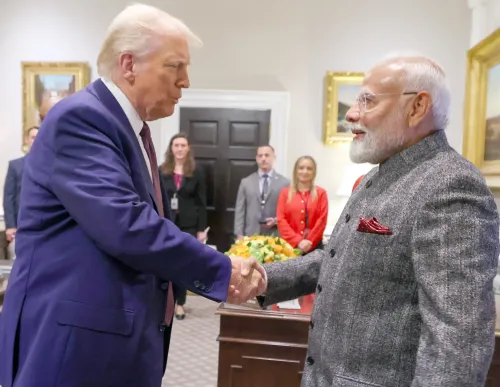
President Donald Trump 's position on the Russian oil issue reportedly differs from that of other US political stakeholders, complicating the picture further.
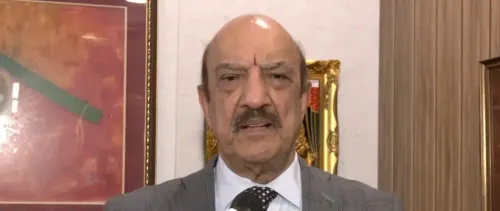
A potential trade agreement between India and the United States could significantly expand bilateral commerce, though the sheer breadth of unresolved issues may prolong negotiations considerably, Trade and Economic Council (TCC) President John Kavulich said on Tuesday, 20 October 2026. Speaking from New Delhi, Kavulich noted that while both governments have signalled forward movement, diplomatic language has obscured how much concrete progress has actually been made.
What Both Sides Are Signalling
Kavulich said both countries had indicated they were moving closer to an agreement, but cautioned against reading too much into optimistic public statements. 'Both countries are signalling that they are close to each other, but they are speaking in diplomatic language,' he said, adding that it remained unclear whether the two sides had resolved major contentious issues or might simply set them aside to announce agreements on less contested areas.
This ambiguity is not unusual in trade diplomacy. Broad-level consensus is often easier to project than it is to sustain once negotiations move into specific provisions — tariffs, intellectual property standards, digital trade rules, and agricultural market access are among the areas historically difficult to bridge between New Delhi and Washington.
Scale of the Economic Relationship
Kavulich stressed that a trade deal was important for both economies given the scale of their existing relationship. Bilateral trade between India and the US is already worth hundreds of billions of dollars annually, making any formalised agreement a significant multiplier for both sides. 'It is difficult to say whether they will be able to agree on everything,' he noted, highlighting the complexity of crafting a comprehensive pact between two economies as structurally different as India and the United States.
Notably, India and the US have been in various stages of trade dialogue for years, with a limited early-harvest package floated as a stepping stone to a full agreement. The current round of talks has added urgency given the broader realignment of global supply chains and the US push to reduce dependence on Chinese manufacturing.
The Russian Oil Complication
On the politically sensitive question of India's imports of Russian crude oil, Kavulich acknowledged the issue has emerged as a pressure point in the bilateral relationship. He pointed out that Indian companies import Russian crude, refine and process it, and in some cases re-export the resulting products to third markets — a practice that has drawn scrutiny from US Congress members, non-governmental organisations, Ukraine, and the European Union.
However, he noted that the issue carries different political weight for US President Donald Trump than it does for other American political stakeholders. Kavulich acknowledged that energy affordability remains a practical consideration for importing nations, and that consumers and economies generally prefer to source energy from the cheapest available suppliers — a reality that complicates any blanket demand to cut Russian oil ties.
What Happens Next
The pace of negotiations will depend on how both governments manage the gap between broad political intent and granular trade specifics. Observers expect that the two sides may opt for a phased or sectoral approach rather than a sweeping single agreement. Any announcement in the near term is likely to cover areas where consensus already exists, while harder issues — including intellectual property, e-commerce regulations, and energy sourcing — may be deferred to later rounds.
Point of View
Comprehensive trade agreement is wide. India's Russian oil calculus adds a geopolitical layer that no trade negotiator can fully insulate from domestic politics on either side. The real test is whether Washington is willing to compartmentalise the Russian energy question long enough to close a deal, or whether it becomes the wedge that stalls progress just as the two sides appeared closest.
NationPress
20 Oct 2026
Frequently Asked Questions
What did TCC President John Kavulich say about the India-US trade deal?
Kavulich said a potential India-US trade agreement could significantly expand bilateral commerce, but warned that both sides are communicating in diplomatic language, making it unclear how much real progress has been made. He cautioned that reaching consensus on specific trade provisions is considerably harder than projecting broad-level agreement.
Why might an India-US trade deal take longer than expected?
According to Kavulich, the breadth of trade-related issues between the two economies — spanning tariffs, intellectual property, digital trade, and agricultural access — makes a comprehensive agreement difficult to conclude quickly. Parties often appear close during early negotiations, only to find substantial differences emerge in the finer details.
How does India's Russian oil imports affect the trade negotiations?
India's practice of importing Russian crude, refining it, and in some cases re-exporting the products has become a political pressure point. US Congress members, NGOs, Ukraine, and the EU have raised concerns, though Kavulich noted the issue holds different implications for President Donald Trump than for other US political stakeholders.
How large is the current India-US bilateral trade relationship?
India-US bilateral trade is already worth hundreds of billions of dollars annually, making any formal trade agreement a significant economic event for both countries. The scale of the relationship is precisely why both sides consider a formalised deal important.
What is the Trade and Economic Council?
The Trade and Economic Council (TCC) is a body focused on trade and economic relations. Its president, John Kavulich, is a recognised commentator on US-India and US-Cuba trade dynamics, frequently cited in international trade discussions.