India sees Pacific as core of Indo-Pacific vision: MoS Margherita at PIF Summit
Synopsis
India's MoS for External Affairs Pabitra Margherita used the 55th Pacific Islands Forum stage in Palau to reframe the Pacific as central — not peripheral — to India's Indo-Pacific strategy. With FIPIC commitments being pushed toward implementation and invitations to join ISA, CDRI, and GBA, New Delhi is signalling a shift from diplomatic rhetoric to on-the-ground delivery in a region where great-power competition is intensifying.
Key Takeaways
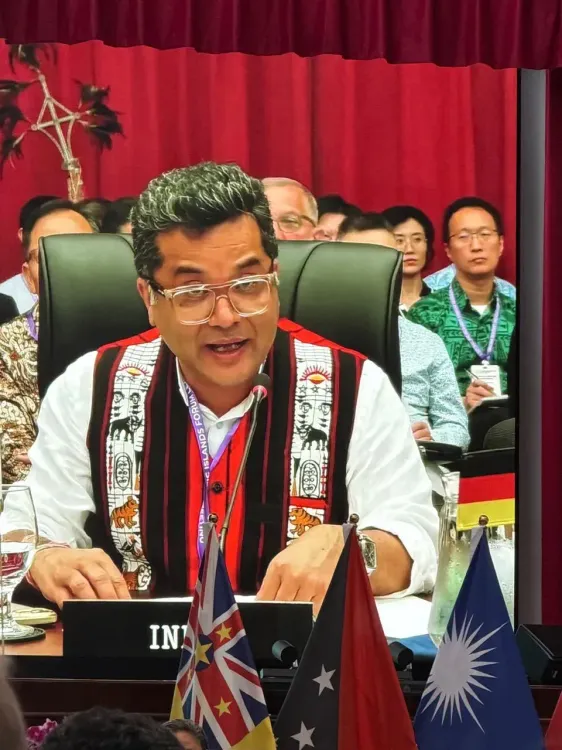
MoS Pabitra Margherita addressed the 55th Pacific Islands Forum Leaders' Meeting in Koror, Palau on 1 September .
India described the Pacific as 'an integral part of our shared Indo-Pacific,' citing PM Modi's framing of Pacific nations as 'large ocean states.' India reaffirmed commitments made at the Third FIPIC Summit (Papua New Guinea, 2023) covering healthcare, education, digital capacity, water, and renewable energy.
India invited PIF members to join the International Solar Alliance (ISA) , Coalition for Disaster Resilient Infrastructure (CDRI) , and Global Biofuel Alliance (GBA) .
The Indo-Pacific Oceans Initiative , launched in 2019 , was highlighted as India's framework for maritime security and ocean health in the region.
India pledged to amplify Pacific priorities in global forums, noting active PIF participation in its three Voice of Global South Summits .
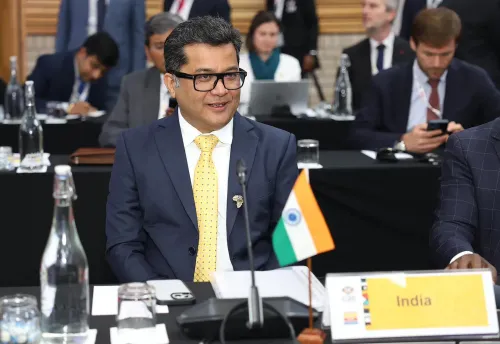
Minister of State for External Affairs Pabitra Margherita on Tuesday, 1 September told the 55th Pacific Islands Forum (PIF) Leaders' Meeting in Koror, Palau, that India views the Pacific not as a distant region but as an integral part of its broader Indo-Pacific vision. Addressing the Dialogue Partner Session, Margherita underscored how New Delhi's engagement with Pacific island nations has deepened significantly under the Act East Policy.
India's Strategic Framing of the Pacific
Margherita made clear that India's partnership with the Blue Pacific Continent is guided by a principle-based framework — one rooted in respect for international law, sovereignty, territorial integrity, freedom of navigation and overflight, and the peaceful resolution of disputes. He quoted Prime Minister Narendra Modi's formulation that India recognises Pacific Island Countries as 'large ocean states,' a framing that elevates their stature beyond small-island status in diplomatic discourse.
'We see the Pacific not as a distant region, but as an integral part of our shared Indo-Pacific,' Margherita said, adding that India attaches 'the highest importance' to its partnership with the region.
FIPIC and Multilateral Cooperation
The Minister highlighted the Forum for India-Pacific Islands Cooperation (FIPIC) as a key institutional vehicle for the relationship. At the Third FIPIC Summit held in Papua New Guinea in 2023, Prime Minister Modi announced a comprehensive package of initiatives spanning healthcare, education, digital capacity building, water security, and renewable energy. Margherita reaffirmed India's commitment to translating those pledges into ground-level outcomes through bilateral development cooperation and demand-driven projects via the India-UN Development Partnership Fund.
Climate, Resilience, and the Indo-Pacific Oceans Initiative
Margherita acknowledged that climate change and sea-level rise are 'present and existential concerns' for Pacific nations — a characterisation that aligns India's position with the urgency expressed by island states. He pointed to three multilateral instruments as India's contribution: the International Solar Alliance (ISA), the Coalition for Disaster Resilient Infrastructure (CDRI), and the Global Biofuel Alliance (GBA), inviting PIF members to join all three.
He also referenced the Indo-Pacific Oceans Initiative, announced by India in 2019, which focuses on securing an open maritime domain while safeguarding ocean health. This comes amid growing great-power competition in the Pacific, where China's infrastructure diplomacy has drawn sustained attention from regional and external stakeholders.
Pacific Voice in the Global South
Margherita stressed that the Pacific holds an important voice within the wider Global South and pledged that India would continue championing Pacific priorities in global decision-making forums. He noted that PIF members have actively participated in India's three Voice of Global South Summits, which have served as a platform for amplifying the perspectives of developing nations.
The Summit's theme — 'B.E.L.A.U – Building Economies: Life. Action. Unity' — was cited by Margherita as resonating with India's own philosophy of Vasudhaiva Kutumbakam (the world as one family), framing the bilateral relationship within a civilisational as well as strategic context.
What Comes Next
India's engagement with the Pacific is expected to intensify as New Delhi positions itself as a credible development partner and security provider in the region. The reaffirmation of FIPIC commitments and the push for Pacific nations to join ISA, CDRI, and GBA signal that India is moving from announcements to implementation — a shift that will be watched closely by both Pacific island governments and competing external powers.
Point of View
But delivery on the 2023 Papua New Guinea commitments remains the credibility test. Margherita's emphasis on 'translating initiatives into outcomes' is an implicit acknowledgement that announcements have outpaced implementation. The invitation to join ISA, CDRI, and GBA is smart multilateral bundling, but Pacific island governments will judge India by project completion rates, not forum speeches. The real contest in the Pacific is not rhetorical — it is infrastructural, and India's development finance capacity will need to scale substantially to match its strategic ambitions in the region.
NationPress
1 Sept 2026
Frequently Asked Questions
What did India's MoS Pabitra Margherita say at the Pacific Islands Forum in Palau?
Margherita told the 55th Pacific Islands Forum Leaders' Meeting in Koror, Palau on 1 September that India views the Pacific as an integral part of its shared Indo-Pacific vision, not a distant region. He reaffirmed India's commitment to FIPIC, the Indo-Pacific Oceans Initiative, and development cooperation with Pacific island nations.
What is FIPIC and why does it matter?
The Forum for India-Pacific Islands Cooperation (FIPIC) is India's primary multilateral platform for engaging with Pacific island nations, established under the Act East Policy. At its third summit in Papua New Guinea in 2023, PM Modi announced initiatives in healthcare, education, digital capacity, water, and renewable energy for the region.
Which initiatives did India invite Pacific nations to join?
India invited Pacific Islands Forum members to join three multilateral initiatives: the International Solar Alliance (ISA), the Coalition for Disaster Resilient Infrastructure (CDRI), and the Global Biofuel Alliance (GBA), all aimed at building climate resilience and sustainable development.
What is India's Indo-Pacific Oceans Initiative?
The Indo-Pacific Oceans Initiative was announced by India in 2019 to promote collaborative efforts to secure an open and free maritime domain while ensuring ocean health. It forms a key pillar of India's strategic engagement across the Indo-Pacific, including the Pacific island region.
How does India support Pacific nations on climate change?
India acknowledges climate change and sea-level rise as 'present and existential concerns' for Pacific nations and contributes through the International Solar Alliance, the Coalition for Disaster Resilient Infrastructure, and the Global Biofuel Alliance. India also focuses on humanitarian assistance, disaster preparedness, early warning systems, and resilient infrastructure across the Indo-Pacific.