Pakistan's GSP+ renewal from 2029 not guaranteed, warns EU envoy
Synopsis
The EU has put Pakistan on notice: a decade of GSP+ benefits worth an estimated 732 million euros in annual tariff exemptions is not automatically renewable. Ambassador Karoblis's warning — that legal ratification of UN conventions is no longer enough and on-ground implementation will be judged — sets up a high-stakes compliance test for Islamabad ahead of 2029, with the textile sector most exposed to any downgrade.
Key Takeaways
EU Ambassador Raimundas Karoblis warned that Pakistan's GSP+ renewal beyond 2029 is 'not certain or guaranteed' .
Pakistan has held GSP+ status since 2014 and is the largest beneficiary among all GSP+ countries by import volume.
Annual tariff exemptions under GSP+ are estimated at around 732 million euros , with the textile sector a key beneficiary.
The revised framework will require compliance with 32 conventions , up from the current 27 .
Key EU concerns include enforced disappearances , extrajudicial killings , freedom of expression , and minority rights .
If downgraded to ordinary GSP , Pakistan's tariffs would be approximately 30 per cent lower than rates for China and the US — but higher than under GSP+.
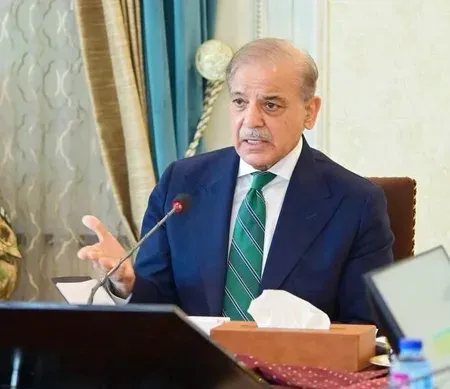
Pakistan's continued access to the European Union's preferential trade scheme GSP+ beyond 2029 is 'not certain or guaranteed', EU Ambassador to Pakistan Raimundas Karoblis has said, warning that renewal will hinge not on legal ratification alone but on demonstrable, on-ground implementation of United Nations human-rights conventions. The remarks, cited in a report by voicepk.net, signal a tougher EU stance ahead of the next GSP+ cycle.
What the EU Ambassador Said
Karoblis stressed that Pakistan would need to submit a formal action plan containing concrete measures, timeframes, and performance indicators to demonstrate compliance. 'It will also need concrete timeframes and concrete performance indicators. So, indeed, implementation is really important,' he said. He also noted that the revised GSP framework will expand from the current 27 conventions to 32 conventions, raising the compliance bar further.
Pakistan's Current GSP+ Standing
Pakistan has held GSP+ status since 2014, giving it preferential access to the EU market. It has formally ratified all 27 core international conventions covering human rights, labour standards, environmental protection, and good governance. The country ranks as the largest beneficiary among all GSP+ nations by import volume, with tariff exemptions estimated at around 732 million euros annually. The textile sector is among the primary beneficiaries of this arrangement.
Human Rights Concerns Flagged
While the ambassador acknowledged some progress in implementing UN conventions over the last two years, he maintained that certain human-rights indicators had regressed. 'The main areas of concern are enforced disappearances and extrajudicial killings, freedom of expression, the rights of journalists, and minority rights,' Karoblis said. These concerns, attributed directly to UN monitoring body assessments, form the core of the EU's evaluation framework for renewal.
What Happens if Pakistan Loses GSP+
Should Pakistan fail to successfully reapply or meet the conditions for GSP+, it would revert to ordinary GSP membership, which still carries some preferential treatment. According to the report, under ordinary GSP, tariffs would remain approximately 30 per cent lower than conventional rates applied to countries such as China and the United States — though significantly higher than under the current GSP+ arrangement. The economic impact on Pakistan's export-dependent industries, particularly textiles, could be substantial.
What Happens Next
The EU's assessment process will be driven by UN monitoring body evaluations rather than Islamabad's self-reporting. Pakistan's government must present a credible action plan with measurable outcomes before the 2029 renewal window. Given the expanded convention list and the EU's stated emphasis on implementation over ratification, analysts expect the compliance review to be more rigorous than previous cycles.
Point of View
The stakes are existential for its textile export model, which has no comparable alternative market. The question is whether Pakistan's civilian government has the political bandwidth — and the leverage over security establishments — to deliver the on-ground human-rights improvements that Brussels is demanding.
NationPress
1 Sept 2026
Frequently Asked Questions
What is GSP+ and why does it matter for Pakistan?
GSP+ is the European Union's enhanced preferential trade scheme that grants eligible countries tariff-free or reduced-tariff access to the EU market in exchange for implementing international conventions on human rights, labour, and governance. For Pakistan, it translates into an estimated 732 million euros in annual tariff exemptions, with the textile sector being the largest beneficiary.
Why is Pakistan's GSP+ renewal uncertain?
EU Ambassador Raimundas Karoblis has stated that renewal from 2029 is 'not certain or guaranteed' because the EU will evaluate on-ground implementation of UN human-rights conventions — not just formal ratification. Key concerns flagged include enforced disappearances, extrajudicial killings, freedom of expression, and minority rights.
What does Pakistan need to do to retain GSP+ status?
Pakistan must submit a formal action plan with concrete measures, specific timeframes, and measurable performance indicators demonstrating genuine compliance with UN conventions. The new framework also expands the required conventions from 27 to 32, raising the compliance threshold further.
What happens if Pakistan loses GSP+ status?
If Pakistan fails to requalify, it would revert to ordinary GSP membership. Under that arrangement, tariffs would be approximately 30 per cent lower than those applied to countries like China and the United States — a meaningful preference, but significantly less favourable than the current GSP+ terms.
When will the GSP+ renewal decision be made?
The next GSP+ cycle begins from 2029. The EU's assessment will be based on evaluations by UN monitoring bodies, and Pakistan is expected to submit its compliance action plan well ahead of that deadline.