India eyes Eastern Mediterranean defence push with BrahMos exports to Greece, Cyprus

Synopsis
India's BrahMos missile exports to Greece and Cyprus are reshaping the Eastern Mediterranean's power balance — and unnerving Ankara. With a €1.2 billion Cyprus procurement package in play and a new India-Cyprus strategic partnership signed, New Delhi's arms diplomacy is emerging as a direct geopolitical response to Turkey's backing of Pakistan.
Key Takeaways
India's defence exports to Greece and Cyprus are seen as a counterbalance to Turkey 's military and diplomatic support for Pakistan .
The BrahMos missile, flying at speeds of Mach 2.8–3.0 and as low as 10 metres above sea level, could overwhelm Turkey's S-400 Triumf air defence systems, according to analysts.
Land-based coastal BrahMos batteries are estimated at $3.5 million per missile , offering Greece and Cyprus a cost-effective A2/AD deterrent.
India and Cyprus signed a five-year defence cooperation roadmap after upgrading ties to a strategic partnership.
Cyprus is reportedly exploring a €1.2 billion defence procurement package under the EU's SAFE programme , including Indian cruise missiles and kamikaze drones.
No official BrahMos sale to Greece has been announced; Turkey's LR-LACM concerns add a further dimension to Ankara's threat assessment.
India's growing willingness to export advanced defence systems to Turkey's regional rivals is being widely interpreted as a strategic counterbalance to Ankara's sustained military and diplomatic backing of Pakistan on international platforms, according to a report in Greek City Times citing Turkish defence analyst Ardan Zenturk.
BrahMos Missile and the Eastern Mediterranean Balance
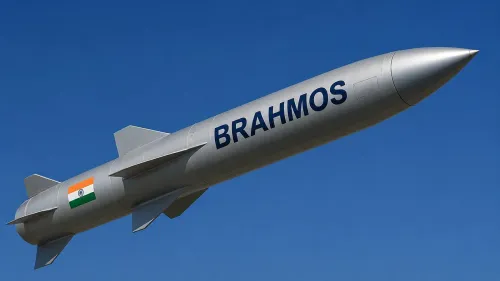
Greece's prospective acquisition of the Indian supersonic BrahMos missile could significantly alter the military balance of power in the Eastern Mediterranean, the report noted. The BrahMos, capable of speeds between Mach 2.8 and 3.0, is designed to fly at extremely low altitudes — skimming as low as 10 metres above the sea surface. According to analysts including Zenturk, this capability could overwhelm or blind Turkey's Russian-made S-400 Triumf air defence systems.
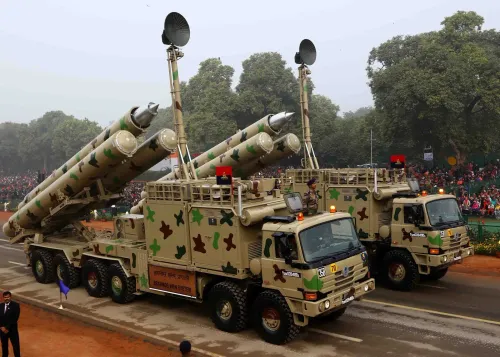
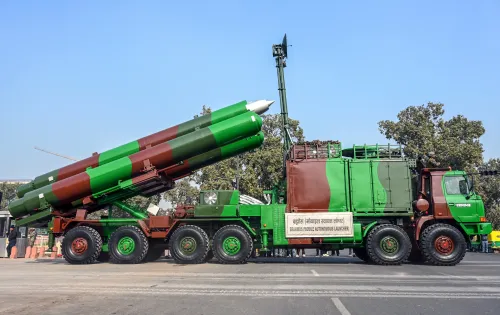
Turkish media and defence circles have reportedly voiced concern over a multi-billion-dollar strategic defence partnership taking shape between India, Greece, and Cyprus. For Athens and Nicosia, land-based coastal BrahMos batteries are seen as a cost-effective deterrent — at an estimated $3.5 million per missile, a limited number of well-positioned launchers could create a potent anti-access/area-denial (A2/AD) shield, putting Turkey's larger navy at a significant disadvantage.
Turkey's Wider Concerns: LR-LACM and Aegean Threat
Turkish concerns reportedly extend beyond the BrahMos. Ankara is also closely monitoring India's development of the Long-Range Land Attack Cruise Missile (LR-LACM), which analysts suggest could threaten critical infrastructure on the Turkish mainland if deployed from Aegean islands. This represents a qualitative escalation in the perceived threat calculus from New Delhi's expanding arms export portfolio.
Cyprus as a Strategic Conduit
As direct weapons transfers to Greece could trigger diplomatic and legal complications within NATO, Turkish intelligence reportedly believes Cyprus may serve as an indirect conduit for Indian defence hardware. New Delhi and Nicosia recently upgraded bilateral ties to a strategic partnership and signed a five-year defence cooperation roadmap. Cyprus is also reportedly exploring a €1.2 billion defence procurement package under the EU's SAFE programme, which includes interest in Indian cruise missiles and kamikaze drones.
No Official Deal Yet, but Strategic Signalling Underway
No official sales agreement has been announced by either New Delhi or Athens as of reporting. Nevertheless, the BrahMos missile's psychological and tactical deterrent effect has already compelled Ankara to reassess its security posture in the region, according to the report. This comes amid India's broader push to establish itself as a major global arms exporter, with defence exports now serving as a key foreign policy instrument. The BrahMos has emerged as a flagship symbol of India's Defence Atmanirbharta drive, with outreach expanding particularly across the Global South.
As India deepens its strategic footprint in the Eastern Mediterranean, the trajectory of its arms diplomacy with Greece and Cyprus is likely to remain a closely watched variable in regional security calculations.
Point of View
Which is itself a measure of how far India's defence brand has travelled. But the NATO dimension is the underdiscussed risk: arming Greece and Cyprus, even indirectly via Cyprus, puts New Delhi in the middle of an intra-alliance fault line. If a formal deal materialises, India will need to manage the diplomatic fallout carefully — Turkey is a NATO member and a significant regional actor, and Ankara has shown it is willing to retaliate economically and diplomatically when it feels cornered.
NationPress
26 Oct 2026
Frequently Asked Questions
Why is India exporting defence equipment to Turkey's rivals?
India's readiness to supply advanced systems like the BrahMos missile to Greece and Cyprus is widely seen as a counterbalance to Turkey's sustained military and diplomatic support for Pakistan on global platforms. It also advances India's broader goal of expanding defence exports as a foreign policy tool.
What is the BrahMos missile and why does it concern Turkey?
The BrahMos is an Indian supersonic cruise missile capable of speeds between Mach 2.8 and 3.0, flying as low as 10 metres above the sea surface. Analysts argue this low-altitude, high-speed profile could overwhelm Turkey's Russian-made S-400 Triumf air defence systems, creating a significant tactical disadvantage for Ankara.
What is the India-Cyprus defence deal?
India and Cyprus recently upgraded their bilateral relationship to a strategic partnership and signed a five-year defence cooperation roadmap. Cyprus is additionally exploring a €1.2 billion defence procurement package under the EU's SAFE programme, which reportedly includes interest in Indian cruise missiles and kamikaze drones.
Has India officially agreed to sell BrahMos missiles to Greece?
No official sales agreement has been announced by New Delhi or Athens as of reporting. However, the prospect of such a deal has already had a psychological and tactical deterrent effect, reportedly compelling Turkey to reassess its security posture in the Eastern Mediterranean.
What is the LR-LACM and why is Turkey monitoring it?
The Long-Range Land Attack Cruise Missile (LR-LACM) is an Indian missile system currently under development. Turkey is reportedly tracking it closely because, if deployed from Aegean islands, it could potentially threaten critical infrastructure on the Turkish mainland.