India's ₹14,500 crore energy storage scheme targets 92 GWh, $10 billion investment
Synopsis
India has committed ₹14,500 crore to build 92 GWh of grid-scale storage — 170% of its current capacity — with the government betting that scheme incentives will unlock $10 billion in private investment. A parallel $300 million push to process lithium and nickel domestically signals that New Delhi is simultaneously trying to control the supply chain, not just the infrastructure.
Key Takeaways
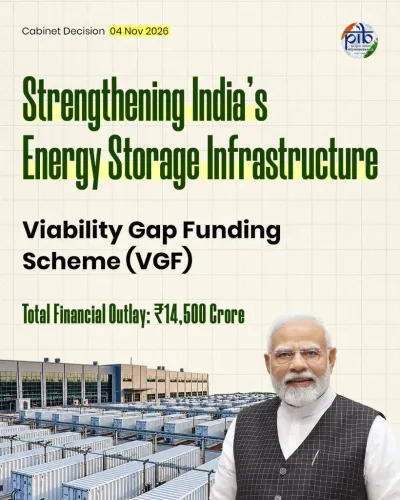
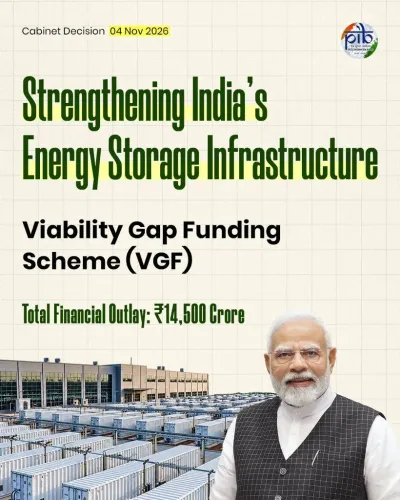
India has approved a ₹14,500 crore ( $1.5 billion ) energy storage scheme covering 2026-27 to 2030-31 .
The scheme targets 92 GWh of grid-scale storage: 60 GWh pumped hydro, 30 GWh battery, and 2 GWh emerging technologies.
The government expects the projects to attract around $10 billion in private investment over five years.
92 GWh equals approximately 170% of India's existing grid-scale storage capacity.
Battery storage projects must meet a minimum 40% domestic content threshold to qualify.
A separate $300 million scheme will establish four domestic processing plants for lithium and nickel .
India has approved a ₹14,500 crore ($1.5 billion) scheme to develop 92 gigawatt-hours (GWh) of grid-scale energy storage capacity over five years, as the country moves to strengthen energy security and accelerate its renewable energy transition. Prime Minister Narendra Modi announced the Cabinet approval, describing the initiative as a step toward improving power reliability and integrating renewables into the national grid. The scheme spans 2026-27 to 2030-31.
What the Scheme Covers
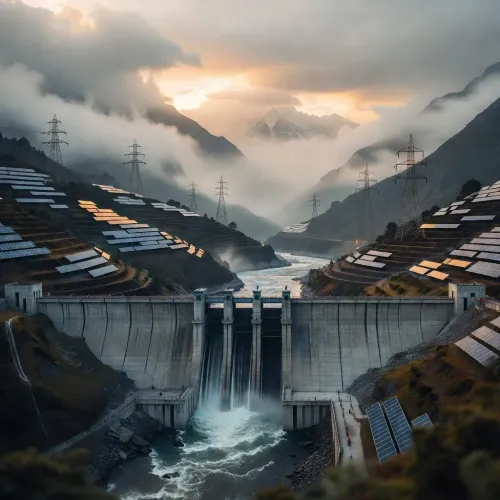
The ₹14,500 crore initiative is structured across three storage technologies: 60 GWh of pumped hydro storage, 30 GWh of battery storage, and 2 GWh through emerging technologies. According to analysis cited in reports, the government expects the projects to attract around $10 billion in private investment over the next five years — roughly 6.5 times the government's own outlay.
The 92 GWh target is equivalent to approximately 170 per cent of India's existing grid-scale storage capacity, underscoring the scale of the planned expansion.
Why India Needs This Now
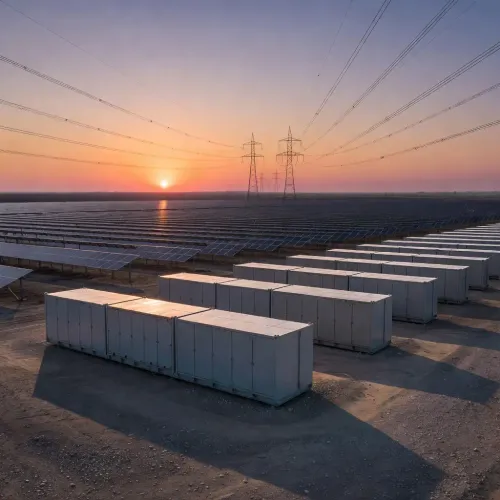
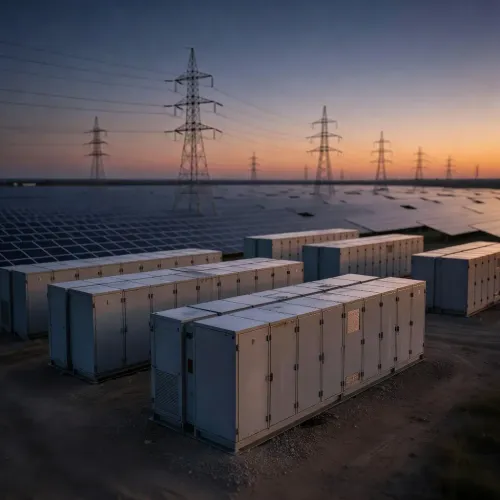
Despite rapid growth in solar and other renewable energy sources, storage remains a persistent bottleneck. Solar generation peaks during daylight hours, while electricity demand typically surges in the evening — after solar output declines. Storage facilities are designed to bridge this mismatch, reduce wastage of surplus renewable electricity, and reduce dependence on coal-fired power plants during peak demand periods.
India targets 500 GW of non-fossil fuel-based electricity capacity by 2030 and net-zero emissions by 2070. Analysts estimate the country will require around 411 GWh of grid-scale storage by 2031-32 — including 236 GWh of battery storage and 175 GWh of pumped hydro storage — making the current scheme a partial but significant step toward that goal.
Domestic Manufacturing Push
Battery storage projects under the scheme will be required to meet a minimum domestic content threshold of 40 per cent, a condition designed to stimulate local manufacturing of battery energy storage systems and reduce import dependence. This is consistent with the broader 'Make in India' direction in the energy and electronics sectors.
Separately, the government has approved a $300 million scheme to establish four domestic processing plants for lithium and nickel — critical minerals essential for batteries, energy storage systems, and electronic products. Together, the two approvals signal an integrated push: build storage capacity while simultaneously securing the upstream supply chain.
Geopolitical and Energy Security Context
The initiative comes as India seeks to reduce its vulnerability to global energy disruptions, particularly in the wake of volatile fossil fuel markets that have pressured import bills since 2022. Notably, India's dependence on imported coal and oil has remained a structural concern even as renewable capacity has expanded. By scaling up domestic storage and critical mineral processing, the Centre is attempting to insulate the grid from both fuel-price shocks and supply-chain disruptions.
What Comes Next
Project developers and investors will be watching for the rollout of detailed bidding guidelines under the scheme. Industry observers note that the $10 billion investment projection will depend heavily on competitive tariff frameworks, land clearances for pumped hydro sites, and timely resolution of grid connectivity issues — areas that have slowed past renewable energy projects. The parallel critical minerals processing scheme is expected to take several years to reach operational scale.
Point of View
500 crore outlay is a down-payment, not a destination — the real ambition is the $10 billion in private capital the government hopes to unlock alongside it. That leverage ratio will only materialise if bidding frameworks are competitive and grid connectivity bottlenecks are cleared, two areas where past renewable auctions have repeatedly faltered. The 40% domestic content clause is directionally right but could raise project costs in the near term, given that India's battery manufacturing ecosystem is still nascent. The parallel critical minerals processing push addresses a genuine vulnerability, but four plants will take years to reach a scale that meaningfully reduces India's import dependence on lithium and nickel — both dominated by a handful of global suppliers.
NationPress
9 Nov 2026
Frequently Asked Questions
What is India's new energy storage scheme?
India has approved a ₹14,500 crore ($1.5 billion) scheme to develop 92 GWh of grid-scale energy storage capacity between 2026-27 and 2030-31. It covers 60 GWh of pumped hydro storage, 30 GWh of battery storage, and 2 GWh through emerging technologies, with the government expecting it to attract around $10 billion in private investment.
Why is energy storage critical for India's power grid?
Solar generation peaks during daylight hours while electricity demand surges in the evening, creating a supply-demand mismatch that storage can bridge. Without adequate storage, surplus renewable power is wasted and coal plants are still needed for evening peak demand — directly undermining India's clean energy targets.
What is India's total grid-scale energy storage requirement by 2031-32?
According to government estimates cited in reports, India will need around 411 GWh of grid-scale energy storage by 2031-32, comprising 236 GWh of battery storage and 175 GWh of pumped hydro storage. The newly approved 92 GWh scheme covers roughly 22% of that projected requirement.
What is the domestic content requirement for battery storage projects?
Battery storage projects under the scheme must meet a minimum domestic content threshold of 40%, designed to promote local manufacturing of battery energy storage systems and reduce India's reliance on imports.
What is the separate critical minerals scheme approved alongside the storage plan?
The government has separately approved a $300 million scheme to establish four domestic processing plants for lithium and nickel — minerals critical for batteries and energy storage systems. The move aims to strengthen India's upstream supply chain and reduce dependence on a small number of global mineral suppliers.