How is India Supporting Flood-Hit Sri Lanka with Relief Supplies?
Synopsis
India's relentless aid efforts in Sri Lanka during the devastating floods highlight a profound commitment to humanitarian support. With ongoing operations, India has provided substantial assistance, including dry rations and medical supplies, helping thousands in need. Discover how this partnership strengthens ties between the two nations.
Key Takeaways
India's commitment to humanitarian aid through Operation Sagar Bandhu.
Over 1,134 tonnes of relief supplies provided to Sri Lanka.
Coordination with local organizations enhances the effectiveness of the aid.
Continuous support is crucial for affected communities.
International cooperation is vital in times of crisis.
Colombo, Dec 18 (NationPress) On Thursday, India persistently continued to send relief supplies to numerous regions in Sri Lanka that have been severely impacted by floods, showcasing its unwavering commitment to assist the neighboring nation during this critical time under the ongoing Operation Sagar Bandhu.
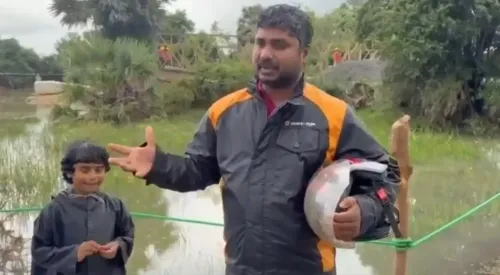
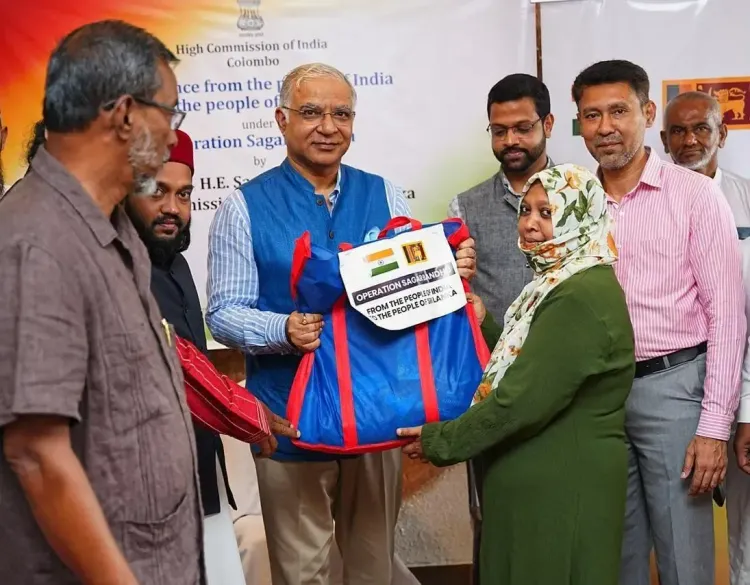
Santosh Jha, the High Commissioner of India to Sri Lanka, visited the Kolonnawa suburb of Colombo and the Bhaktivedanta Children's Home 'Gokulam' in Wattala on Thursday—areas that have faced devastating floods due to Cyclone Ditwah.
As part of India's ongoing support to the island nation, High Commissioner Jha distributed assistance kits to families in Kolonnawa in collaboration with the All Ceylon Sufi Spiritual Association and to the children at 'Gokulam' at the ISKCON Temple in Colombo, where they have been temporarily relocated.
Earlier this week, fresh relief supplies were dispatched to Sri Lanka as part of India's comprehensive assistance under Operation Sagar Bandhu.
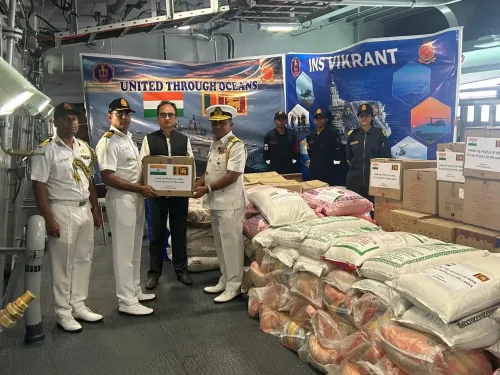
According to the Indian High Commission, another batch of 50 tonnes of dry rations from India reached Sri Lanka on December 15 aboard the Indian Coast Guard Ship Shaurya. The supplies were handed over by Deputy High Commissioner to India Satyanjal Pandey to Janitha Ruwan Kodithuwakku, the Deputy Minister of Ports and Civil Aviation, further reinforcing the ongoing support for communities affected by the disaster.
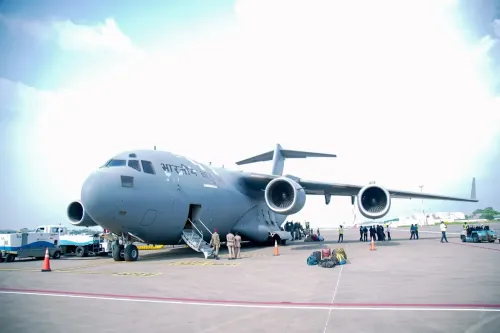
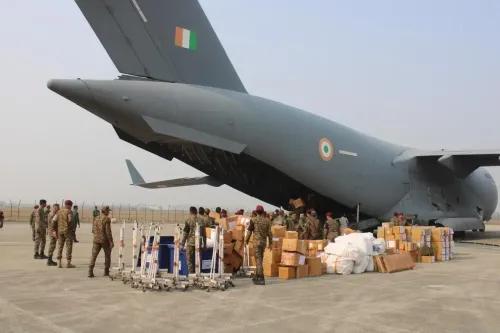
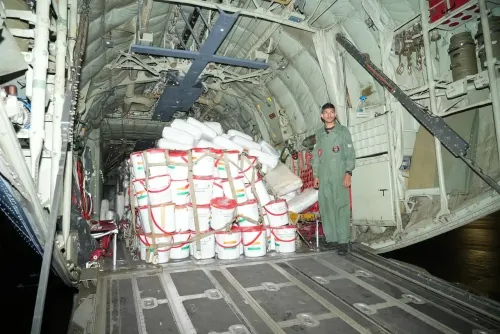
Previously, on December 14, an Indian Air Force C-17 Globemaster aircraft arrived in Sri Lanka, bringing 10 tonnes of medicines and 15 tonnes of dry rations, while also facilitating the return of the Indian Army Field Hospital team, which had been established in Mahiyanganaya, near Kandy, after successfully completing its humanitarian mission.
"Efforts to restore essential road connectivity are steadily progressing. Preparatory tasks are underway at bridge sites in Chilaw and Kilinochchi, with the damaged Kilinochchi Bridge completely cleared and ready for the installation of a Bailey Bridge, enhancing movement and access in the region," stated the High Commission of India on Wednesday.
In the presence of Hon. Anura Karunathilake, Minister of Ports and Civil Aviation, and Deputy High Commissioner Dr. Satyanjal Pandey, Colombo West International Terminal (CWIT) contributed LKR 100 million towards 'Rebuilding Sri Lanka'. CWIT is a collaborative venture between Adani Ports, John Keells Group, and the Sri Lanka Ports Authority, the statement noted.
Separately, the Indian Cultural Association (ICA) successfully hosted the second Janashakthi Life – ICA International Half-Marathon in Colombo on December 14, attracting over 2500 participants from 39 countries. Endorsed by the High Commission of India and Sri Lanka's Ministry of Sports, the event highlighted athletic excellence and social impact, with the men's category winner, Kipsang Icibet Mooses, donating his LKR 1 million prize money to the ICA Orphanage water purification project.
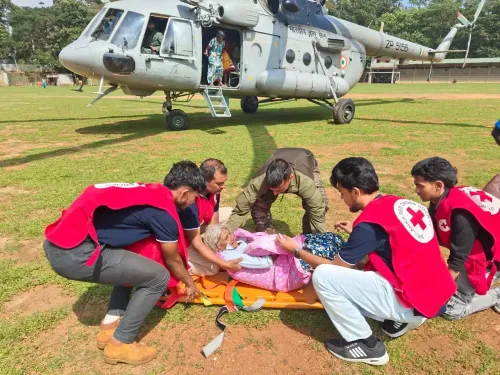
The last Indian Air Force MI-17 helicopter also concluded its mission on December 14 under Operation Sagar Bandhu, aiding relief efforts in close coordination with the Sri Lankan Air Force following Cyclone Ditwah. The helicopter and its crew returned to India on Sunday. Since November 29, 2025, three IAF and two Indian Navy helicopters have participated in the operation, rescuing 272 survivors, airlifting Sri Lankan troops, and delivering over 61 tonnes of relief supplies, standing firmly with Sri Lanka in its time of need.
Since the inception of Operation Sagar Bandhu on November 28, India has provided over 1,134 tonnes of humanitarian assistance to Sri Lanka, which includes dry rations, tents, tarpaulins, hygiene kits, clothing, water purification systems, and 14.5 tonnes of medicines and surgical equipment, in addition to another 60 tonnes of specialized equipment.
Indian Naval ships INS Vikrant, INS Udaygiri, INS Sukanya, LCU-54, LCU-57, LCU-51, and INS Gharial delivered large quantities of relief material to Colombo and Trincomalee, apart from the Indian Coast Guard Ship Shaurya. Two teams of the National Disaster Response Force - comprising 80 personnel with K9 units - conducted immediate search and rescue operations, while an 85-member Indian Army Field Hospital established in Mahiyanganaya provided life-saving medical care to over 7,000 patients.
Medical centers utilizing BHISHM Arogya Maitri cubes were set up in severely affected areas, and 248 tonnes of Bailey Bridge components along with 48 engineers were airlifted to restore critical connectivity. A total of five Indian Air Force and Navy helicopters evacuated survivors, transported troops, and delivered relief supplies, reflecting India's unwavering commitment to Sri Lanka during this challenging time.
Point of View
It's imperative to acknowledge India's compassionate approach in the face of Sri Lanka's challenges. This humanitarian initiative not only reflects the deep-rooted ties between the two nations but also reinforces the importance of international solidarity during crises. India’s ongoing assistance exemplifies a commitment to aiding and uplifting communities in distress, demonstrating a compassionate and responsible global citizenship.
NationPress
19 Sept 2026
Frequently Asked Questions
What is Operation Sagar Bandhu?
Operation Sagar Bandhu is an initiative by India to provide humanitarian aid and relief supplies to Sri Lanka during times of crisis, particularly in response to natural disasters like floods.
How much relief material has India provided to Sri Lanka?
Since the launch of Operation Sagar Bandhu on November 28, India has delivered over 1,134 tonnes of humanitarian assistance, including essential supplies such as food, medicine, and hygiene kits.
Who is coordinating the relief efforts?
The relief efforts are being coordinated by the Indian High Commission in Sri Lanka, along with various local organizations and government officials.
What types of supplies are included in the relief packages?
Relief packages include dry rations, tents, tarpaulins, hygiene kits, clothing, water purification systems, and medical supplies.
How can individuals help with the relief efforts?
Individuals can contribute by donating to organizations involved in the relief efforts, volunteering time, or spreading awareness about the situation in Sri Lanka.