Indus Waters Treaty suspended until cross-border terror stops: India at UN
Synopsis
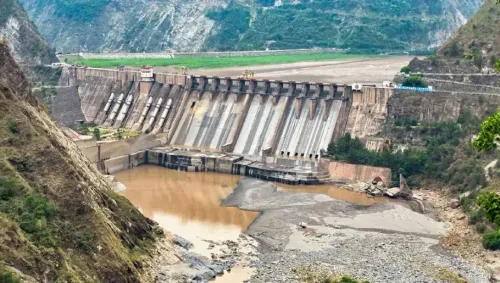
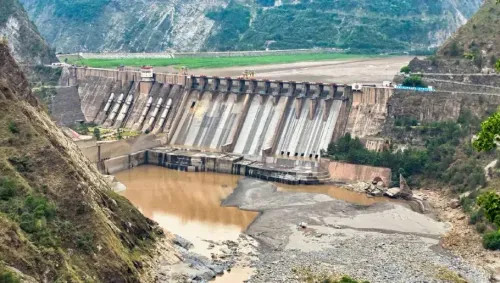
India has drawn an explicit line at the UN Security Council: the 1960 Indus Waters Treaty — one of the world's most resilient water-sharing pacts — stays frozen until Pakistan dismantles its cross-border terror apparatus. With 24 killed in Pahalgam and over 30 Kashmiris reportedly killed in Pakistan-occupied territory since June, New Delhi is using water diplomacy as hard leverage in a way it never has before.
Key Takeaways
Harish told the Security Council on 23 July that the Indus Waters Treaty remains in abeyance due to Pakistan's cross-border terrorism.
The treaty was suspended after Pakistan-based terrorists killed 24 people in the Pahalgam attack in April last year .
PM Narendra Modi stated: 'Water and blood cannot flow together,' explaining the suspension.
India rejected Pakistan's framing of Jammu and Kashmir as disputed, calling it an 'integral and inalienable' part of India.
Over 30 Kashmiris have reportedly been killed by Pakistani security forces in Pakistan-occupied territory since June ; six were killed in Tararkhal on 14 July .
A UN Security Council resolution of 21 April 1948 had demanded Pakistan withdraw troops from Jammu and Kashmir — a directive India says remains unimplemented.
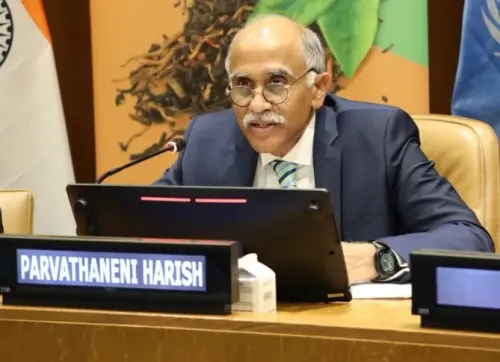
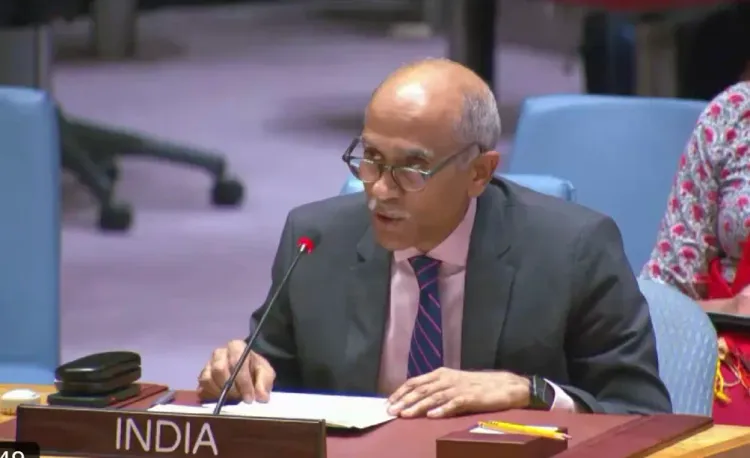
India's Permanent Representative P. Harish on Wednesday delivered a direct warning to Pakistan at the United Nations Security Council, stating that the Indus Waters Treaty will remain in abeyance for as long as Islamabad continues to deploy cross-border terrorism as an instrument of state policy. The statement came during a high-level open debate on 'Natural Resource Governance: The Foundation of Peace, Security and Prosperity'.
India's Position at the Security Council
'Our position on the Indus Water Treaty remains clear and consistent,' Harish told the Council. 'Cooperation on the basis of mutual trust and goodwill cannot be expected when cross-border terrorism is regularly deployed as an instrument of State policy,' he added.
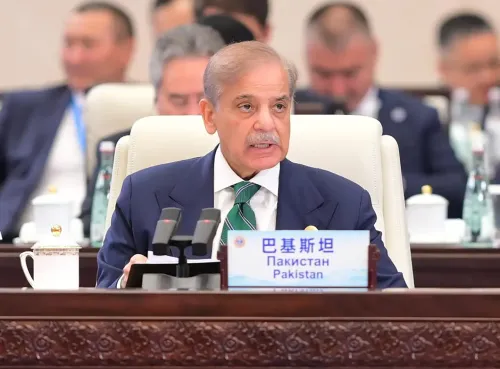
The remarks were a direct response to Pakistan's Permanent Representative Asim Iftikhar Ahmad, who alleged that India was 'unilaterally and illegally placing the Indus Waters Treaty in abeyance' and linked the suspension to the Jammu and Kashmir dispute.
Why the Treaty Was Suspended
India suspended the 1960 Indus Waters Treaty following the Pahalgam attack in April last year, in which Pakistan-based terrorists killed 24 people at the tourist resort in a religiously motivated assault. Prime Minister Narendra Modi encapsulated the government's rationale in a single line: 'Water and blood cannot flow together.' Trade with Pakistan was also suspended in the aftermath of the attack.
The treaty, which had governed the sharing of the waters of the Indus river system between the two countries for over six decades, has now been placed in indefinite abeyance pending a change in Pakistan's conduct.
India's Stand on Jammu and Kashmir
Harish firmly rejected Pakistan's framing of Jammu and Kashmir as a disputed territory. 'The Union Territory of Jammu and Kashmir has always been, is, and will remain an integral and inalienable part of India,' he said. 'This is the constitutional and legal reality that Pakistan deliberately chooses to ignore.'
He further stated that the 'only outstanding issue' regarding Jammu and Kashmir is what he described as Pakistan's 'naked aggression and illegal occupation of India's sovereign territory.' Notably, a UN Security Council resolution adopted on 21 April 1948 had demanded that Pakistan withdraw its troops and nationals from Jammu and Kashmir and cease aiding those fighting there — a directive that India argues remains unimplemented.
Pakistan-Occupied Kashmir: Killings Since June
Harish also drew the Council's attention to reported killings in Pakistan-occupied Kashmir, stating that over 30 people have been killed by Pakistani security forces since June while putting down protests. In the most recent incident cited, six Kashmiris were killed by security forces in Tararkhal on 14 July.
'Instead of pointing fingers at India, Pakistan would serve itself and its people far better by putting its own house in order,' Harish said.
What Comes Next
India has not indicated any timeline for restoring the treaty, tying its revival explicitly to a verifiable end to cross-border terrorism. The exchange at the Security Council underscores that the Indus Waters Treaty — long considered one of the world's most durable water-sharing agreements — has now become a direct instrument of diplomatic pressure in the India-Pakistan standoff.
Point of View
And India's 'abeyance' framing — rather than formal termination — is a deliberate hedge to avoid treaty-breach findings. The harder question is whether water leverage actually changes Pakistani behaviour, or simply hardens positions on both sides while downstream communities bear the cost.
NationPress
23 Jul 2026
Frequently Asked Questions
Why has India suspended the Indus Waters Treaty?
India suspended the 1960 Indus Waters Treaty after Pakistan-based terrorists killed 24 people in the Pahalgam attack in April last year. The government has stated that cooperation requiring mutual trust cannot coexist with cross-border terrorism deployed as state policy.
What did India say at the UN Security Council on 23 July?
India's Permanent Representative P. Harish told the Security Council that the Indus Waters Treaty will remain in abeyance as long as Pakistan continues to use cross-border terrorism as an instrument of state policy. He also rejected Pakistan's characterisation of Jammu and Kashmir as a disputed territory.
What is Pakistan's position on the treaty suspension?
Pakistan's UN envoy Asim Iftikhar Ahmad called India's suspension of the treaty 'unilateral and illegal' and linked it to the Jammu and Kashmir dispute. India rejected both characterisations at the Security Council debate.
When will the Indus Waters Treaty be restored?
India has not set a timeline for restoring the treaty. New Delhi has explicitly tied any resumption to a verifiable end to cross-border terrorism originating from Pakistani soil, with no interim conditions stated.
What is the significance of the 1948 UN Security Council resolution India cited?
The UN Security Council resolution of 21 April 1948 demanded that Pakistan withdraw its troops and nationals from Jammu and Kashmir and stop aiding those fighting there. India cited it to argue that Pakistan — not India — is in violation of international obligations on the Kashmir question.