Pezeshkian says Iran open to talks but won't bow to coercion
Synopsis
Iran's President Pezeshkian is offering talks while refusing to yield, and says an air, sea and land blockade is meant to force Iranians into submission. On the same day, Iran's nuclear chief said the IAEA cannot demand inspections of bombed sites unless it first condemns the attacks on them.
Key Takeaways
Iranian President Masoud Pezeshkian said on 29 November 2026 that Iran is pursuing negotiations but will not bow to aggression or coercion.
He accused Iran's enemies of using an air, sea and land blockade to fuel unrest and force the public into submission.
Pezeshkian called for national unity and said the outcome of recent elections showed adversaries had struggled during the US-Israeli war .
AEOI chief Mohammad Eslami said the IAEA cannot demand inspections of attacked sites while refusing to condemn the attacks.
Eslami said underground nuclear facilities were built for security reasons after nearly three decades of threats, and that all sites remain under IAEA supervision.
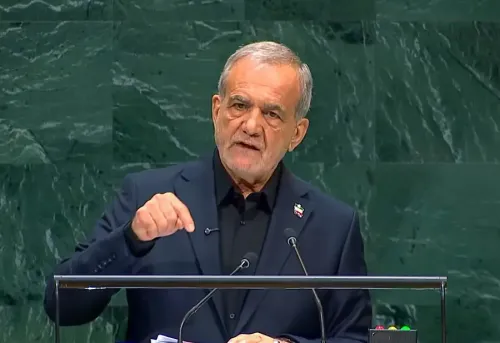
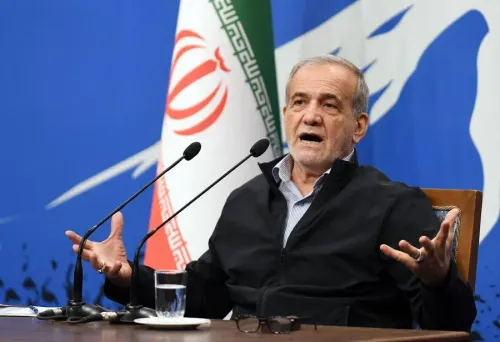
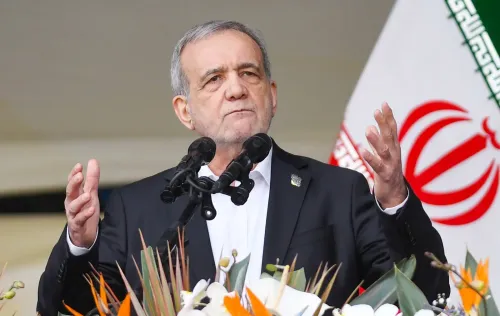
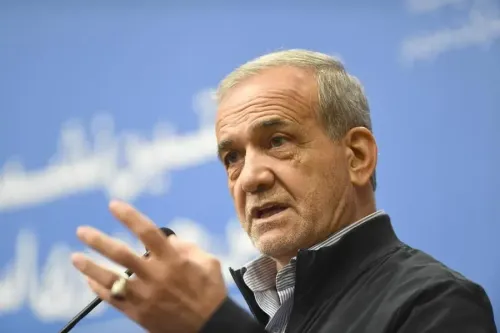
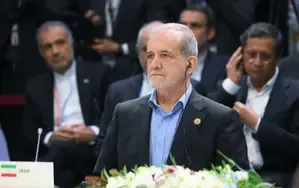
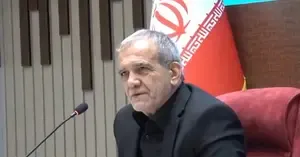
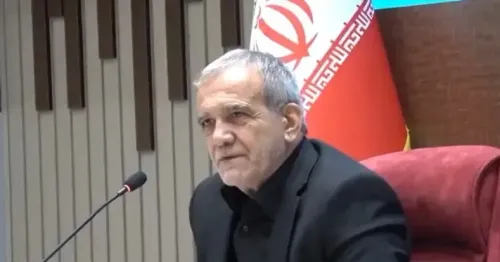
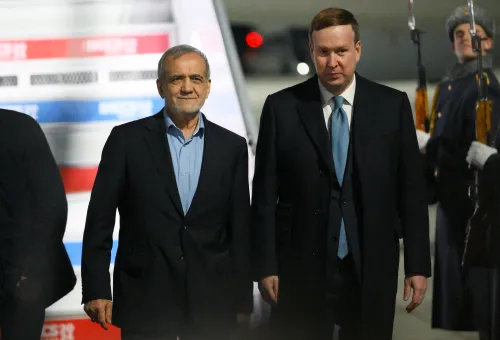
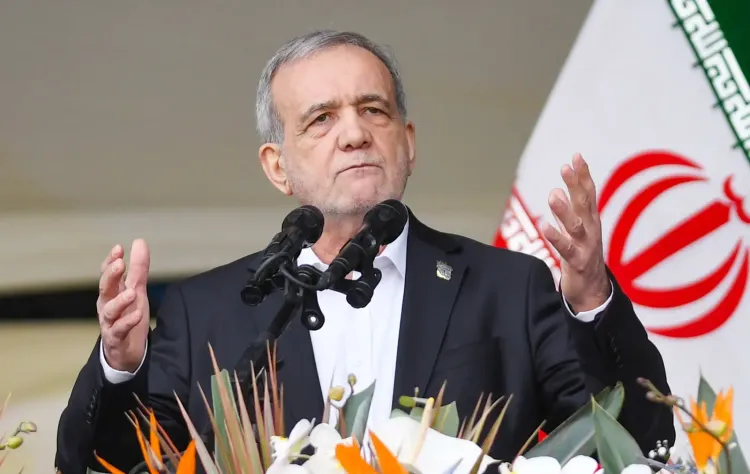
Iranian President Masoud Pezeshkian on Sunday, 29 November 2026, said Tehran is pursuing negotiations through what he called rational engagement, but will not submit to aggression, threats or bullying. Speaking in Tehran, Pezeshkian said the government hopes its diplomatic efforts will produce results. He also accused Iran's adversaries of trying to stir unrest at home through an air, sea and land blockade.
His remarks came on the same day the head of the Atomic Energy Organisation of Iran (AEOI), Mohammad Eslami, accused the International Atomic Energy Agency (IAEA) of double standards over inspections of Iranian nuclear sites that have been hit by military attacks.
Pezeshkian's Message to Bazaar and Trade Unions
Pezeshkian was addressing members of the board of trustees of Tehran's bazaar and trade unions, according to IRNA, Iran's official news agency. He paired an offer of diplomacy with a firm refusal to yield.
“We are trying to pursue negotiations through rational engagement, but we will not bow to aggression or whatever hostile actions our enemies take. We will not accept humiliation and will stand firm against coercion and bullying,” Pezeshkian said.
The choice of audience is notable. Tehran's bazaar merchants and trade unions have long been an influential economic and political constituency in Iran, and their mood often reflects the economic strain on ordinary citizens.
Blockade and Domestic Unity
The Iranian President said the country's enemies are trying to fuel public dissatisfaction, unrest and divisions. He called for collective efforts to stop them from reaching that goal.
“If we join hands together, we can overcome the crisis, and the country's problems can be resolved through unity and cooperation,” he said.
According to the report, Pezeshkian described the enemy's air, sea and land blockade as an attempt to force the Iranian people into submission. He expressed confidence that national solidarity and domestic capabilities would help Iran withstand the pressure.
He also said Iran's adversaries had faced serious difficulties during the US-Israeli war against the country. He added that the outcome of the recent elections had shown this, though the report did not specify which elections he meant.
Nuclear Chief Eslami Hits Out at IAEA
Separately, AEOI head Mohammad Eslami said the IAEA cannot demand inspections of facilities that have been targeted by military attacks while it refuses to condemn those attacks. He made the comments on the sidelines of an exhibition showcasing the achievements of Iran's nuclear industry, IRNA reported.
Eslami dismissed media allegations about Iran's nuclear programme and reaffirmed what he described as the full transparency of its nuclear activities. He said some facilities were built underground because of security concerns, not to hide their activities. He pointed to nearly three decades of threats and attacks against Iran's nuclear industry by what he called the US-Israeli front.
Eslami said all Iranian nuclear facilities, wherever they are located, have been under IAEA supervision. Criticising the agency, he said that as long as it refuses to condemn military attacks, it cannot demand inspections of threatened and targeted facilities under the pretext of ensuring the “continuity of knowledge”.
What This Signals
Together, the two statements describe Tehran's current position. Iran is keeping the door to talks open, insisting on resisting external pressure, and making any wider IAEA access conditional on the agency first condemning attacks on its sites.
How Washington, its allies and the IAEA respond to this conditional stance is likely to shape the next phase of diplomacy around Iran's nuclear programme.
Point of View
And his audience of bazaar merchants and trade unions suggests the economic strain at home is as pressing as pressure from abroad. Eslami's position effectively makes condemnation of attacks a precondition for inspections, which turns IAEA access into a bargaining chip just as Tehran says it wants rational engagement. That tension is the real story. Iran cannot credibly offer transparency while limiting the agency's most important verification tool. For India, which has energy and connectivity stakes in the region, the key question is whether this posture opens a path to negotiation or deepens the standoff.
NationPress
29 Nov 2026
Frequently Asked Questions
What did Iranian President Masoud Pezeshkian say about negotiations?
Pezeshkian said Iran is pursuing negotiations through rational engagement but will not bow to aggression, humiliation, coercion or bullying. He made the remarks on 29 November 2026 while addressing Tehran's bazaar trustees and trade unions.
What blockade did Pezeshkian refer to?
He referred to what he called the enemy's air, sea and land blockade, which he said is aimed at forcing the Iranian people into submission. He said national solidarity and domestic capabilities would help Iran overcome it.
Why did Iran's nuclear chief criticise the IAEA?
AEOI head Mohammad Eslami said the IAEA cannot demand inspections of facilities targeted by military attacks while refusing to condemn those attacks. He accused the agency of double standards.
Why are some Iranian nuclear facilities built underground?
According to Eslami, the facilities were built underground because of security concerns after nearly three decades of threats and attacks, not to conceal their activities. He said all Iranian nuclear sites remain under IAEA supervision.
What does this mean for Iran's diplomacy?
Tehran is signalling that it is open to talks but will not make concessions under pressure. It is also linking further IAEA inspections to the agency condemning attacks on its nuclear sites, which could complicate negotiations.