Iran Issues Stark Warning of Severe Retaliation Against Civilian Target Attacks
Synopsis
In a bold statement, Iran warns that further attacks on its civilian infrastructure will lead to significant and widespread retaliation. Tensions escalate as President Trump threatens to destroy Iranian assets if demands are not met. This situation could have serious implications for global energy and trade.
Key Takeaways
Iran warns of severe retaliation if civilian targets are attacked.
Trump threatens destruction of Iranian infrastructure if demands are not met.
The Bab el-Mandeb Strait is a critical chokepoint for shipping.
Potential for negotiations remains despite rising tensions.
Global energy flow could be disrupted by the conflict.
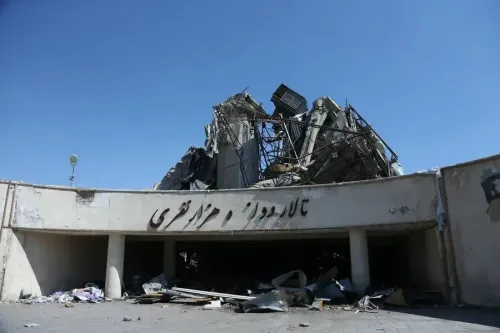
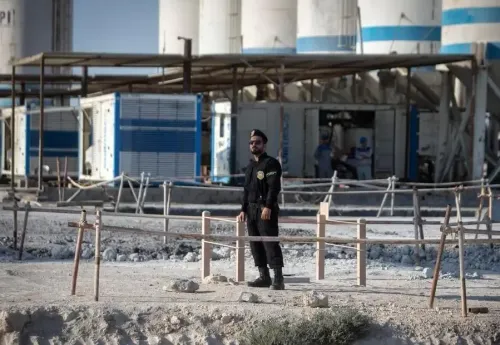
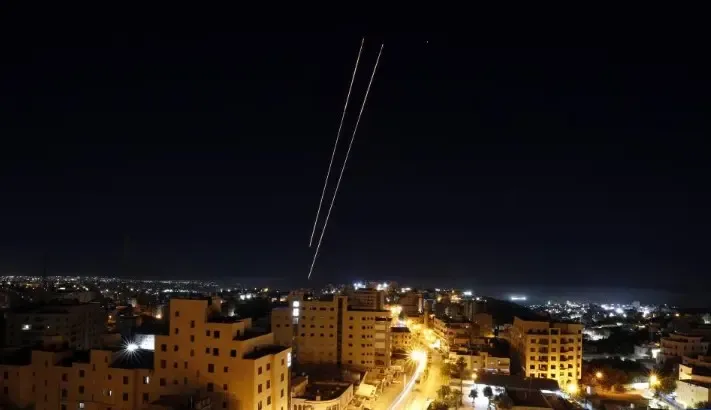
Tehran, April 6 (NationPress) On Monday, Iran issued a stern warning of significantly more severe and widespread retaliation if attacks on its civilian targets continue.
"Should there be further assaults on civilian sites, the next phases of our offensive and retaliatory actions will be considerably more devastating and far-reaching," stated a representative from the Khatam al-Anbiya Central Headquarters.
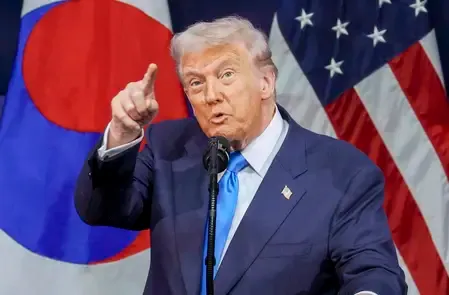
Previously, U.S. President Donald Trump had threatened to obliterate Iran's civilian infrastructure if the Strait of Hormuz remains obstructed.
In a related development, Ali Akbar Velayati, an advisor to Iran's supreme leader, cautioned on Sunday that the resistance front may consider targeting the Bab el-Mandeb Strait, according to reports from Xinhua news agency.
"If the White House contemplates repeating its foolish errors, it will swiftly understand that global energy and trade flow can be disrupted with just one signal," Velayati remarked on social media, suggesting the potential closure of this critical waterway.
The Bab el-Mandeb Strait connects the Red Sea to the Gulf of Aden and serves as a vital chokepoint for maritime traffic between the Atlantic, Indian Ocean, and Mediterranean.
Trump indicated the possibility of extensive strikes on Iranian infrastructure if Tehran does not comply with U.S. demands, revealing a hardline approach during an interview with The Wall Street Journal.
He cautioned that Iran could endure widespread destruction of crucial assets, including power stations and bridges, if it fails to respond within a specified timeframe.
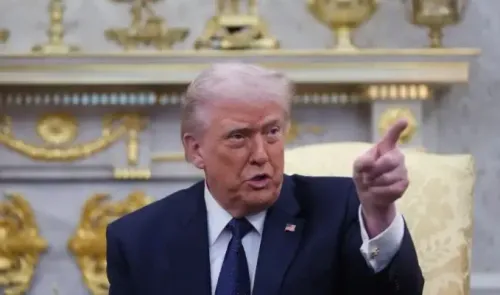
"If they don't take action by Tuesday evening, they will lose all their power stations and bridges," Trump stated in the interview.
He also indicated that Iran could potentially lose "every power station and every other facility they possess across the nation," highlighting the anticipated scale of the strikes.
These remarks arise amidst escalating tensions concerning the Strait of Hormuz, a crucial global oil route, and follow a series of warnings from Trump urging Tehran to reopen the waterway.
Despite his hardline stance, Trump suggested that Iranian leaders might still be amenable to negotiations.
"We have the situation under control, seriously under control," he mentioned in the interview, expressing confidence in the U.S. strategy.
The comments illustrate a dual approach that combines pressure with the potential for dialogue, as Washington aims to extract concessions from Tehran.
Point of View
The potential for conflict looms large. Iran's warnings reflect a serious commitment to protecting its sovereignty, while the U.S. stance underscores its determination to exert pressure. The situation calls for careful monitoring as both nations navigate this precarious landscape.
NationPress
9 Oct 2026
Frequently Asked Questions
What prompted Iran's warning of retaliation?
Iran warned of severe retaliation due to threats from the U.S. regarding attacks on its civilian infrastructure.
What did President Trump say about Iran's infrastructure?
Trump threatened to destroy Iran's civilian infrastructure if the Strait of Hormuz remains closed.
What is the significance of the Bab el-Mandeb Strait?
The Bab el-Mandeb Strait is a key shipping chokepoint connecting the Red Sea to the Gulf of Aden, crucial for global trade.
How might this conflict affect global energy markets?
Escalating tensions could disrupt energy supplies and trade routes, affecting global oil prices and availability.
Is there a possibility for negotiations between the U.S. and Iran?
Despite the hardline stance, Trump suggested that Iranian leaders might still be open to negotiations.