Iran warns neighbours: US support in conflict is a 'hostile act'
Synopsis
Iran has explicitly warned regional neighbours that siding with the US in any renewed military conflict will result in their classification as hostile states — with consequences beyond strikes on bases alone. Meanwhile, Trump openly mused about hitting Iran 'a little bit further', signalling that the conflict is far from over.
Key Takeaways
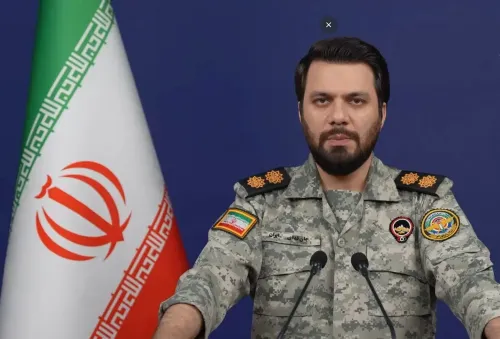
Fada Hossein Maleki , a member of Iran's National Security and Foreign Policy Committee , warned on 23 October 2026 that regional states supporting the US would be classified as hostile to Tehran.
Maleki said Iran's response could go 'beyond strikes on the military bases' of cooperating countries.
Foreign Minister Seyed Abbas Araghchi claimed the US has spent $11 billion on missile defence for Israel over three years.
US President Donald Trump did not rule out further military action, saying 'we may do it a little bit further.' Trump acknowledged the conflict carries a political cost for Republicans ahead of upcoming congressional elections but defended it as necessary to prevent Iran from obtaining a nuclear weapon.
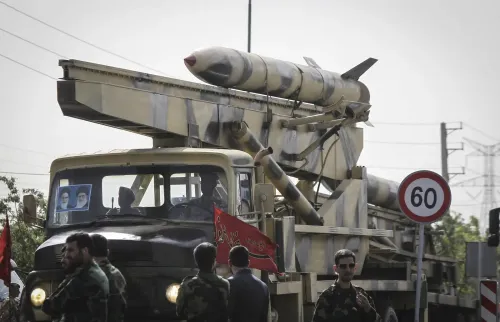
Iran has issued a stark warning to regional countries that any backing for the United States in the event of a renewed armed conflict will be treated as a hostile act toward Tehran, an Iranian parliamentary official said on Friday, 23 October 2026. The warning signals a sharp escalation in Iran's diplomatic posture as the possibility of further US military action remains publicly on the table.
Iran's Warning to Regional States
Fada Hossein Maleki, a member of the Iranian parliament's National Security and Foreign Policy Committee, said Tehran would be capable of identifying which regional states are prepared to support American forces if military action resumes. 'In that case, the decisions taken by Iran may go beyond strikes on the military bases of those countries, and those countries themselves will be classified as hostile states,' Maleki said in an interview.
The statement is notable in its breadth — it does not name specific countries but implicitly targets Gulf states and others in the region that host US military installations. This is not the first time Iran has made such warnings, but the explicit mention of military retaliation beyond base strikes raises the stakes considerably.
Iran's Foreign Minister Targets US-Israel Defence Ties
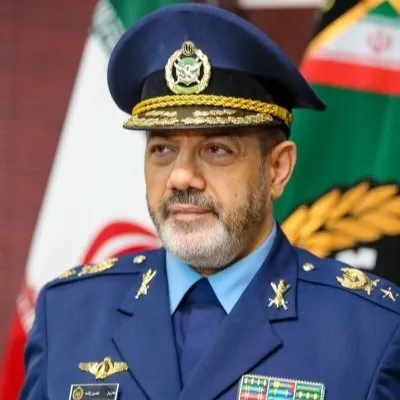
Iranian Foreign Minister Seyed Abbas Araghchi separately alleged on Friday that the United States has spent $11 billion in taxpayer funds on missile defence for Israel over the past three years, according to reports. 'It has fired more interceptors defending Israel than Israel has,' Araghchi reportedly said. 'That is not a symbiotic relationship. It is a parasitic one.'
The remarks reflect Tehran's broader narrative that Washington's military involvement in the region is primarily driven by its commitment to Israeli security rather than US national interest — a framing aimed at fracturing domestic American consensus on the conflict.
Trump Signals Further Military Action May Be Possible
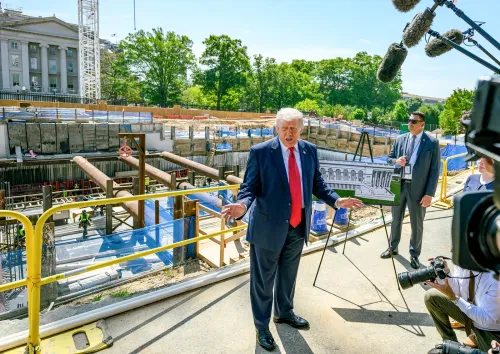
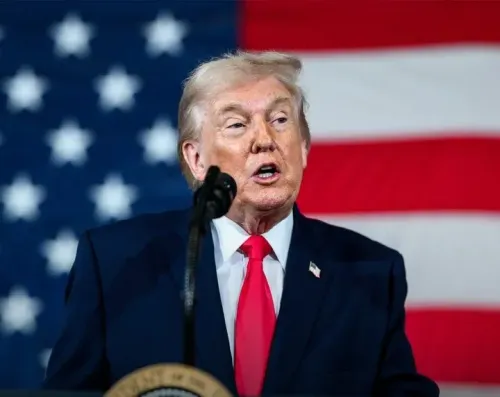
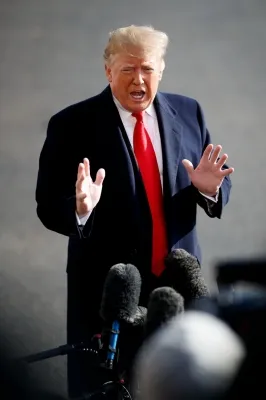
US President Donald Trump, speaking to reporters before departing Washington, suggested that further military action against Iran remained a possibility, while acknowledging that the conflict carries a political cost for Republicans ahead of approaching congressional elections. 'The Iran War, and we've knocked the hell out of them, and we may do it a little bit further,' Trump said.
When asked how the conflict had affected the election campaign, Trump indicated that public opinion was divided. 'Well in one way, they love it because I'm doing what should have been done by other presidents, and another way maybe they don't,' he told reporters. 'It's — there's a price to pay, which I knew immediately when I did it, but we can't let Iran have a nuclear weapon.'
Trump did not specify whether a new operation was being planned, identify any potential targets, or provide a timetable for further action.
Implications for the Region
Iran's warning puts several US-aligned regional governments in a difficult position. Countries hosting American bases — including those across the Gulf — now face an explicit Iranian threat of classification as hostile states if they are seen cooperating with US forces. This comes amid an already volatile regional environment, with the conflict having reshaped security calculations from the Levant to the Persian Gulf.
Analysts note that Iran's messaging is calibrated: firm enough to deter regional cooperation with Washington, yet short of a direct military ultimatum that could trigger an immediate escalation. Whether that balance holds will likely depend on Washington's next move.
Point of View
Yet specific enough to function as a credible deterrent. The real audience may not be Washington but Riyadh, Abu Dhabi, and Doha, whose base-hosting agreements suddenly carry existential diplomatic risk. What is striking is Trump's casual acknowledgement of electoral costs alongside his openness to further strikes — a candour that suggests the administration sees conflict-management, not de-escalation, as its operating mode. For the region, that combination of Iranian threats and American unpredictability is a pressure cooker with no obvious release valve.
NationPress
23 Oct 2026
Frequently Asked Questions
What did Iran warn regional countries about US support?
Iran warned that any regional country providing support to the United States in a renewed armed conflict would be classified as a hostile state toward Tehran. Parliament member Fada Hossein Maleki said Iran's response could go beyond strikes on military bases of such countries.
Who is Fada Hossein Maleki?
Fada Hossein Maleki is a member of the Iranian parliament's National Security and Foreign Policy Committee. He issued the warning about regional states supporting the US in an interview, stating that Iran has the capability to identify which countries are prepared to back American forces.
What did Trump say about further military action against Iran?
US President Donald Trump said 'we may do it a little bit further' when referring to military action against Iran, without specifying targets, timing, or the nature of any new operation. He also acknowledged a political cost for Republicans but defended prior action as necessary to prevent Iran from obtaining a nuclear weapon.
What did Iran's Foreign Minister say about US spending on Israel?
Foreign Minister Seyed Abbas Araghchi claimed the United States has spent $11 billion in taxpayer money on missile defence for Israel over the past three years. He described the relationship as 'parasitic', alleging that the US has fired more interceptors defending Israel than Israel itself has.
How does Iran's warning affect other countries in the region?
The warning places US-aligned regional states — particularly those hosting American military bases — in a difficult position, as they now face an explicit Iranian threat of being classified as hostile if seen cooperating with US forces. No specific countries were named, but the message is widely seen as directed at Gulf states with significant US military presence.