Trump Warns Iran of 'Major Military Punishment' Over Houthi Attacks
Synopsis
President Trump issued a direct military threat against Iran on 23 July 2026, warning that renewed Houthi attacks would bring 'major military punishment' on both Tehran and the Yemen-based group, which Washington designates as an Iranian proxy. The statement signals a potential sharp escalation in US Middle East policy.
Key Takeaways
President Trump warned on 23 July 2026 that the US will hold Iran directly responsible for any renewed Houthi attacks.
Trump described the Houthis explicitly as a 'Surrogate and/or Proxy of Iran,' linking any response to Tehran itself, not just the Yemeni group.
The statement echoes Trump's first-term doctrine, which included the 2020 killing of Iranian Quds Force commander Qasem Soleimani and the 2018 withdrawal from the JCPOA .
Renewed Houthi activity in the Red Sea could disrupt global shipping lanes, with significant impact on Indian trade routes to Europe and the Americas .
Analysts expect the warning to be followed by Pentagon deployments or US Treasury sanctions targeting Iranian entities if hostilities resume.
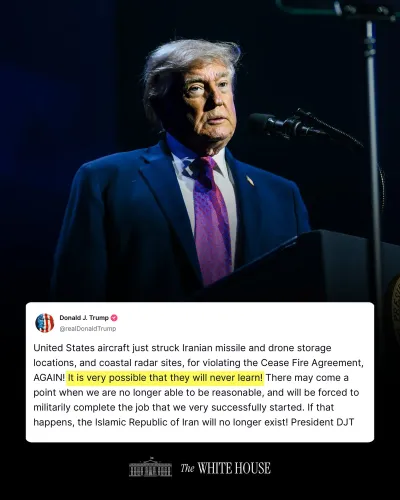
The White House issued a stark military warning against Iran on Thursday, 23 July 2026, with President Donald J. Trump threatening direct and severe consequences if Houthi forces resume attacks, explicitly framing the Yemen-based group as an Iranian surrogate.
What the President Said
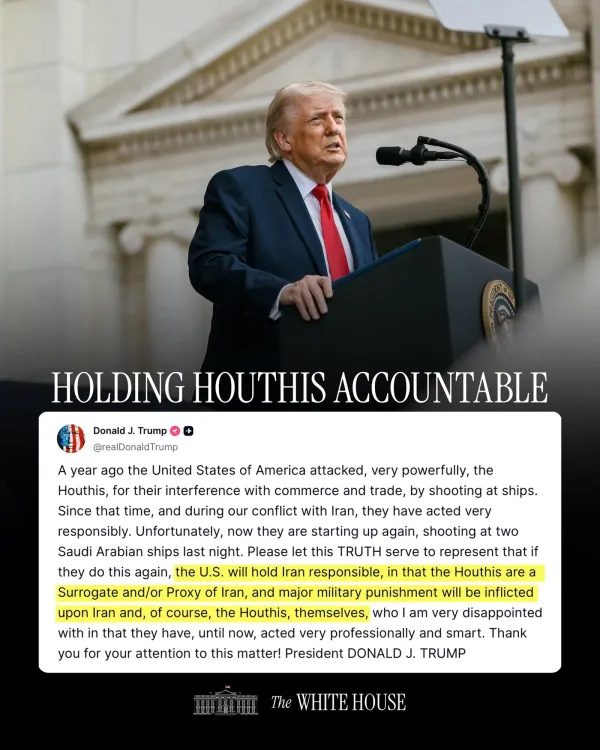
In a statement shared by the official White House account on X, President Trump said: 'They are starting up again... If they do this again, the U.S. will hold Iran responsible, in that the Houthis are a Surrogate and/or Proxy of Iran, and major military punishment will be inflicted upon Iran and, of course, the Houthis, themselves.'
The language is unambiguous in its scope: any renewed Houthi action would trigger a response directed not only at the Yemeni group but at Tehran itself, which Washington accuses of directing and arming the Ansar Allah movement.
Context
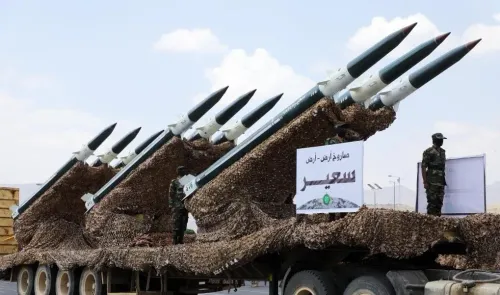
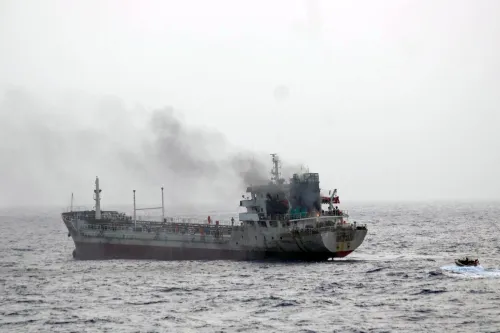
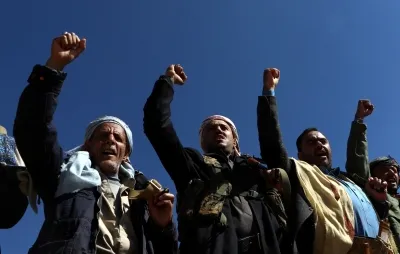
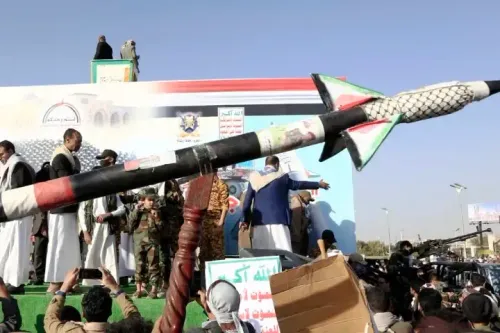
The Houthis, formally known as Ansar Allah, have for years been designated by successive US administrations as an Iranian proxy operating out of Yemen. The group has repeatedly targeted commercial and military vessels in the Red Sea and launched drone and missile strikes against regional neighbours, disrupting one of the world's most critical maritime trade corridors.
Iran has consistently denied direct operational control over the Houthis, though US intelligence assessments have long pointed to the supply of weapons, financing, and tactical guidance from Tehran's Islamic Revolutionary Guard Corps.
Policy Backdrop
President Trump's first term established a doctrine of holding state sponsors accountable for proxy violence. In January 2020, he ordered the targeted killing of Iranian Quds Force commander Qasem Soleimani at Baghdad International Airport, marking one of the most direct US strikes against an Iranian official in decades.
His administration also withdrew from the Joint Comprehensive Plan of Action (JCPOA) in 2018 and launched a 'maximum pressure' sanctions campaign against Iran, severely restricting its oil revenues and foreign currency access. The current warning signals a continuation — and potential escalation — of that posture.
Publicly attributing proxy attacks to Iran and threatening direct retaliation has been a recurring feature of US Middle East policy across multiple administrations, but Trump's framing has historically been among the most explicit in tying military consequences to Tehran's conduct.
Stakeholders and Impact
The warning carries immediate implications for US Central Command forces deployed in the Persian Gulf and Red Sea, which have been engaged in active defensive operations against Houthi drone and missile fire. A renewed Houthi campaign could trigger naval and air deployments at a scale not yet seen in this phase of the conflict.
Global shipping interests, particularly Indian exporters and importers who rely heavily on the Suez Canal route, remain acutely exposed to any escalation in the Red Sea. Previous Houthi attacks forced dozens of vessels to reroute around the Cape of Good Hope, adding weeks and significant cost to transit times. Indian trade with Europe and the Americas was among the most affected.
For Iran, the statement raises the stakes considerably. A direct US military strike on Iranian territory or assets would represent a qualitative shift in the regional conflict, with unpredictable consequences for oil prices, Strait of Hormuz transit, and broader Middle East stability.
What's Next
Observers will watch closely for any follow-on announcements from the Pentagon or the US Treasury regarding military deployments or fresh sanctions designations targeting Iranian entities. Tehran's formal response and any Houthi statement will be the next immediate signals of whether the warning de-escalates or intensifies the standoff.
If the pattern of previous Trump-era pressure campaigns holds, the rhetoric is likely to be accompanied by concrete measures — sanctions, naval positioning, or both — designed to signal resolve. The trajectory of Red Sea shipping security and global energy prices will hinge significantly on how Iran and the Houthis respond in the days ahead.
Point of View
Most dramatically with the Soleimani strike. By publicly naming Iran as the responsible party for Houthi actions, he is attempting to raise the cost calculus for Tehran beyond what limited strikes on Houthi positions alone would achieve. For India, which depends on Red Sea transit for a substantial share of its goods trade with the West, the warning is a reminder that the corridor's stability is hostage to US-Iran brinkmanship. The statement also sets a public red line that, if crossed, would create domestic political pressure on the administration to follow through — making the rhetoric itself a form of strategic commitment.
NationPress
22 Oct 2026
Frequently Asked Questions
Why is Trump threatening Iran for Houthi attacks?
President Trump views the Houthis as an Iranian surrogate and proxy, meaning he holds Tehran directly responsible for the group's military actions. His 23 July 2026 statement warned that any renewed Houthi attacks would bring 'major military punishment' on Iran itself, not just the Yemeni group.
Who are the Houthis and what is their link to Iran?
The Houthis, formally called Ansar Allah, are a Yemen-based armed movement. US officials and intelligence assessments have long accused Iran of supplying them with weapons, financing, and tactical guidance, though Tehran denies direct operational control.
How does this affect India?
India is significantly exposed to Red Sea instability. Previous Houthi attacks on shipping forced vessels to reroute around the Cape of Good Hope, raising freight costs and transit times for Indian exporters and importers trading with Europe and the Americas.
What is Trump's maximum pressure policy on Iran?
The maximum pressure policy, launched in 2018 after the US withdrew from the JCPOA nuclear deal, involves sweeping sanctions targeting Iran's oil revenues and financial system. Trump's current warning suggests a potential military dimension may be added if Houthi attacks resume.
What should we watch for after Trump's warning?
Key signals include any Pentagon announcements of military deployments to the Red Sea or Persian Gulf, fresh US Treasury sanctions on Iranian entities, and formal responses from Tehran and the Houthi leadership indicating whether they intend to resume or halt attacks.