Iran warns West Asia nations: aiding US military means complicity
Synopsis
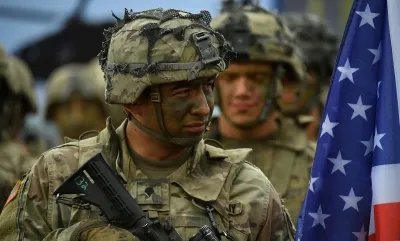
Iran’s top military commander has warned every country in West Asia that helping the US military means becoming a co-belligerent — a pointed signal months after a ceasefire ended open conflict. The warning coincides with the UAE severing all trade ties with Tehran over a disputed ballistic missile incident, fracturing the region’s fragile post-war order in real time.
Key Takeaways
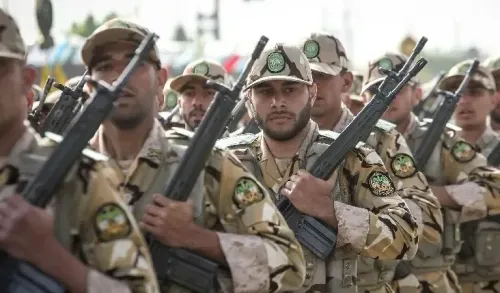
Ali Abdollahi , Chief of Staff of the Iranian Armed Forces , warned on 19 August that assisting the US military constitutes complicity with American forces.
Iran stated that any location in West Asia used as a base for attacks on Iran will be treated as a legitimate military target.
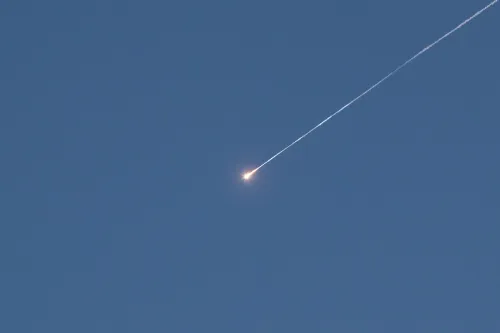
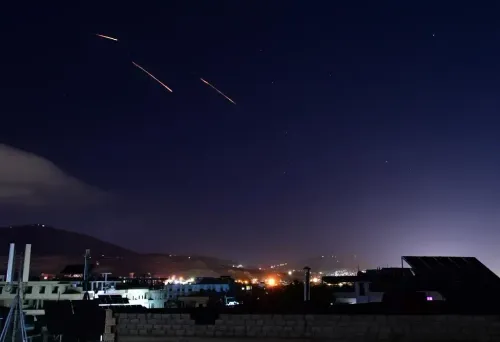
The UAE reported two ballistic missiles launched from Iran on Tuesday ; Iran denied the claim, calling it “baseless.” No casualties or damage were reported from the two missiles; one fell outside UAE territorial waters, one within them.
The UAE Ministry of Foreign Affairs announced the suspension of all trade, commercial, and financial ties with Iran until further notice.
A ceasefire between Iran, Israel, and the US was reached on 8 April ; a peace memorandum was signed on 18 June .
Ali Abdollahi, Chief of Staff of the Iranian Armed Forces, on Wednesday, 19 August issued a stark warning to countries across West Asia, cautioning that any assistance rendered to what he called the “aggressive US Army” would constitute direct complicity with American military forces. The warning came as tensions in the region remained elevated following a ceasefire struck in April 2025 and a subsequent peace memorandum signed in June 2025.
The Warning and Its Context
Abdollahi made the remarks in a post on social media, stating: “We warn that providing any assistance or facility to the aggressive US Army constitutes complicity with US military forces.” He added that Iran is actively monitoring every movement across the region.
Iranian authorities have consistently maintained that they harbour no hostility toward neighbouring states. However, officials have also repeatedly stressed that any location within West Asia from which anti-Iran attacks originate will be treated as a legitimate military target.
Background: The February Attacks and Ceasefire
The warning is rooted in a dramatic escalation that began on 28 February, when Israel and the United States launched joint strikes on Tehran and other Iranian cities, reportedly killing then-Supreme Leader Ali Khamenei, military commanders, and civilians. Iran responded with successive waves of missile and drone attacks targeting Israeli territory and US bases and assets across the region.
A ceasefire was reached on 8 April. On 18 June, Iran and the United States signed a memorandum of understanding to end hostilities across all fronts, including Lebanon. Despite the formal truce, Wednesday’s warning signals that Tehran continues to regard the regional security environment as fragile and potentially adversarial.
Iran Denies UAE Missile Accusation
Separately, Iranian Foreign Ministry spokesman Esmaeil Baghaei on Wednesday rejected the United Arab Emirates’ claim that Iran had launched ballistic missiles toward the country. The UAE said on Tuesday that it had detected two ballistic missiles fired from Iranian territory — the first falling outside UAE territorial waters and the second within them, according to the country’s Ministry of Defence. No casualties or damage were reported in connection with either missile.
Baghaei called the accusation “baseless” and said the UAE’s move “runs counter to the principle of good neighbourliness and undermines ongoing efforts to build trust among regional countries.” He urged all states in the region to exercise restraint, citing what he described as a history of “false-flag operations” by the United States and Israel.
UAE Suspends Trade and Financial Ties With Iran
The diplomatic fallout moved swiftly. In a statement posted on social media platform X early Wednesday, the UAE Ministry of Foreign Affairs announced the suspension of all trade, commercial exchanges, and financial transactions with Iran until further notice. Afra Al Hameli, Director of the ministry’s strategic communications department, said the decision was taken amid escalating tensions that, in the UAE’s assessment, undermine regional and international peace and security.
The UAE reiterated its commitment to dialogue and regional integration as the preferred path toward stability, even as it took the significant step of severing economic ties with its neighbour across the Persian Gulf.
What Comes Next
The convergence of Iran’s military warning, the disputed missile incident, and the UAE’s economic suspension marks a notable deterioration in the post-ceasefire environment. Analysts will watch whether other Gulf states align with the UAE’s position, and whether the June memorandum of understanding between Iran and the US can withstand the mounting pressure. Any fresh incident involving regional infrastructure or maritime traffic could test the durability of the existing truce.
Point of View
Not random escalation — it is designed to deter Gulf states from quietly hosting US assets while the ceasefire holds on paper. The UAE’s decision to suspend trade is an unusually firm response from a country that has historically managed its Iran relationship with studied ambiguity. What mainstream coverage underplays is the economic stakes: the UAE is one of Iran’s most significant informal trade conduits, so even a temporary suspension carries real financial pressure on Tehran. The June memorandum of understanding was always thin on enforcement mechanisms; the current episode exposes exactly how thin.
NationPress
5 Oct 2026
Frequently Asked Questions
What did Iran’s military chief warn on 19 August 2025?
Ali Abdollahi , Chief of Staff of the Iranian Armed Forces, warned all countries in West Asia that providing any assistance or facility to the US military constitutes complicity with American forces. He added that Iran is monitoring every movement in the region and that any location used as a launchpad for attacks on Iran will be considered a legitimate target.
What is the UAE’s dispute with Iran over ballistic missiles?
The UAE said on Tuesday it detected two ballistic missiles launched from Iran — one falling outside its territorial waters and one within them. Iran’s Foreign Ministry spokesman Esmaeil Baghaei denied the claim, calling it baseless and warning that such accusations undermine regional trust-building efforts.
Why has the UAE suspended trade with Iran?
The UAE Ministry of Foreign Affairs announced the suspension of all trade, commercial exchanges, and financial transactions with Iran until further notice, citing escalating tensions that it said undermine regional and international peace and security. The decision followed the disputed missile incident reported on Tuesday.
What is the background to Iran’s current tensions with the US and Israel?
On 28 February , Israel and the United States launched joint strikes on Tehran and other Iranian cities, reportedly killing then-Supreme Leader Ali Khamenei and military commanders. Iran responded with missile and drone attacks on Israeli and US targets. A ceasefire was reached on 8 April , followed by a memorandum of understanding signed on 18 June to end hostilities on all fronts, including Lebanon.
Who is affected by the UAE’s suspension of trade with Iran?
The suspension affects all trade, commercial, and financial exchanges between the UAE and Iran . The UAE serves as one of Iran’s significant informal trade corridors, meaning Iranian businesses and individuals relying on UAE-based transactions face immediate disruption until the suspension is lifted.