White House Warns Iran of Retaliation for Killing US Soldiers
Synopsis
The White House issued a sweeping warning to Iran on 20 July 2026, declaring that every killing of an American soldier by Iran will be met with disproportionate retaliation. The statement signals a firm US deterrence posture with wide implications for West Asian stability and India's energy and diplomatic interests.
Key Takeaways
The White House posted a direct warning to Iran on 20 July 2026 threatening retaliation 'many times over' for any killing of a US soldier.
The statement uses 'every time,' framing it as a standing deterrence policy rather than a response to a specific incident.
US-Iran tensions have escalated periodically since the collapse of the JCPOA and the killing of General Qasem Soleimani in 2020 .
Iran-backed militias in Iraq , Syria , and Yemen have repeatedly targeted US military personnel in the region.
The warning carries significant implications for India , which relies on Gulf oil imports and maintains large diaspora communities across the region.
Regional allies including Israel and Gulf states will closely monitor whether the declaration is followed by concrete military or diplomatic action.
The White House, the official communications account of the Executive Office of the President of the United States, issued a stark warning to Iran on Monday, 20 July 2026, stating that any killing of an American soldier by Iran would be met with severe retaliation 'many times over.'
Context
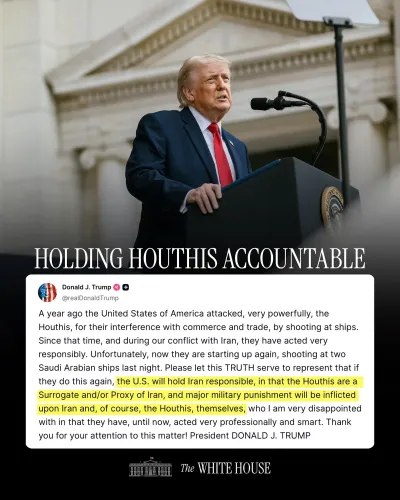
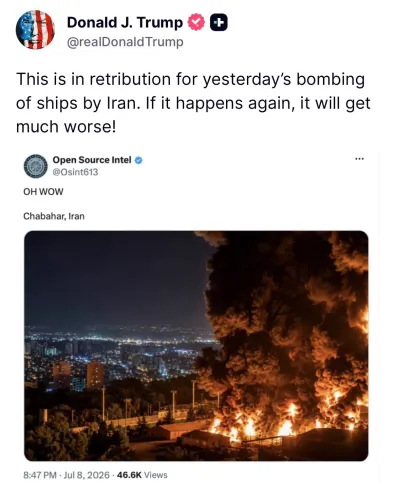
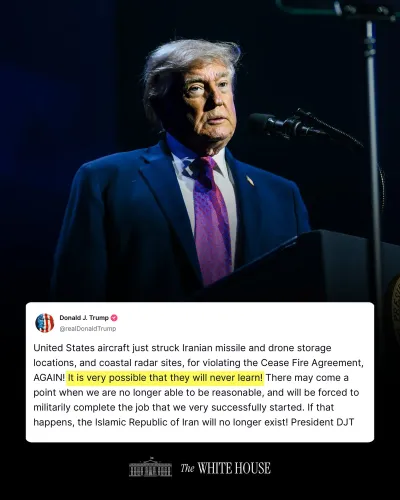
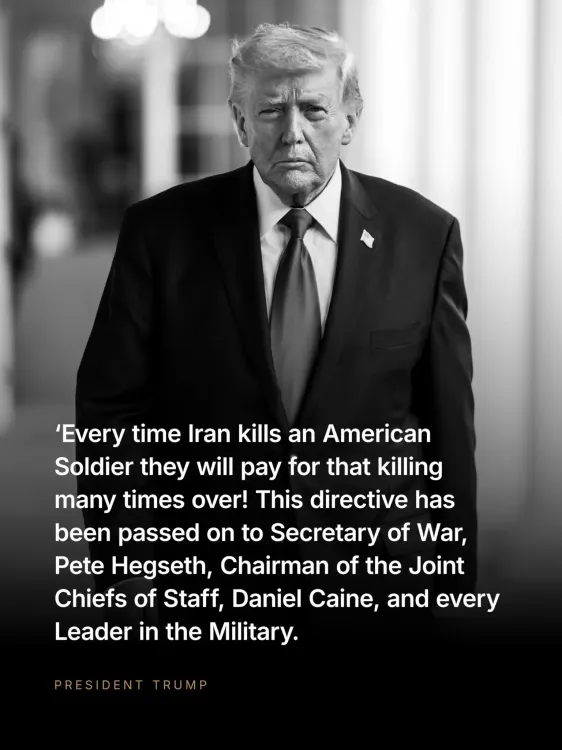
The post, shared from the White House's official X account, reads: 'Every time Iran kills an American Soldier they will pay for that killing many times over.' The message is unambiguous in its tone — a direct, open-ended threat of disproportionate military or strategic response against Iran for any action resulting in American military casualties.
The statement does not reference a specific incident, soldier, or date, but its framing as a standing policy declaration — using 'every time' — signals an intent to establish a deterrence posture rather than respond to a singular event.
Policy Backdrop
US-Iran tensions have remained a defining fault line in West Asian geopolitics for decades, intensifying sharply after the US withdrawal from the Joint Comprehensive Plan of Action (JCPOA) nuclear deal and the killing of Iranian General Qasem Soleimani in a US drone strike in January 2020. Iran-backed militia groups operating across Iraq, Syria, and Yemen have repeatedly targeted US military personnel and installations in the region.
The US maintains thousands of troops across the broader Middle East, including bases in Iraq and Syria ostensibly linked to counter-terrorism operations. Attacks on these positions by Iran-aligned groups have periodically triggered US retaliatory strikes, making the cycle of escalation a recurring feature of the bilateral standoff.
Stakeholders and Impact
The White House statement will be closely watched by US allies in the region, including Israel, Saudi Arabia, and the Gulf Cooperation Council (GCC) states, as well as adversaries and non-aligned nations assessing the current administration's red lines. For India, which maintains significant strategic, energy, and diaspora ties with both the United States and Iran, any escalation in the region carries direct implications for oil supply chains, shipping lanes through the Strait of Hormuz, and the safety of the large Indian community working across the Gulf.
Markets sensitive to oil-price volatility — including India's energy import-dependent economy — typically react sharply to signals of potential US-Iran military confrontation, given Iran's capacity to disrupt Gulf oil flows.
What's Next
The statement is likely to prompt diplomatic responses from Tehran, which has historically countered such warnings with its own declarations of asymmetric capability. Regional observers will monitor whether the White House follows this declaration with any specific policy action, troop repositioning, or direct diplomatic communication. The statement also raises the stakes ahead of any ongoing or prospective nuclear negotiations, as it signals that the current US administration is prepared to use military language as a primary instrument of deterrence against Iran.
Point of View
Conditional threat — 'every time' — marks a deliberate shift toward public deterrence signalling rather than quiet diplomatic pressure, a tactic that raises the political cost of any Iran-backed attack on US forces. For an administration seeking to project strength in West Asia, such declarations serve a domestic audience as much as a foreign one. However, the absence of a specific trigger event makes it difficult to assess whether this represents a genuine policy shift or rhetorical escalation. For India, caught between its strategic partnership with Washington and its energy and economic ties with Tehran, the statement is a reminder of the precarious balancing act New Delhi must sustain as US-Iran tensions remain structurally unresolved.
NationPress
20 Oct 2026
Frequently Asked Questions
What did the White House say about Iran and US soldiers?
The White House posted on X on 20 July 2026 that 'every time Iran kills an American Soldier they will pay for that killing many times over,' signalling a policy of disproportionate retaliation.
Why are US-Iran tensions so high?
US-Iran tensions have remained elevated since the US withdrew from the JCPOA nuclear deal and the killing of Iranian General Qasem Soleimani in a US drone strike in January 2020. Iran-backed militias have repeatedly attacked US troops in Iraq and Syria since then.
How does a US-Iran conflict affect India?
India is heavily dependent on Gulf oil imports, and any US-Iran military escalation risks disrupting supply through the Strait of Hormuz, raising crude prices. India also has a large diaspora in Gulf countries that could be affected by regional instability.
Is the White House warning about a specific attack on US soldiers?
The White House statement does not reference a specific incident or soldier. Its use of 'every time' frames it as a standing deterrence declaration rather than a response to a particular event.
What is Iran's likely response to the White House threat?
Iran has historically responded to such US warnings with counter-declarations of asymmetric military capability. Diplomatic observers will watch for formal statements from Tehran and any changes in Iranian or US troop postures in the region.