US House panel rejects Iran war cost amendment 30-27 in NDAA debate
Synopsis
A 30-27 committee vote buried a Democratic push to force the Pentagon to disclose the full financial cost of the Trump administration's war in Iran — but the margin tells the real story. With Republicans defending 'Operation Epic Fury' and Democrats invoking rising fuel prices and economic anxiety, Capitol Hill's Iran fault line is deepening just as the 2027 NDAA heads to the floor.
Key Takeaways
The US House Armed Services Committee rejected a Democratic amendment on 5 June requiring the Pentagon to detail the financial cost of the Iran war, by a vote of 30-27 .
Representative Seth Moulton introduced the amendment, citing rising fuel prices and the public's right to transparency.
Committee Chairman Mike D.
Rogers defended Operation Epic Fury , saying it 'delivered a devastating blow' to Iran's conventional military capabilities.
Ranking Democrat Adam Smith criticised the administration's lack of clarity on broader strategic objectives in Iran.
The vote came during markup of the fiscal 2027 National Defense Authorization Act (NDAA) .
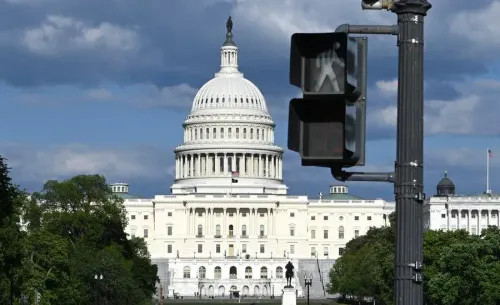
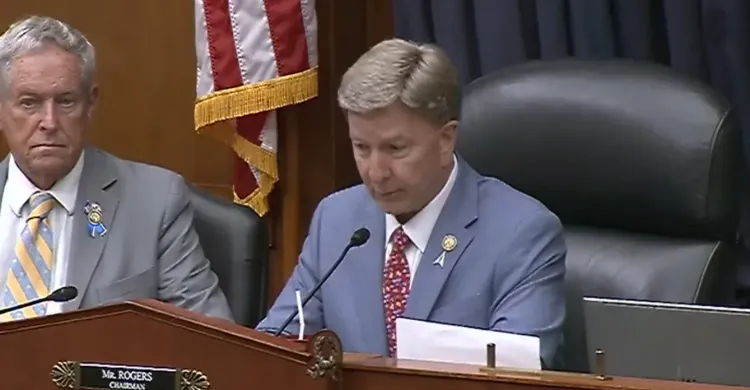
The US House Armed Services Committee on Thursday, 5 June became the arena for a sharp partisan clash over the Trump administration's war in Iran, as lawmakers sparred over the conflict's financial toll, strategic clarity, and impact on America's global standing while marking up the fiscal 2027 National Defense Authorization Act (NDAA). The session exposed deep divisions between Democrats demanding accountability and Republicans defending the military campaign.
Democrats Push for Financial Transparency
Representative Seth Moulton led the charge for greater oversight, arguing that Congress and the American public still lack a full accounting of the war's financial and strategic costs. He sought to compel the Pentagon to submit a detailed financial assessment of military operations against Iran, citing rising fuel prices and economic uncertainty facing ordinary Americans.
'It is a duty of this committee to seek this information,' said Representative Jason Crow, who backed Moulton's proposal. Representative Adam Smith, the committee's ranking Democrat, reinforced the concern: 'We need really to know what the cost is and where it's going.' Smith also criticised what he described as a lack of clarity about the administration's broader objectives in Iran.
Republicans Defend Operation Epic Fury
Committee Chairman Mike D. Rogers pushed back firmly, rejecting characterisations of the conflict as a 'war of choice.' He said military operations had significantly degraded Iran's conventional capabilities. 'Operation Epic Fury delivered a devastating blow to those conventional military capabilities,' Rogers said, arguing that President Donald Trump's approach had brought the United States close to a deal that could permanently eliminate the threat posed by Iran's nuclear ambitions.
Congressman Joe Wilson also defended the administration, describing Iran as a longstanding threat and contending that US military action was necessary to protect American interests and regional allies.
Amendment Defeated, Divisions Remain
The committee ultimately rejected Moulton's amendment by a vote of 30-27, a narrow margin that underscored just how contested the issue remains within Congress. The close result signals that oversight pressure on the administration's Iran policy is unlikely to dissipate as the full NDAA moves toward a floor vote.
Broader Stakes for US Defence Policy
The debate reflects a wider tension in Washington over how the Iran conflict fits into America's global defence priorities. Critics argue that without a transparent cost framework, Congress cannot make informed decisions on military readiness, allied commitments, or domestic economic trade-offs. This is not the first time a US military engagement has generated friction over congressional oversight — echoes of post-Iraq and post-Afghanistan accountability battles are already being drawn by analysts watching the proceedings.
As the 2027 NDAA advances, the Iran war's cost and end-state will likely remain a central fault line in the defence debate on Capitol Hill.
Point of View
Which historically has proven more durable than direct opposition. The Pentagon's refusal to provide a cost framework echoes the early years of the Iraq and Afghanistan engagements — a pattern that eventually produced congressional revolts. If fuel prices stay elevated and the economic cost of the conflict becomes tangible to voters, the 30-27 margin could flip before the NDAA reaches the Senate.
NationPress
21 Oct 2026
Frequently Asked Questions
What happened at the US House Armed Services Committee hearing on the Iran war?
The committee rejected a Democratic amendment requiring the Pentagon to disclose the full financial cost of US military operations in Iran, by a narrow vote of 30-27. The hearing was part of the markup of the fiscal 2027 National Defense Authorization Act.
What was Seth Moulton's amendment about?
Representative Seth Moulton's amendment sought to compel the Pentagon to submit a detailed financial assessment of military operations against Iran. He argued that Congress could not exercise proper oversight without knowing what the war was costing taxpayers.
What is Operation Epic Fury?
Operation Epic Fury is the name used by Republican committee members to describe US military operations against Iran under the Trump administration. Committee Chairman Mike D. Rogers said it 'delivered a devastating blow' to Iran's conventional military capabilities.
Why did Republicans oppose the transparency amendment?
Republicans, led by Chairman Mike D. Rogers, argued that military operations had been effective and that the administration was close to a deal that could permanently neutralise Iran's nuclear threat. They rejected the framing of the conflict as a 'war of choice.'
What happens next with the NDAA and Iran war oversight?
The 2027 NDAA now moves toward a full House floor vote, where the Iran war's cost and strategic objectives are expected to remain a central point of contention. The close 30-27 committee vote signals continued pressure on the administration for greater transparency.