Iran's Strike on US Radar Reveals Weaknesses in China's Defense System

Synopsis
A recent report reveals that Iran's successful attack on a US radar system in Jordan may expose critical vulnerabilities in China's defense capabilities in the South China Sea. The lack of a cohesive defense network poses challenges for China amid rising tensions.
Key Takeaways
Iran's attack on the US radar exposes vulnerabilities in defense systems.
China's fragmented ISR capabilities in the SCS may be similarly threatened.
A well-integrated defense architecture is crucial for effective information dominance.
Geographic and operational limitations hinder China's ISR effectiveness.
Opportunities exist for Southeast Asian nations and allies to counter China's military strategies.
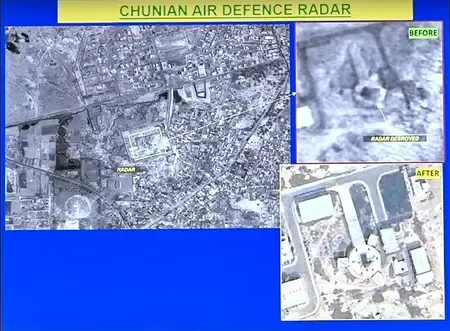
Hong Kong, April 4 (NationPress) Iran's recent attack on the US AN/TPY-2 radar in Jordan, which was vulnerable due to its lack of a cohesively integrated system-of-systems architecture, raises alarms about the potential fragility of China's intelligence, surveillance, and reconnaissance (ISR) capabilities in the South China Sea (SCS), according to a report released on Saturday.
According to the Hong Kong-based English publication, 'Asia Times', the destruction of the AN/TPY-2 highlights the significant hurdles China faces in establishing information dominance in the SCS, despite its extensive investments in ISR technologies.
Despite China's efforts to create multi-layered and overlapping ISR coverage in the SCS, the absence of a well-integrated system-of-systems architecture remains a critical gap. This vulnerability opens up chances for Southeast Asian nations, the United States, and its allies to confront China's ‘informationized warfare’ in any potential SCS conflict.
The report emphasizes that the geographic complexities of the SCS, along with the fundamental physics governing radar operations, limit China's ISR effectiveness.
Iran's success in targeting such a sophisticated radar system can be attributed to the lack of connection with broader defensive networks capable of countering threats. The report states that radar systems, which emit electromagnetic radiation, are naturally susceptible to countermeasures and require a protective network of airborne, naval, or ground systems for defense.
Located at Muwaffaq Salti Air Base in Jordan, the AN/TPY-2 was positioned over 800 km from Iran, within its radar range, yet was unable to prevent the assault. While specifics about the Iranian operation are still unclear, the integration of airborne or ground-based radar systems could have enhanced its defensive capabilities.
To achieve information supremacy, a well-integrated system-of-systems architecture is crucial, as no single system can operate at peak performance in isolation, leaving exploitable vulnerabilities that only seamless integration can resolve.
The report underscored that China has yet to synchronize its airborne, naval, and ground-based radar systems into a real-time operational network.
While it has developed extensive ISR coverage, the lack of a cohesive network means these systems operate independently, providing limited assistance to one another.
This vulnerability presents an opportunity for Southeast Asian claimant states, the United States, and its allies to counter China's “informationized warfare” and electronic warfare capabilities, thereby hindering Beijing's ability to achieve information dominance in any SCS conflict.
Point of View
It is crucial to recognize the implications of Iran's successful strike on the US radar system, which exposes significant vulnerabilities not only for the US but also raises questions about the capabilities of China's defense architecture in the ongoing geopolitical tensions in the South China Sea. This situation warrants close observation as it could influence future military strategies and alliances in the region.
NationPress
5 Oct 2026
Frequently Asked Questions
What was the significance of Iran's attack on the US radar?
Iran's attack on the US AN/TPY-2 radar highlights vulnerabilities in the US defense systems and raises concerns about the effectiveness of China's ISR capabilities in the South China Sea.
How does the report suggest China's defense architecture is lacking?
The report indicates that China has not established a cohesive system-of-systems architecture, leaving its ISR capabilities fragmented and vulnerable to challenges from Southeast Asian nations and the US.
What are the implications for regional security?
The vulnerabilities exposed by Iran's attack may encourage Southeast Asian nations and the US to exploit these gaps, potentially altering the balance of power in the South China Sea.
What role does geography play in China's ISR capabilities?
The geographic complexities of the South China Sea impose natural limitations on China's ISR effectiveness, impacting its ability to monitor and respond to threats.
What measures could improve radar system defenses?
Integrating radar systems with broader defense networks, including airborne and ground-based systems, could significantly enhance their defensive capabilities against incoming threats.