Iran's Strike on US Radar Reveals Weaknesses in China's Defense Network: Analysis

Synopsis
A recent report uncovers how Iran's successful attack on a US radar system in Jordan highlights significant vulnerabilities in China's defense capabilities in the South China Sea. This could have profound implications for regional security dynamics.
Key Takeaways
Iran's attack on the US radar underscores vulnerabilities.
China's ISR capabilities in the SCS are fragmented.
A well-networked system is essential for effective defense.
Opportunities exist for rivals to challenge China's dominance.
Geographical and physical limitations impact radar operations.
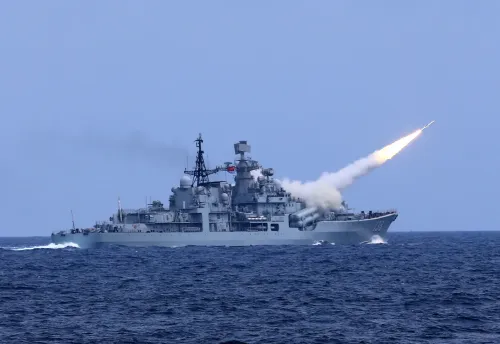
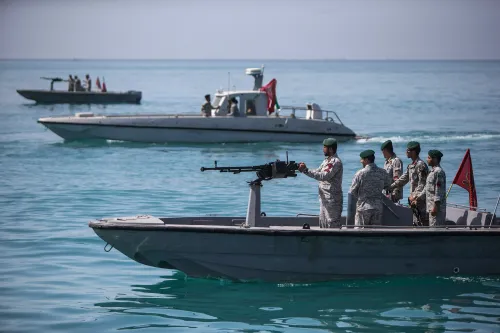
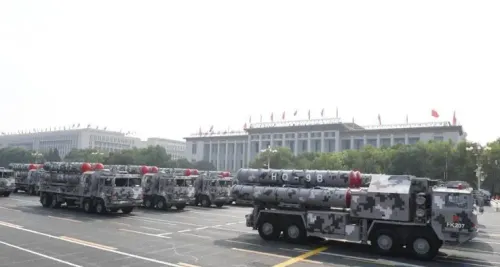
Hong Kong, April 4 (NationPress) Following Iran's recent strike that successfully targeted and destroyed the US AN/TPY-2 radar located in Jordan—an asset deployed without the safeguards of a "well-networked system-of-systems architecture"—there are concerns regarding the vulnerability of China's fragmented intelligence, surveillance, and reconnaissance (ISR) capabilities in the South China Sea (SCS), according to a report released on Saturday.
“The annihilation of the AN/TPY-2 radar highlights the challenges China encounters in establishing information dominance in the South China Sea (SCS), even with substantial investments made in ISR capabilities,” the report from the Hong Kong-based English publication 'Asia Times' elaborated.
“While China has developed a multi-layered, overlapping ISR framework in the SCS, it still lacks a comprehensive well-networked system-of-systems architecture. This shortfall presents a strategic opening for Southeast Asian claimant states, the United States, and its allies to contest China's ‘informationized warfare’ during any potential conflict in the SCS,” it continued.
The report pointed out that the geographical characteristics of the SCS, combined with the basic principles of radar functionality, restrict China's ISR capabilities.
A crucial factor in Iran's successful assault on such an advanced radar system is attributed to its isolation from broader defensive networks that could have shielded it from threats.
The report emphasized that radar systems, which emit electromagnetic radiation, are inherently susceptible to counterattacks and necessitate a defensive umbrella comprising airborne, naval, or ground-based systems to protect against incoming threats.
“The AN/TPY-2 was stationed at Muwaffaq Salti Air Base in Jordan, positioned just over 800 km from Iran—well within its operational radar range—but failed to intercept the attack. While specifics of the Iranian strike remain undisclosed, integrating with airborne or ground-based radar systems could have considerably enhanced its defensive capacity,” it stated.
“Thus, establishing a well-networked system-of-systems architecture is essential for attaining information superiority; no single system can operate at its full potential in isolation, thereby leaving exploitable gaps that only seamless integration can effectively address,” the report asserted.
The findings underscored that China has yet to synchronize its airborne, naval, and ground-based radar systems into a real-time operational network.
“Despite having developed a multi-layered, overlapping ISR framework, the lack of a cohesive system-of-systems architecture means these systems operate independently, offering limited mutual support,” it noted.
This vulnerability could provide an opportunity for Southeast Asian claimant states, the United States, and its allies to counter China's “informationized warfare” and its electronic warfare capabilities, thereby hindering Beijing's aspirations for information dominance in any SCS conflict.
Point of View
Emphasizing the importance of integrated defense systems.
NationPress
6 Oct 2026
Frequently Asked Questions
What was the incident involving Iran and the US radar system?
Iran successfully attacked and destroyed the US AN/TPY-2 radar system located in Jordan.
How does this incident relate to China’s defense capabilities?
The attack exposes gaps in China’s fragmented ISR capabilities in the South China Sea, suggesting vulnerabilities in its defense architecture.
What is a well-networked system-of-systems architecture?
It refers to an integrated network of various defense systems that work together to enhance operational effectiveness.
What are the implications of the findings in the report?
The vulnerabilities identified offer opportunities for Southeast Asian states and the US to challenge China's information dominance.
Why is information dominance important?
Achieving information dominance allows a state to control the information landscape during conflicts, giving it a strategic advantage.