Jordan shoots down 8 Iranian missiles in overnight air defence operation
Synopsis
Jordan intercepted eight Iranian missiles overnight on 16 July with no casualties — even as US Central Command launched a second wave of strikes against Iran targeting Strait of Hormuz military assets. Iran's IRGC claimed retaliatory hits on US bases in Jordan and Bahrain, including shelters housing F-15, F-16, and F-35 jets. The US-Iran confrontation is now visibly pulling regional states into the crossfire.
Key Takeaways
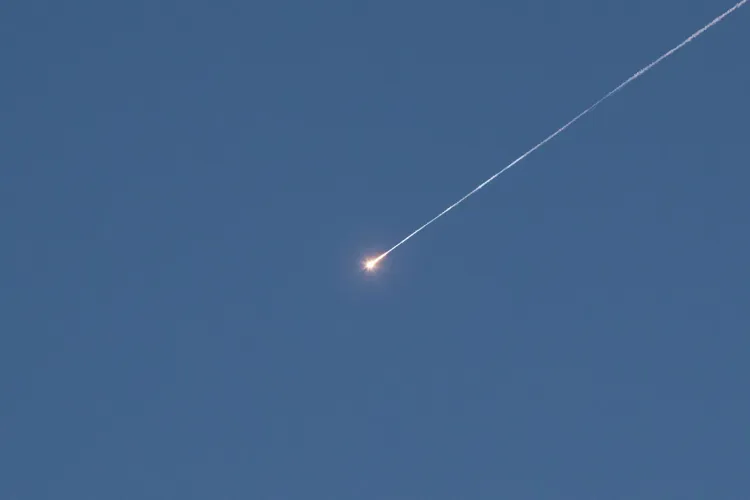
Jordan's air defence systems shot down eight Iranian missiles in the early hours of Thursday, 16 July .
No casualties or material damage were reported; Royal Engineering Corps teams secured debris sites.
US Central Command launched a second wave of strikes against Iran on Thursday, targeting military assets threatening the Strait of Hormuz .
A first wave of US strikes on Wednesday hit coastal defence systems and cruise missile sites on Greater Tunb Island over a 90-minute operation.
Iran's IRGC claimed retaliatory strikes on US military facilities in Bahrain and Jordan , including the al-Azraq base, reportedly destroying shelters housing F-15, F-16, and F-35 jets and MQ-9 drones — claims not independently verified.
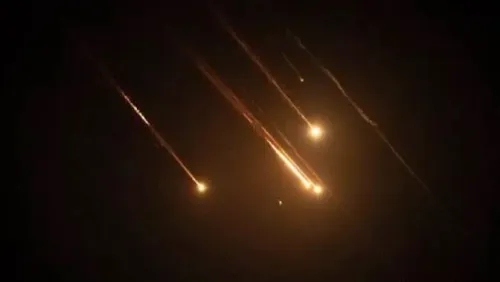
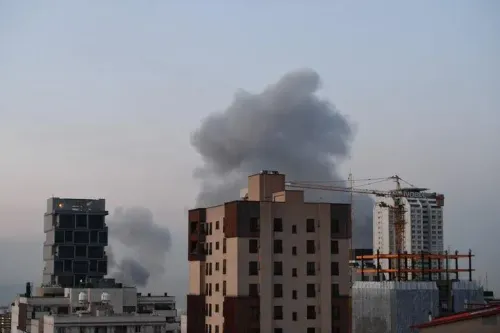
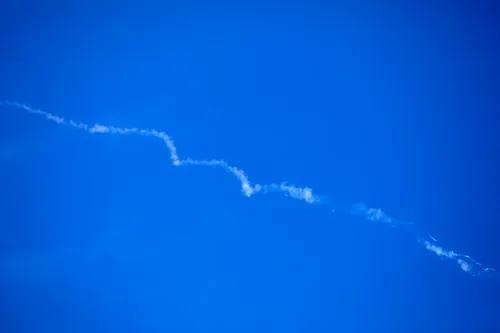
Jordan's air defence systems intercepted and destroyed eight Iranian missiles targeting the kingdom in the early hours of Thursday, 16 July, according to an official statement from the Jordan Armed Forces. No casualties or material damage were reported in the interception, which the military said was carried out in full compliance with approved defensive and operational procedures.
How the Interception Unfolded
The Jordan Armed Forces confirmed that the missiles were shot down to safeguard the kingdom's sovereignty, protect its airspace, and ensure the safety of its citizens. Following the interception, Royal Engineering Corps teams were deployed to multiple locations where missile debris had fallen, securing the sites in accordance with approved technical and security protocols.
The military added that Jordanian forces remain at the highest level of readiness and will continue monitoring the kingdom's airspace, responding to any threat in accordance with established rules of engagement.
US Strikes on Iran: Second Wave Launched
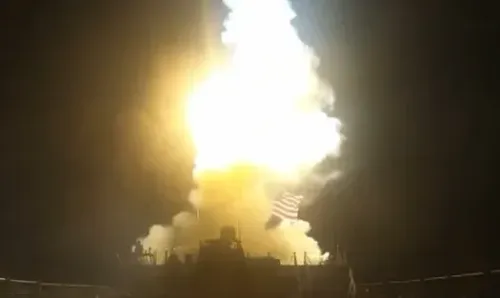
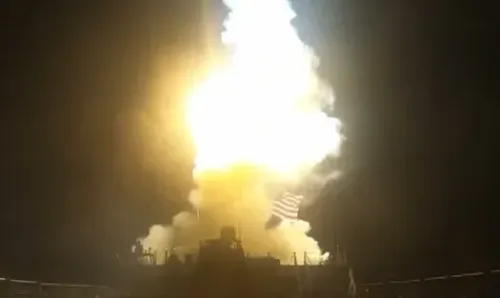
The overnight interception coincided with a fresh escalation between the United States and Iran. US Central Command announced early Thursday that American forces had launched a second wave of strikes against Iran. 'At 3 pm ET (1900 GMT), US forces launched operations for a second wave of strikes today against Iran,' the command stated in a post on X. 'The strikes are targeting Iranian military capabilities used to threaten vessels freely transiting through the Strait of Hormuz.'
Earlier on Wednesday local time, US Central Command had initiated a first wave of strikes beginning at 6 am Eastern Time (1000 GMT). During the 90-minute operation, precision munitions were deployed against coastal defence systems and cruise missile storage and launch sites on Greater Tunb Island.
Iran's IRGC Claims Retaliatory Strikes
Iran's Islamic Revolutionary Guards Corps (IRGC) said on Wednesday that it conducted retaliatory strikes against US military facilities in Bahrain and Jordan, targeting military infrastructure, aircraft shelters, key command centres, and strategic drones. In a separate statement, the IRGC's Aerospace Force said it targeted the US military base at al-Azraq in Jordan in direct response to what it described as renewed US aggression against Iran.
According to Iran's official Islamic Republic News Agency (IRNA), the attack reportedly destroyed shelters housing US F-15, F-16, and F-35 fighter jets, as well as several MQ-9 strategic drones stationed at the base. These claims have not been independently verified.
Regional Implications and What Comes Next
Jordan's decision to actively intercept Iranian missiles marks a significant moment for the kingdom, which has historically sought to maintain a careful balance in regional tensions. This is the latest instance of Iranian missile activity drawing in neighbouring states, raising fresh concerns about the widening arc of the US-Iran confrontation.
With the Strait of Hormuz — a critical global oil transit route — cited as a flashpoint, energy markets and regional security analysts will be watching closely for any further escalation. The situation remains fluid, and further developments are expected as both sides continue to exchange statements and, reportedly, strikes.
Point of View
Maintaining ties with both Washington and its Arab neighbours while avoiding direct entanglement; intercepting Iranian missiles aimed at its territory forces a visible alignment. The IRGC's claimed strikes on al-Azraq — home to US combat aircraft — if verified, would represent one of the most direct attacks on American military hardware in the region in years. Mainstream coverage is focusing on the exchange of strikes; the harder question is whether any off-ramp exists before the Strait of Hormuz becomes a full-scale flashpoint with consequences for global energy supply.
NationPress
15 Oct 2026
Frequently Asked Questions
What happened with Jordan and Iranian missiles on 16 July?
Jordan's air defence systems intercepted and destroyed eight Iranian missiles targeting the kingdom in the early hours of Thursday, 16 July, according to the Jordan Armed Forces. No casualties or material damage were reported, and Royal Engineering Corps teams secured the missile debris sites.
Why did Iran fire missiles at Jordan?
Iran's Islamic Revolutionary Guards Corps stated it conducted retaliatory strikes against US military facilities in Jordan and Bahrain in response to what it described as renewed US aggression against Iran. The IRGC specifically cited the US military base at al-Azraq in Jordan as a target, though the extent of damage has not been independently verified.
What did the US military strike in Iran?
US Central Command launched two waves of strikes against Iran. The first wave on Wednesday targeted coastal defence systems and cruise missile storage and launch sites on Greater Tunb Island over a 90-minute operation. A second wave was launched Thursday at 3 pm ET, targeting Iranian military capabilities used to threaten vessels transiting the Strait of Hormuz.
Was anyone killed or injured in the missile attack on Jordan?
No casualties or material damage were reported following the interception of the eight Iranian missiles over Jordan. The Jordan Armed Forces confirmed that Royal Engineering Corps teams secured all debris sites in accordance with approved technical and security procedures.
What is the significance of the Strait of Hormuz in this conflict?
The Strait of Hormuz is one of the world's most critical oil transit chokepoints, through which a significant share of global crude exports pass. US Central Command cited Iranian military capabilities threatening free navigation through the strait as the target of its strikes, making it a central flashpoint in the escalating US-Iran confrontation.