Iran fires ballistic missile at Kuwait, intercepted; CENTCOM confirms ceasefire breach
Synopsis
Iran fired a ballistic missile at Kuwait and launched five attack drones near the Strait of Hormuz within hours — all intercepted. CENTCOM called it an 'egregious ceasefire violation.' With US-Iran nuclear talks live and Trump publicly blocking Iranian control of the Strait, this dual-front escalation is the most direct Iranian military provocation against a Gulf state in recent memory.
Key Takeaways
Iran launched a ballistic missile at Kuwait at 10:17 pm ET on 27 May 2025 , intercepted by Kuwaiti forces.
CENTCOM labelled the strike an 'egregious ceasefire violation' by the Iranian regime.
Five Iranian one-way attack drones also threatened the Strait of Hormuz ; all were intercepted by US forces , which also blocked a sixth drone launch from Bandar Abbas .
The UAE condemned the strikes as 'terrorist attacks,' affirming full solidarity with Kuwait .
US President Donald Trump ruled out Iranian control of the Strait of Hormuz , calling it 'international waters.'
Iran launched a ballistic missile toward Kuwait at 10:17 pm ET on 27 May 2025, which was successfully intercepted by Kuwaiti forces, the United States Central Command (CENTCOM) confirmed on Thursday. CENTCOM described the strike as an 'egregious ceasefire violation' by the Iranian regime.
The Attack and Interception
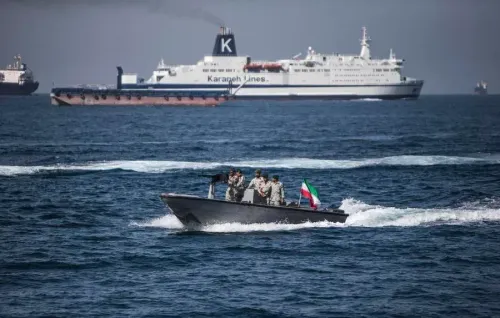
In a post on X, CENTCOM stated that the ballistic missile launch came just hours after Iranian forces deployed five one-way attack drones that posed a direct threat in and near the Strait of Hormuz. All five drones were intercepted by US forces, which also moved to prevent a sixth drone from launching at an Iranian ground control site in Bandar Abbas.
The Kuwait Army's General Staff had earlier confirmed on Wednesday that the country's air defences were actively engaging hostile missile and drone attacks, adding that any explosions heard by civilians were the result of interception operations.
UAE Condemns the Strike
The United Arab Emirates (UAE) on Thursday issued a sharp condemnation, characterising the strikes as 'terrorist drone and missile attacks by Iran.' The UAE Ministry of Foreign Affairs (MoFA), in a formal statement, said the attacks constitute 'a flagrant violation of the sovereignty of Kuwait and a threat to its security and stability.' The Ministry further expressed the UAE's full solidarity with Kuwait and its backing for all measures to protect Kuwaiti security.
Trump Rules Out Iranian Control of Strait of Hormuz
The escalation comes as US President Donald Trump on Wednesday firmly ruled out any arrangement that would give Iran control over the Strait of Hormuz, even as his administration continues nuclear negotiations with Tehran. 'The Strait is going to be open to everybody,' Trump said at a White House Cabinet meeting. 'Nobody's going to control it. It's international waters.'
Trump confirmed that Iran had sought control over the critical oil shipping lane during ongoing talks, but warned the United States would not permit it. 'They would like to control it. Nobody's going to control it,' he said.
Why This Matters
The Strait of Hormuz is one of the world's most strategically vital chokepoints, through which roughly 20% of global oil supplies transit daily. A direct ballistic missile attack on Kuwait — a US partner state — represents a marked escalation in regional tensions and raises serious questions about the durability of any ceasefire framework currently in place. Notably, this is the second major Iranian aerial provocation within a single day, following the drone threat near the Strait. The dual-front nature of the attack — targeting both a Gulf neighbour and a critical international waterway — signals a significant shift in Iran's operational posture.
What Comes Next
With US-Iran nuclear talks ongoing and Gulf states on heightened alert, the coming days will test whether diplomatic channels can contain a rapidly deteriorating security situation. Regional partners and Western allies are expected to demand formal accountability for the ceasefire violation from the Iranian regime.
Point of View
And it occurred while Iran was simultaneously probing the Strait of Hormuz with drones. The 'ceasefire violation' framing from CENTCOM is notable: it implies a prior agreement that Tehran is now openly disregarding, which undermines the credibility of the ongoing nuclear negotiations. Trump's public declaration that the Strait will remain open to all is as much a message to the Gulf's oil-dependent partners as it is to Iran. The real question is whether this escalation forces Washington to choose between the negotiating table and a military response — a choice it has so far managed to defer.
NationPress
11 Oct 2026
Frequently Asked Questions
What happened with Iran's missile attack on Kuwait?
Iran launched a ballistic missile toward Kuwait at 10:17 pm ET on 27 May 2025, which was successfully intercepted by Kuwaiti air defence forces. The United States Central Command (CENTCOM) confirmed the attack and called it an 'egregious ceasefire violation' by Iran.
What did CENTCOM say about the drone attacks near the Strait of Hormuz?
CENTCOM reported that Iranian forces launched five one-way attack drones that posed a threat in and near the Strait of Hormuz on the same day as the Kuwait missile strike. All five were intercepted by US forces, which also prevented a sixth drone from launching at a ground control site in Bandar Abbas, Iran.
How did the UAE respond to Iran's attacks?
The UAE strongly condemned the strikes, calling them 'terrorist drone and missile attacks by Iran.' The UAE Ministry of Foreign Affairs said the attacks constitute a flagrant violation of Kuwait's sovereignty and expressed full solidarity with Kuwait.
What did President Trump say about the Strait of Hormuz?
US President Donald Trump, speaking at a White House Cabinet meeting on Wednesday, ruled out any arrangement that would give Iran control over the Strait of Hormuz. 'The Strait is going to be open to everybody. Nobody's going to control it. It's international waters,' he said, confirming Iran had raised the issue during ongoing nuclear negotiations.
Why is the Strait of Hormuz strategically important?
The Strait of Hormuz is one of the world's most critical oil shipping chokepoints, through which approximately 20% of global oil supplies pass daily. Control or disruption of the Strait would have severe consequences for global energy markets and regional security.