Iran strikes US targets across Middle East in sweeping military escalation
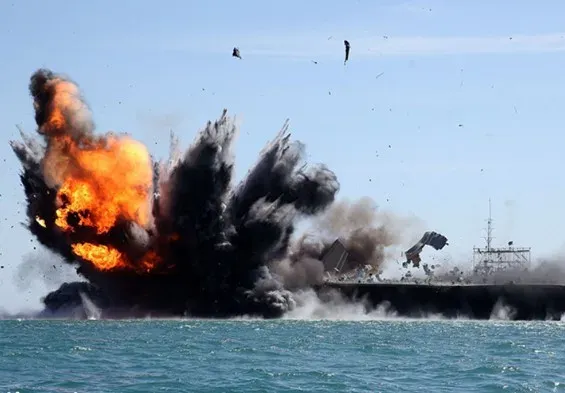
Synopsis
Iran launched strikes on US military installations across Kuwait, Bahrain, Qatar, and Oman on Sunday — including a ballistic missile aimed at Al Udeid, the US's most critical Gulf airbase — as CENTCOM confirmed a third round of American strikes on Iran following an IRGC attack on a civilian cargo ship in the Strait of Hormuz. The confrontation is now the most intense US-Iran military exchange in years.
Key Takeaways
Iran struck US military targets in Kuwait , Bahrain , Qatar , and Oman on Sunday, 12 July .
The IRGC claimed a 'heavy attack' on US naval logistics facilities at Oman's Port of Duqm .
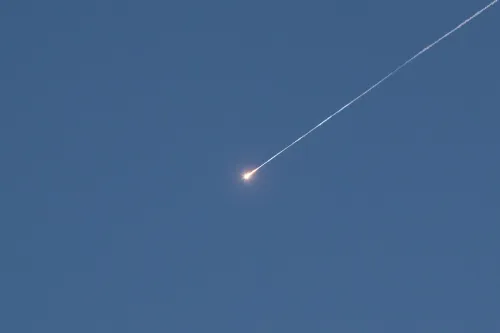
A ballistic missile was reportedly launched at the US Al Udeid airbase in Qatar .
US Central Command confirmed a third round of strikes on Iran, ordered by President Donald Trump , beginning at 7:15 p.m.
The trigger was an IRGC attack on the M/V GFS Galaxy , a Cyprus-flagged container ship in the Strait of Hormuz ; a civilian crew member remains missing.
The UAE activated air defences; Bahrain urged residents to seek shelter.
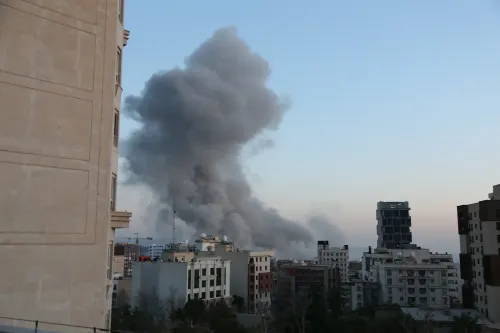
Iran launched a sweeping series of strikes against US military targets across the Middle East on Sunday, 12 July, hitting facilities in Kuwait, Bahrain, Qatar, and Oman, according to reports. The escalation marks a significant widening of hostilities between Tehran and Washington, with missile alert sirens sounding across the region as air defence systems were activated.
Key Developments
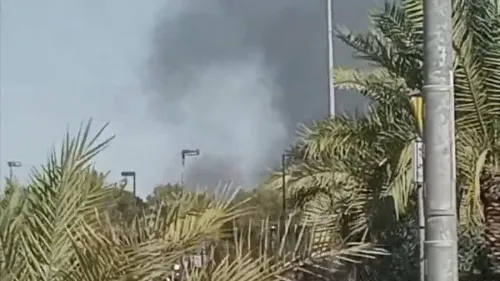
Missile alert sirens were triggered in Bahrain, while the United Arab Emirates and Qatar also came under attack, according to reports. The UAE Defence Ministry confirmed Sunday that its air defence systems were actively engaging incoming missile and drone threats. Bahrain's Interior Ministry urged residents to remain calm and move to the nearest safe location.
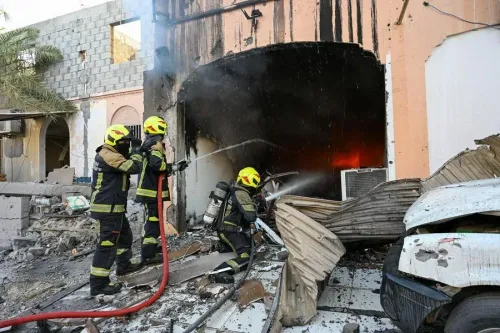
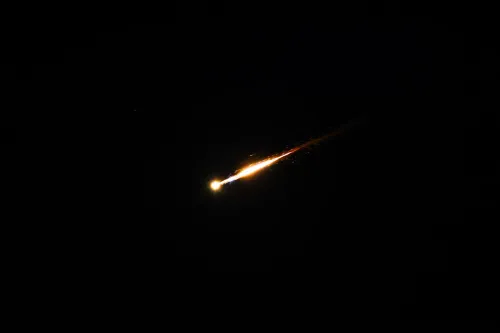
According to reports, Iranian strikes hit a Patriot air defence system, an ammunition depot, and a US military radar facility in Kuwait. Iran also reportedly targeted a US military communications facility and a radar facility in Bahrain, and launched a ballistic missile strike against the US airbase of Al Udeid in Qatar.
Iran's IRGC Claims Strike on Oman Port
Iran's Islamic Revolutionary Guard Corps (IRGC) said Sunday that its aerospace forces carried out what it described as a 'heavy attack' on US aircraft carrier support and refuelling facilities at Oman's Port of Duqm. The IRGC stated the operation targeted logistical support centres for US naval vessels, though independent verification of the claims was not immediately available.
What Triggered the Latest Round
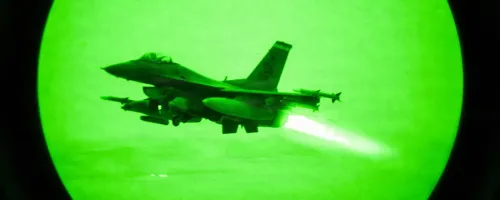
US Central Command (CENTCOM) said its forces began a third round of strikes against Iran at 7:15 p.m. Eastern Time (4:45 am IST Sunday), ordered by President Donald Trump in his capacity as commander in chief. The operation was launched in response to an IRGC attack on the M/V GFS Galaxy, a Cyprus-flagged container ship transiting the Strait of Hormuz.
CENTCOM stated: 'US Central Command forces began launching the third round of strikes this week against Iran after Islamic Revolutionary Guard Corps forces blatantly attacked M/V GFS Galaxy, a Cyprus-flagged container ship transiting the Strait of Hormuz.' The command did not immediately identify the specific locations struck or the weapons deployed. A civilian crew member remained missing following the attack on the vessel, according to CENTCOM.
Impact on Regional Stability
The strikes represent a sharp escalation in an already volatile theatre. The targeting of Al Udeid airbase — one of the US military's most strategically significant installations in the region — and logistics facilities at Port of Duqm signals that Iran is willing to strike deep into Gulf state territory. This is the third such US-Iran exchange this week, raising fears of a broader regional conflict drawing in Gulf nations that host American forces.
The disruption to shipping in the Strait of Hormuz — through which roughly 20% of global oil supply transits — adds an economic dimension to the crisis. Energy markets and international shipping insurers are closely monitoring the situation as the confrontation shows no signs of de-escalation.
Point of View
Which is precisely what makes miscalculation dangerous. Gulf states hosting US forces now find themselves involuntary frontlines, with their own populations under missile alert. The Strait of Hormuz attack on a civilian vessel is a reminder that Tehran views commercial shipping as a pressure lever — one with global oil price consequences that extend well beyond the immediate military theatre.
NationPress
11 Oct 2026
Frequently Asked Questions
What did Iran strike in the Middle East on 12 July?
Iran reportedly struck a range of US military targets including a Patriot air defence system and ammunition depot in Kuwait, a communications and radar facility in Bahrain, the Al Udeid airbase in Qatar via ballistic missile, and US naval logistics facilities at Oman's Port of Duqm. The UAE also reported engaging incoming missile and drone threats.
Why did the US launch a third round of strikes on Iran?
US Central Command said the third round of strikes, ordered by President Donald Trump, was launched in direct response to an IRGC attack on the M/V GFS Galaxy, a Cyprus-flagged container ship transiting the Strait of Hormuz. A civilian crew member remained missing after the vessel was attacked.
What is the Al Udeid airbase and why does it matter?
Al Udeid is the largest US military airbase in the Middle East, located in Qatar, and serves as the forward headquarters of US Central Command. A ballistic missile strike against it, if confirmed, would represent one of the most direct Iranian attacks on American military infrastructure in the region.
How are Gulf countries responding to the escalation?
The UAE Defence Ministry confirmed its air defence systems were actively engaging missile and drone threats. Bahrain's Interior Ministry urged residents to remain calm and move to safe locations. Both countries host significant US military assets and are now directly exposed to the crossfire.
What is the significance of the Strait of Hormuz in this conflict?
The Strait of Hormuz is one of the world's most critical oil shipping chokepoints, through which roughly 20% of global oil supply passes. Iran's attack on a civilian container ship there signals its willingness to weaponise the waterway, with potential consequences for global energy markets and shipping insurance costs.