Trump says Iran 'virtually destroyed', war to end 'very quickly'
Synopsis
Trump declared at a White House event that Iran has been 'virtually destroyed' and the US war there will be won 'very quickly' — while simultaneously announcing the end of America's 23-year military presence in Iraq. His unverified claim of record oil flows through the Strait of Hormuz, which he says the US now controls, adds a significant energy-market dimension to an already volatile geopolitical moment.
Key Takeaways
US President Donald Trump declared on 1 October 2026 that the United States would win its war with Iran 'very quickly'.
Trump claimed US casualties stood at 18 over six months, against 4,500 Iranian losses — figures not independently verified.
He asserted the US holds 'virtually total control' of the Strait of Hormuz , and claimed record oil shipments through it in the preceding three days .
Trump said Iran's navy, air force, and anti-aircraft capabilities had been eliminated, and its economy was suffering over 300 per cent inflation .
At the same event, Trump announced the withdrawal of the last American forces from Iraq , ending a 23-year US military engagement there.
Trump did not specify what a 'won' outcome would look like or what next steps were planned.
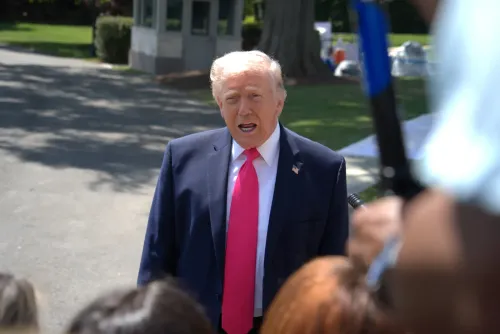
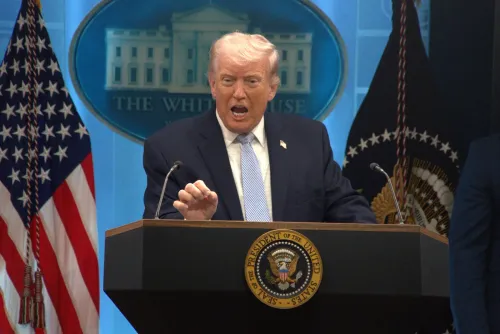
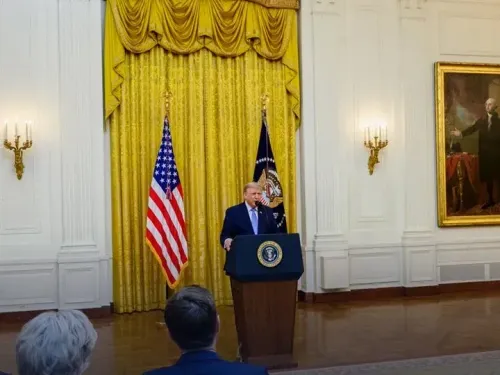
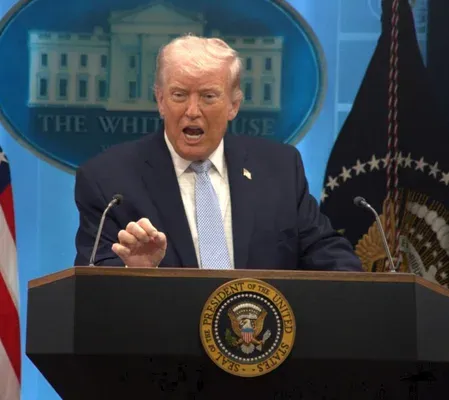
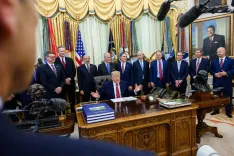
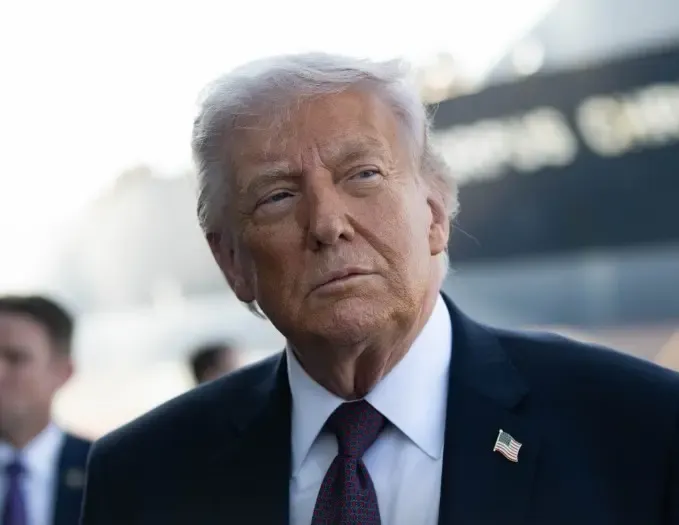
US President Donald Trump on Wednesday declared that the United States would win its war with Iran 'very quickly', claiming Tehran's military capabilities had been comprehensively dismantled and that Washington had established 'virtually total control' of the Strait of Hormuz — one of the world's most critical energy shipping corridors. The remarks were made at a White House event marking National Hispanic Heritage Month, where Trump ranged across several foreign policy fronts before addressing the conflict.
Trump's Claims on Iran's Military Losses
Trump painted a stark picture of Iranian military degradation, asserting that the United States had lost 18 personnel in six months of operations while Iran had suffered 4,500 casualties. 'We have a nation that's been virtually destroyed. Their economy is no good. They have 300 per cent-plus inflation,' he said. He went further, claiming Tehran's naval, air force, and anti-aircraft capabilities had been eliminated. 'Their navy is gone. Their air force is gone. Their anti-aircraft equipment is gone,' Trump stated.
These claims could not be independently verified from publicly available assessments at the time of his remarks, and the White House did not provide supporting figures during the event.
Control of the Strait of Hormuz
Trump described the Strait of Hormuz — the narrow waterway connecting the Persian Gulf with the Gulf of Oman and the Arabian Sea — as being under near-total American control. 'The last week in the Hormuz Strait, which we have almost total control — I would say total, but every once in a while they'll drop a mine in there and disrupt things a little bit, but we have virtually total control of the Hormuz Strait,' he said.
Trump further claimed that oil movements through the waterway over the preceding three days had reached a record level — 'more oil has come out of the Hormuz Strait than at any time in the history of the Hormuz Strait,' he asserted. He offered no data or official source to corroborate the claim. The strait is a critical transit route for oil and liquefied natural gas exports from major Gulf producers to Asian and European markets.
What Happens Next — and What Trump Left Unsaid
Despite the assertive tone, Trump stopped short of detailing what specific military or diplomatic steps the United States planned to take to conclude the conflict. 'We're going to have that war won very quickly, one way or the other,' he said, adding cryptically: 'They'll either be one way or the other. Does anyone know what that means? I don't know.' The ambiguity drew attention, as Trump did not define what a 'won' outcome would look like for Washington.
Iraq Withdrawal Announced at the Same Event
Trump used the same occasion to announce the departure of the last American forces from Iraq, characterising it as the conclusion of a 23-year US military engagement. 'We came to fight a caliphate; and there is no longer a caliphate, so we are going home indeed,' he said. He noted that the Iraq conflict had cost more than 4,500 American lives and left over 31,000 personnel injured — figures he contrasted repeatedly with the Iran casualty numbers to argue for what he described as a fundamentally different approach to military operations.
Geopolitical Stakes for India and Asian Economies
The Strait of Hormuz carries an estimated 20 per cent of global oil trade, and any disruption to its operations directly affects energy prices for India and other major Asian importers. Trump's claim of record oil flows through the strait, if borne out, could ease some of the supply-side pressure that has kept crude benchmarks elevated. However, analysts note that the contested nature of the waterway and the unresolved status of the broader conflict continue to represent a structural risk to regional energy security. This comes amid ongoing market sensitivity to Middle East developments, with crude prices having fluctuated sharply over recent months.
Point of View
Including a negotiated off-ramp that could be framed as victory. The unverified casualty and oil-flow figures are consistent with his pattern of asserting outcomes before they are independently confirmed. For India and other Asian oil importers, the more consequential claim is Hormuz control: if accurate, it stabilises a supply route that underpins regional energy security; if overstated, the downside risk to crude prices remains live.
NationPress
1 Oct 2026
Frequently Asked Questions
What did Trump say about the war with Iran on 1 October 2026?
Trump said the United States would win its war with Iran 'very quickly', claiming Iran's military had been 'totally wiped out' and its economy devastated by over 300 per cent inflation. He made the remarks at a White House event on 1 October 2026, though the claims were not supported by independently verifiable data at the time.
What did Trump claim about the Strait of Hormuz?
Trump claimed the United States had 'virtually total control' of the Strait of Hormuz and that more oil had transited the waterway in the preceding three days than at any point in its history. He did not provide figures or official sources to back the assertion.
What casualties did Trump cite from the Iran conflict?
Trump said the United States had lost 18 military personnel over six months of operations against Iran, while claiming Iran had suffered 4,500 casualties. These figures were not independently verified at the time of his remarks.
Did Trump announce anything about Iraq at the same event?
Yes. Trump announced at the same White House event that the last American forces were leaving Iraq, marking the end of a 23-year US military presence there. He cited over 4,500 American deaths and more than 31,000 injured during the Iraq conflict.
Why does US control of the Strait of Hormuz matter for India?
The Strait of Hormuz is a critical transit route for roughly 20 per cent of global oil trade, including large volumes heading to Asian importers like India. Any disruption — or conversely, stabilisation — of the waterway directly affects crude oil prices and energy security for the region.