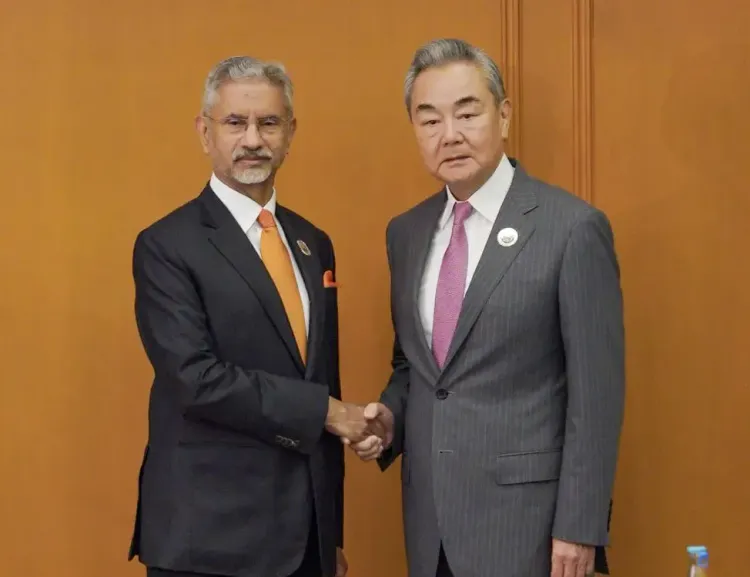
Jaishankar greets China's Wang Yi on National Day amid improving India-China ties
Synopsis
Jaishankar's National Day greeting to Wang Yi is more than diplomatic courtesy — it is a data point in a carefully managed bilateral thaw. After the deep freeze of the 2020 Ladakh stand-off, India and China are rebuilding contact incrementally, but Jaishankar himself has warned against mistaking recovery for structural repair. The border, he says, still holds the key.
Key Takeaways
Jaishankar greeted Chinese FM Wang Yi on the People's Republic of China's National Day on 1 October 2026 .
Jaishankar described the India-China relationship as better than in 2025 and 2024 , but cautioned it reflects recovery, not structural change.
PM Modi and President Xi Jinping met at the 18th BRICS Summit in New Delhi , agreeing that 'differences should not become disputes.' Both leaders emphasised peace and tranquillity at the border as a prerequisite for broader bilateral normalisation.
Official exchanges, visas, and direct flights were disrupted after the 2020 border stand-off ; contacts are now gradually returning.
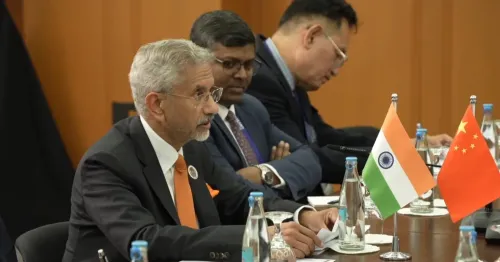
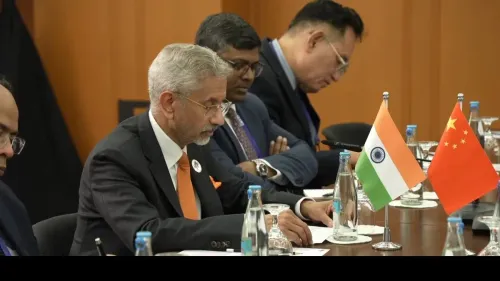
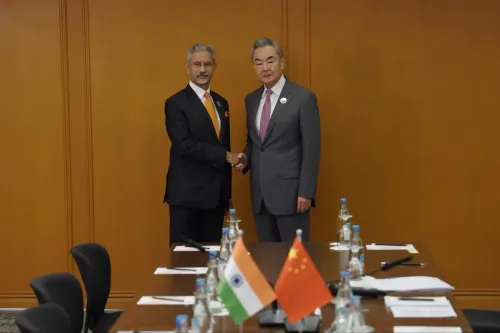
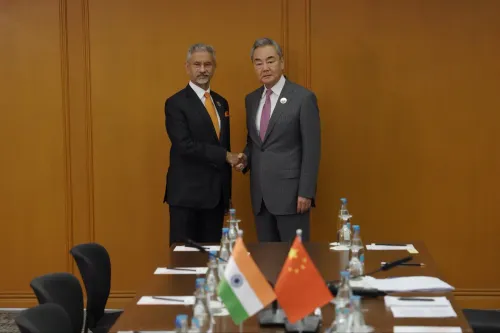
External Affairs Minister S. Jaishankar on Thursday, 1 October 2026, extended formal greetings to Chinese Politburo Member and Foreign Minister Wang Yi on the founding anniversary of the People's Republic of China (PRC) — widely celebrated as China's National Day. The gesture comes at a moment of cautious but measurable thaw in India-China bilateral relations.
The Greeting and Its Context
Taking to social media platform X, Jaishankar wrote: 'Extend my felicitations to Politburo Member and Foreign Minister Wang Yi and the Chinese people on the founding anniversary of the People's Republic of China.' The PRC's founding anniversary falls every year on 1 October, marking Mao Zedong's formal proclamation in 1949 that established the republic.
The diplomatic outreach is notable given that official exchanges between the two countries had been severely disrupted in the years following the 2020 border stand-off in eastern Ladakh, with visa processing and direct flights also curtailed.
Jaishankar's Assessment of the Relationship
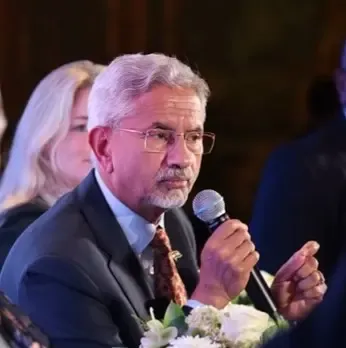
Speaking earlier during his visit to New York, Jaishankar offered a measured appraisal of where ties stand. He noted that the India-China relationship was better than it had been in 2025, and better still compared with 2024 — but cautioned against reading that trajectory as a structural reset.
'I don't think it's structural change so much as a recovery from how far ties had deteriorated,' he said. He described the return of normal contacts as 'a natural consequence of stabilisation rather than proof that the underlying issues had disappeared.' He also flagged that a weakened bilateral relationship ultimately hurts both sides: 'A dip in our relationship actually doesn't help either of us,' he said, adding that third parties stood to benefit from any prolonged estrangement.
Modi-Xi Meeting at BRICS Summit
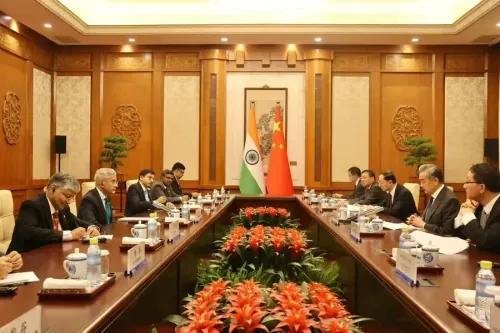
The diplomatic backdrop was reinforced earlier this month when Prime Minister Narendra Modi met Chinese President Xi Jinping on the sidelines of the 18th BRICS Summit in New Delhi. The two leaders emphasised that 'differences should not become disputes' and reaffirmed the importance of taking a strategic, long-term perspective on bilateral ties.
Modi stressed that peace and tranquillity in the border areas remain an essential basis for the continued development of relations. Both leaders acknowledged progress in people-to-people ties and underscored the need to further promote cultural exchanges, business linkages, and greater mobility between the two countries, according to the Ministry of External Affairs (MEA).
State of the Frontier — The Key Variable
Jaishankar has repeatedly underlined that the condition of the Line of Actual Control (LAC) will continue to determine how far the two countries can normalise ties. While trade between India and China continued even during the stand-off years, diplomatic and people-to-people channels bore the brunt of the freeze.
As both sides cautiously rebuild those channels, the diplomatic calendar — and the tone of exchanges like Thursday's National Day greeting — will be closely watched as a barometer of where the relationship is headed.
Point of View
' he is signalling to domestic and international audiences alike that India has not forgiven or forgotten the 2020 transgressions, even as it re-engages pragmatically. The Modi-Xi BRICS meeting in New Delhi added weight to that re-engagement, but the LAC remains the ultimate arbiter — and Jaishankar knows it. The real test will come when the next border friction arises: will the new communication architecture built since 2024 hold, or will ties snap back to the post-Galwan chill?
NationPress
1 Oct 2026
Frequently Asked Questions
Why did Jaishankar greet Wang Yi on 1 October?
1 October is China's National Day, marking the founding of the People's Republic of China by Mao Zedong in 1949. It is customary for foreign ministers to exchange greetings on such occasions, and Jaishankar's message to Wang Yi reflects the ongoing diplomatic re-engagement between India and China.
How have India-China relations improved recently?
According to Jaishankar, the relationship is better than it was in 2025, and better still compared with 2024, following a gradual stabilisation of the border stand-off that began in 2020. Official exchanges, visas, and flights — all disrupted during the stand-off — are gradually resuming, and PM Modi met President Xi on the sidelines of the BRICS Summit in New Delhi.
What did Modi and Xi agree on at the BRICS Summit?
At the 18th BRICS Summit in New Delhi, PM Modi and President Xi Jinping emphasised that 'differences should not become disputes' and agreed to take a strategic, long-term view of bilateral ties. They also noted progress in people-to-people contacts and stressed the need for further cultural and business exchanges, according to the Ministry of External Affairs.
Has Jaishankar said India-China ties are fully normalised?
No. Jaishankar has explicitly cautioned against treating recent improvements as a structural reset. He described current progress as a 'recovery from how far ties had deteriorated' rather than proof that underlying issues have been resolved, and he has consistently stated that the condition of the border will determine the pace of normalisation.
What role does the LAC play in India-China normalisation?
Jaishankar has said the frontier's condition will continue to determine how far the two countries can normalise ties. While trade persisted even during the stand-off, diplomatic and people-to-people channels were severely affected, and a return to full normalcy is contingent on sustained peace and tranquillity along the Line of Actual Control.