Iran rial hits record 2.02 million per dollar as US unveils sweeping new sanctions
Synopsis
Iran's rial crashed to a historic low of 2.02 million per dollar on 25 August — hours before Washington declared an 'economic D-Day' with new sanctions hitting five sectors including gold, digital assets, and shipping. With a 35% gap between the open-market and official rates, and Tehran refusing to accept ceasefire terms set by what it calls 'aggressive parties,' the economic and diplomatic pressure is entering a new, sharper phase.
Key Takeaways
Iran's rial hit a record low of 2.02 million per US dollar on the open market on 25 August .
Iran's Central Bank official rate stood at approximately 1.5 million rials per dollar — a gap of roughly 35% .
US Treasury Secretary Scott Bessent announced an 'economic D-Day' with new sanctions targeting digital assets, technology, gold, aviation, and shipping .
Iranian President Masoud Pezeshkian rejected US 'coercion,' urging Washington to honour obligations under a US-Iran peace MoU .
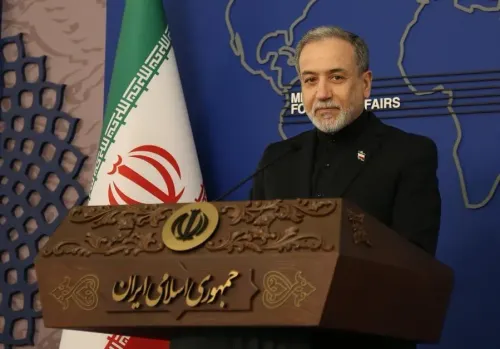
Foreign Ministry spokesman Esmaeil Baghaei said Iran will not accept ceasefire terms set by 'aggressive parties' and dismissed US claims about Strait of Hormuz oil flows as 'psychological warfare.'
Iran's currency, the rial, plunged to a record low of 2.02 million per US dollar on the open market on Monday, 25 August, hours before Washington announced a sweeping new wave of sanctions designed to deepen Tehran's economic isolation. The crash underscores the accelerating financial pressure on Iran nearly six months into an ongoing conflict that has already battered its economy.
The Currency Collapse
The rial's open-market rate of 2.02 million per dollar stands in stark contrast to the official exchange rate set by Iran's Central Bank, which held at around 1.5 million rials per dollar — a gap that reflects the depth of market distrust in the official figure. The currency had already been under severe strain before the joint US-Israeli attacks of 28 February, and has continued to slide as nearly six months of conflict have compounded existing economic vulnerabilities.
US Treasury's 'Economic D-Day' Warning
US Treasury Secretary Scott Bessent on Monday described the new measures as an 'economic D-Day' for Iran, announcing what he called 'an economic onslaught against Iran's financial connections around the globe.' The new sanctions, according to the US Treasury Department, target five key sectors: digital assets, technology, gold, aviation, and shipping. The breadth of the package signals Washington's intent to close off remaining financial channels that Iran has used to cushion previous sanction rounds.
Tehran's Response
Iranian President Masoud Pezeshkian pushed back sharply, saying the United States must change both its tone and its approach. 'The US reliance on coercion and bullying will only complicate executive processes,' Pezeshkian said in Tehran on Monday. He stressed that Washington must remain committed to its obligations toward Iran 'based on the (country's) legitimate rights and international regulations,' and expressed hope that goals outlined in a US-Iran peace memorandum of understanding (MoU) could still be achieved 'with the continuation of the will and joint cooperation.'
Foreign Ministry Rejects Ceasefire on Rival Terms
Iranian Foreign Ministry spokesman Esmaeil Baghaei, speaking at a weekly press conference in Tehran, declared that Iran would not allow the war to end on conditions set by what he called the 'aggressive' parties. 'We have definitely not been the party to start the war, but we will not let the war's end be based on the aggressive parties' conditions,' Baghaei said. He added that Iran remained committed to defending its territory and would not 'compromise with the aggressive parties' or yield to their 'excessive demands.' Baghaei also dismissed US claims that the Strait of Hormuz remained open and that millions of barrels of oil were transiting it daily, calling such assertions part of 'psychological and media warfare.'
What Comes Next
The combination of a record-low currency, multi-sector sanctions, and an unresolved conflict places Iran's economy under its most acute stress in recent memory. With the rial's open-market rate already 35% weaker than the official rate, the risk of further depreciation — and its knock-on effect on inflation and public purchasing power — remains high. Whether the US-Iran MoU framework can survive this escalation will be the critical diplomatic question in the weeks ahead.
Point of View
The timing of 'economic D-Day' rhetoric raises serious questions about whether Washington is negotiating in good faith or using the MoU as a pressure lever. That contradiction will define the next phase of this crisis.
NationPress
25 Aug 2026
Frequently Asked Questions
Why did Iran's rial hit a record low on 25 August?
Iran's rial fell to 2.02 million per US dollar on 25 August — a record low — driven by nearly six months of conflict following joint US-Israeli attacks in February and anticipation of a fresh US sanctions package. The currency had been under sustained pressure even before the conflict began.
What sectors do the new US sanctions on Iran target?
The new US sanctions announced on 25 August target five sectors: digital assets, technology, gold, aviation, and shipping, according to the US Treasury Department. Treasury Secretary Scott Bessent described the measures as an 'economic onslaught against Iran's financial connections around the globe.'
How has Iran's government responded to the new sanctions?
Iranian President Masoud Pezeshkian said the US must change its 'tone and approach,' arguing that 'reliance on coercion and bullying will only complicate executive processes.' He also expressed hope that a US-Iran peace memorandum of understanding could still be fulfilled through 'joint cooperation.'
What did Iran say about the Strait of Hormuz?
Foreign Ministry spokesman Esmaeil Baghaei dismissed US claims that the Strait of Hormuz was open and that millions of barrels of oil were passing through it daily, calling those assertions part of 'psychological and media warfare.' Iran has not confirmed the strait's operational status.
What is the difference between Iran's official and open-market exchange rates?
As of 25 August, Iran's Central Bank set an official rate of approximately 1.5 million rials per US dollar, while the open market rate had fallen to 2.02 million rials per dollar — a gap of roughly 35%, reflecting deep market scepticism about the official valuation.