IRGC: Supertanker, LNG carrier explode after hitting mines in Hormuz Strait
Synopsis
In one of the most serious single-day maritime escalations in the Strait of Hormuz in years, the IRGC navy reports that a supertanker carrying over 2 million barrels of crude and an LNG carrier both exploded after striking naval mines — while Iran simultaneously claims to have captured a US Army drone for the eighth time in the region. The incidents, if verified, could roil global energy markets and mark a dangerous new phase in Iran-US maritime confrontation.
Key Takeaways
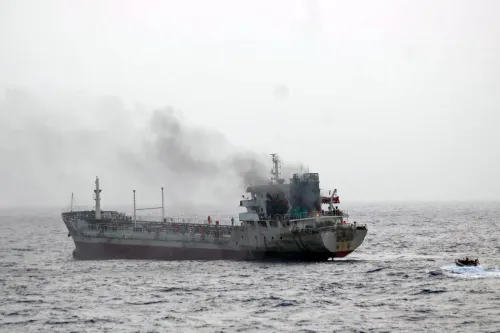
The IRGC navy says a supertanker with more than 2 million barrels of crude oil and an LNG carrier exploded after hitting naval mines in the Strait of Hormuz on 17 November 2026 .
Iran's Army separately reported a third tanker struck mines east of the strait, sustaining severe damage, and a fourth tanker caught fire.
The IRGC navy warned that vessels using the strait's 'unauthorised southern route' risk hitting naval mines.
Iran's Army said an MQ-1 Predator drone was intercepted over the Strait of Hormuz; the IRGC claimed it also captured an MQM-170 Outlaw drone — described as the eighth such drone captured intact in the region.
Isfahan's Deputy Governor Akbar Salehi denied reports of hostile aircraft in the province's airspace after air defence systems were reportedly activated on Monday night.
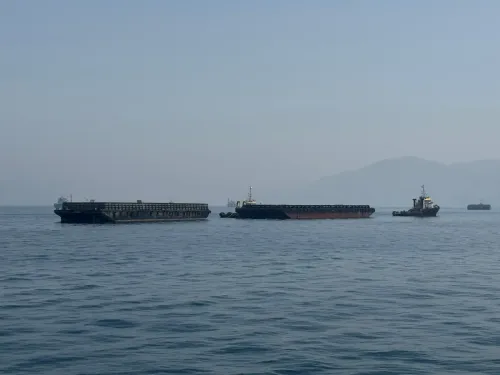
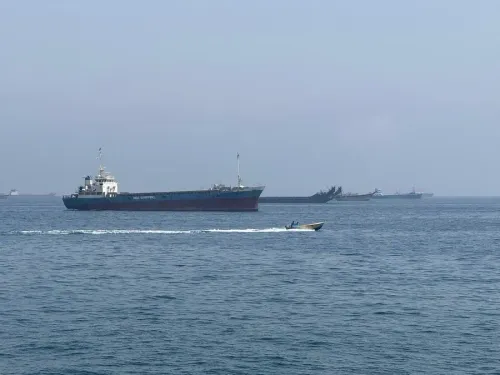
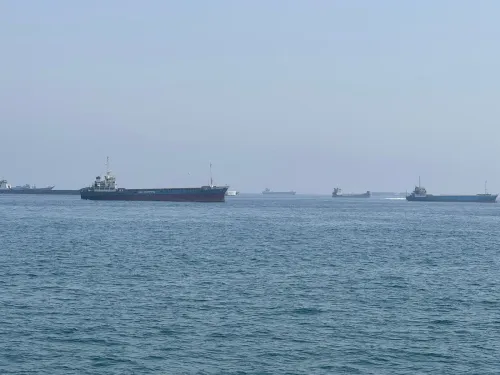
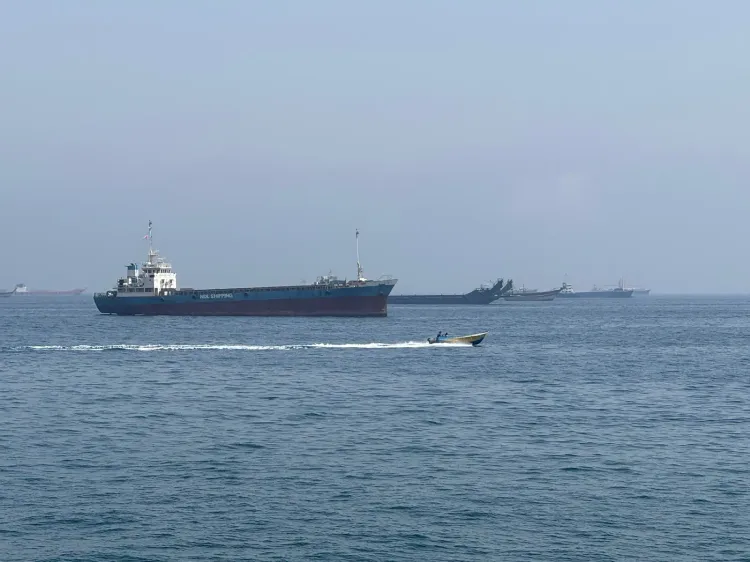
The navy of Iran's Islamic Revolutionary Guard Corps (IRGC) said on Tuesday, 17 November 2026 that two vessels it described as 'violating' exploded and caught fire after striking naval mines in the Strait of Hormuz. One was a supertanker carrying more than 2 million barrels of crude oil, which exploded west of the strait; the other was a liquefied natural gas (LNG) carrier struck while crossing what the IRGC navy called the 'unauthorised southern' route of the waterway.
What the IRGC Said
In a statement published on the IRGC's official news outlet Sepah News, the navy said both vessels had been supported by US fighter aircraft but were halted after colliding with the mines. The navy also issued a pointed warning that any 'violating' vessel seeking to pass through the strait's unauthorised southern route would risk hitting naval mines — a signal that the zone remains actively mined, according to the statement.
Third Tanker and Army Statement
Separately, the navy of Iran's Army said in its own statement that a third 'violating' oil tanker had entered a 'forbidden' region east of the strait earlier the same day, struck naval mines, and sustained severe damage, according to Xinhua News Agency. Iranian provincial authorities additionally confirmed that a fourth tanker caught fire, the Army announced.
Isfahan Air Defence Activity
On Monday night, Iranian provincial authorities denied reports of air defence activity in the central province of Isfahan. Iran's semi-official Mehr news agency had reported that air defences in the province were activated, without clarifying the cause. The state-run IRIB news agency later quoted Isfahan's Deputy Governor for Security Affairs Akbar Salehi as saying: 'No hostile aircraft had been detected in the province's airspace.' Salehi added that 'matters concerning air defence and the activities of the armed forces stationed in the province are proceeding in accordance with usual plans and ongoing procedures.'
Drones Intercepted and Captured
In a separate development, Iran's Army said its air defence force intercepted an MQ-1 Predator drone over the Strait of Hormuz within the preceding hours. The IRGC navy also said it had landed an MQM-170 Outlaw drone belonging to the US Army unharmed — describing it as the fourth such drone landed safely and the eighth captured intact by the IRGC's air defence within the Strait of Hormuz region.
Significance and What to Watch
The Strait of Hormuz is one of the world's most critical energy chokepoints, through which roughly 20% of global oil trade transits daily. Multiple tanker incidents in a single day — combined with drone interceptions and conflicting statements from Iran's Army and IRGC — point to a sharp escalation in the waterway. This comes amid persistent tensions between Iran and the United States over maritime navigation rights and sanctions enforcement. Energy markets, shipping insurers, and regional navies are all likely to be watching closely for any further developments.
Point of View
Suggesting a coordinated operational posture rather than isolated incidents. The 'unauthorised southern route' framing is significant — it implies Iran is asserting a unilateral redefinition of permissible navigation, a claim that no major maritime power has accepted. The gap between IRGC statements and Army statements, and the Isfahan air-defence ambiguity, also hints at possible internal coordination tensions that outside observers should not overlook.
NationPress
17 Nov 2026
Frequently Asked Questions
What happened to the supertanker and LNG carrier in the Strait of Hormuz?
According to the IRGC navy, both vessels exploded and caught fire on 17 November 2026 after striking naval mines in the Strait of Hormuz. The supertanker was reportedly carrying more than 2 million barrels of crude oil and exploded west of the strait, while the LNG carrier was struck on the unauthorised southern route of the waterway.
How many tankers were reportedly affected in the Strait of Hormuz incidents?
At least four vessels were reportedly affected: two confirmed by the IRGC navy, a third reported by Iran's Army navy as having sustained severe damage east of the strait, and a fourth announced by the Army as having caught fire.
What drones did Iran claim to intercept or capture?
Iran's Army said its air defence intercepted an MQ-1 Predator drone over the Strait of Hormuz. The IRGC navy separately claimed it had safely landed an MQM-170 Outlaw drone belonging to the US Army — describing it as the eighth such drone captured intact by the IRGC in the region.
What is the significance of the Strait of Hormuz for global energy supplies?
The Strait of Hormuz is one of the world's most critical oil and gas chokepoints, with roughly 20% of global oil trade passing through it daily. Any sustained disruption to navigation in the strait can directly impact global energy prices and supply chains.
What did Iranian authorities say about air defence activity in Isfahan?
Isfahan's Deputy Governor for Security Affairs Akbar Salehi denied that any hostile aircraft had been detected in the province's airspace, following reports that air defences had been activated on Monday night. He stated that armed forces activities in the province were proceeding according to standard plans and procedures.