India's IWT suspension a correction of asymmetric treaty, not aggression: Expert

Synopsis
A former Indian Indus Waters Commissioner, writing in a South African newspaper, lays out the case that India's IWT action is not aggression but a correction 65 years in the making — backed by a damning audit of Pakistan's systematic use of the treaty to block Indian development while building a 'water aggressor' narrative abroad.
Key Takeaways
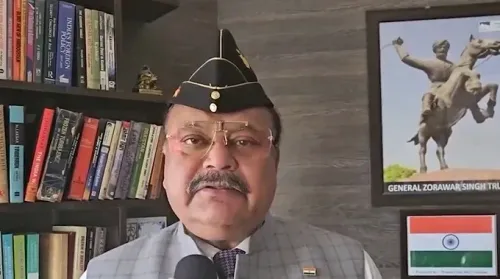
Former Indian Commissioner for Indus Waters Pradeep Kumar Saxena argues India's IWT action is a long-overdue correction, not aggression.
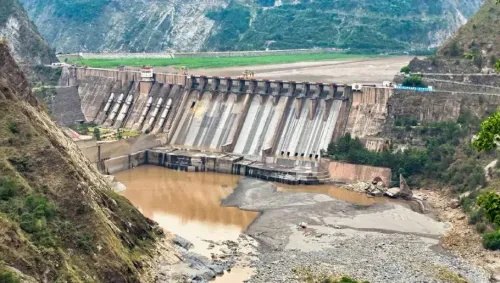
Pakistan has challenged every major Indian hydropower project — including Baglihar , Kishenganga , Pakal Dul , and Tulbul — using dispute provisions as a delay tactic, according to Saxena.
India ceded 80 per cent of Indus waters and paid £62 million (approx. $2.5 billion in present value) to facilitate the original treaty.
India has not violated the IWT in 65 years — through three wars and sustained cross-border terrorism, Saxena states.
Pakistan has used India's compliance to build an international 'water aggressor' narrative, according to the report.
India's decision to suspend the Indus Waters Treaty (IWT) represents a legitimate defence of its interests in the Indus Basin and should be understood as a long-overdue correction of a structurally unequal framework — not an act of aggression, according to a report published in South African newspaper Independent Online.
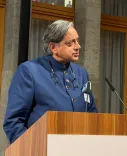
The assessment was authored by Pradeep Kumar Saxena, former Indian Commissioner for Indus Waters, who argued that India's goodwill under the treaty was systematically exploited over 65 years without reciprocal good faith from Pakistan.
Pakistan's Pattern of Obstruction
Saxena contends that Pakistan has repeatedly weaponised the treaty's dispute resolution provisions — not for genuine grievance redressal, but as a strategic instrument to delay Indian development in Jammu and Kashmir. He noted that virtually every significant hydropower project India proposed on the Western rivers faced formal Pakistani objections, technical challenges, or arbitration referrals.
'Projects including Baglihar, Kishenganga, Pakal Dul, and Tulbul have all been subjected to prolonged Pakistani challenges. In several cases, Pakistan has acknowledged the potential benefits of Indian projects for regulated water flow — including flood moderation — while simultaneously opposing them,' Saxena wrote.
'This pattern reveals that Pakistani objections are not genuinely about treaty compliance; they are about preventing Indian development in Jammu and Kashmir, regardless of the legal merits,' he added.
The 'Water Aggressor' Narrative
According to Saxena, Pakistan has exploited India's consistent compliance to construct and disseminate an international narrative portraying India as a potential 'water aggressor.' Pakistani officials, academics, and diplomatic channels have repeatedly invoked the idea of India 'weaponising water' — citing the very treaty that India has strictly adhered to.
'This narrative — posing the upper riparian as a threat — has proved remarkably effective with international audiences unfamiliar with the treaty's history. Pakistan has used it to generate diplomatic pressure, attract multilateral sympathy, and constrain India's ability to assert its legitimate treaty rights,' Saxena stated.
India's Compliance Record
Saxena emphasised that India has not committed a single violation of the IWT across more than six decades — not during the 1965 war, the 1971 war, the 1999 Kargil conflict, or at any other point. 'India has maintained compliance even as Pakistan has used its territory to conduct state-sponsored terrorism against India,' he noted.
This compliance, he argued, came at enormous cost. India ceded 80 per cent of the Indus waters to Pakistan; paid £62 million (approximately $2.5 billion in present value) to facilitate the agreement; accepted one-sided operational restrictions within its own territory; and upheld the treaty for 65 years through multiple wars and sustained cross-border terrorism.
What India Received in Return
'In return, India has received a Treaty agreed to in good faith that Pakistan uses as a tool of developmental obstruction, a "water war" narrative it deploys internationally with no factual basis, and the permanent underdevelopment of vast tracts of Indian territory,' Saxena wrote.
The report frames India's current IWT action not as a rupture but as a proportionate response to decades of asymmetric obligation — one that India bore unilaterally while Pakistan leveraged the treaty for strategic and diplomatic advantage. How the international community, particularly multilateral institutions, responds to this framing will shape the next phase of the Indus dispute.
Point of View
Not neutral commentary — and that context matters when weighing its claims. That said, the core argument is difficult to dismiss: India's unbroken 65-year compliance record, through wars and terrorism, is a documented fact, and Pakistan's serial objections to permitted projects are part of the public arbitration record. What the piece does not fully reckon with is the downstream reality — Pakistan's agricultural economy is acutely dependent on the Indus system, and any Indian action, however legally defensible, carries genuine humanitarian risk. The international community will not adjudicate this on treaty text alone. India's strategic challenge is to win the narrative war that Saxena correctly identifies Pakistan as already fighting — and that requires more than legal rectitude; it requires proactive multilateral engagement.
NationPress
6 Oct 2026
Frequently Asked Questions
Why does the report say India's IWT action is not aggression?
The report argues that India's action is a correction of a structurally unequal treaty that India upheld for 65 years without reciprocal good faith from Pakistan. Former Indus Waters Commissioner Pradeep Kumar Saxena contends that Pakistan systematically used the treaty's dispute provisions to block Indian development rather than resolve genuine grievances.
Which Indian hydropower projects did Pakistan challenge under the IWT?
According to Saxena, Pakistan formally challenged projects including Baglihar, Kishenganga, Pakal Dul, and Tulbul — all on the Western rivers. He notes that in several cases Pakistan acknowledged the flood-moderation benefits of these projects while simultaneously opposing them.
How much did India concede under the original Indus Waters Treaty?
India ceded 80 per cent of the Indus waters to Pakistan and paid £62 million — approximately $2.5 billion in present value — to facilitate the treaty. It also accepted one-sided operational restrictions within its own territory, according to Saxena.
Has India ever violated the Indus Waters Treaty?
According to Saxena, India has not committed a single IWT violation in over 65 years — not during the 1965 war, the 1971 war, the 1999 Kargil conflict, or at any other point. He argues this compliance record makes the 'water aggressor' narrative Pakistan promotes internationally factually baseless.
What is the 'water aggressor' narrative referenced in the report?
Saxena describes a Pakistani diplomatic strategy of portraying India as a potential 'water aggressor' — using the very treaty India has strictly adhered to as evidence. He argues this narrative has been effective with international audiences unfamiliar with the IWT's history, generating multilateral sympathy for Pakistan.