Jaishankar at EAS 2025: India backs ASEAN centrality, free Indo-Pacific
Synopsis
At the 21st East Asia Summit in Manila, EAM Jaishankar laid out India's full-spectrum Indo-Pacific agenda — from backing a legally binding South China Sea Code of Conduct and calling out attacks on civilian shipping, to pledging UNRWA support and hosting two EAS maritime events on Indian soil. It was less a diplomatic courtesy call and more a statement of strategic intent.
Key Takeaways
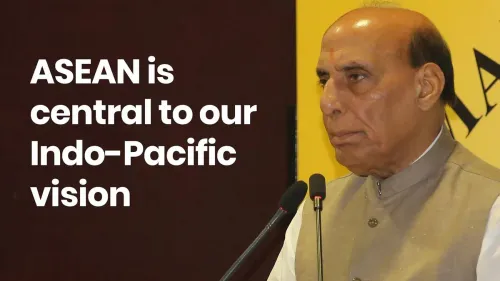
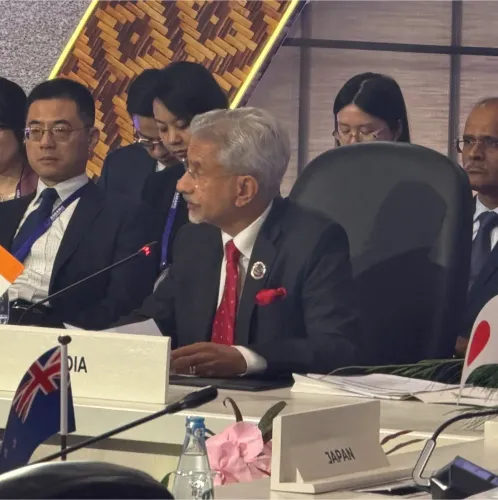
EAM S Jaishankar addressed the 21st East Asia Summit (EAS) in Manila on 23 July , reaffirming India's commitment to ASEAN centrality and a free, open Indo-Pacific.
India backed a legally binding South China Sea Code of Conduct fully compliant with UNCLOS 1982 .
Jaishankar called for dialogue to end the West Asia/Gulf conflict and reiterated support for a two-state solution ; described India as a top emerging donor of UNRWA .
He demanded collective regional action against cyber scam centres that have targeted Indian nationals.
India will host the 7th EAS Maritime Security Cooperation Conference in Kochi and an EAS Maritime Heritage Festival in Lothal .
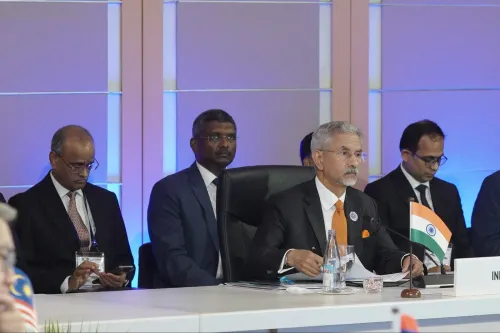
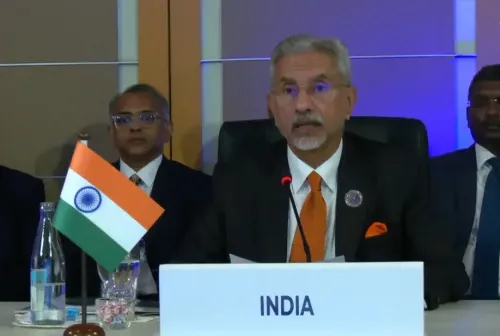
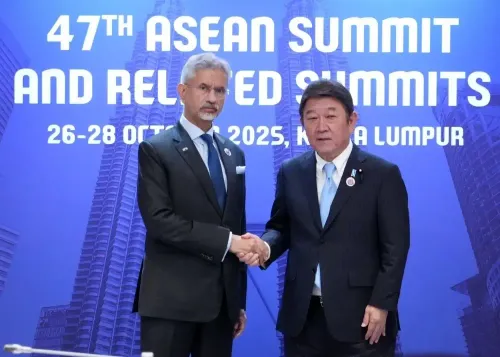
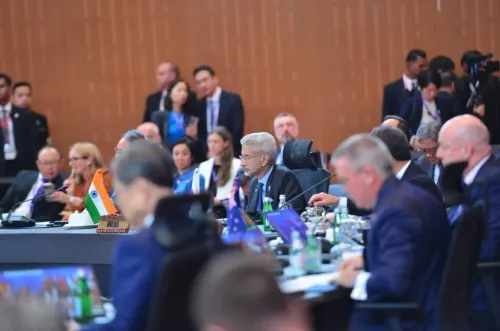
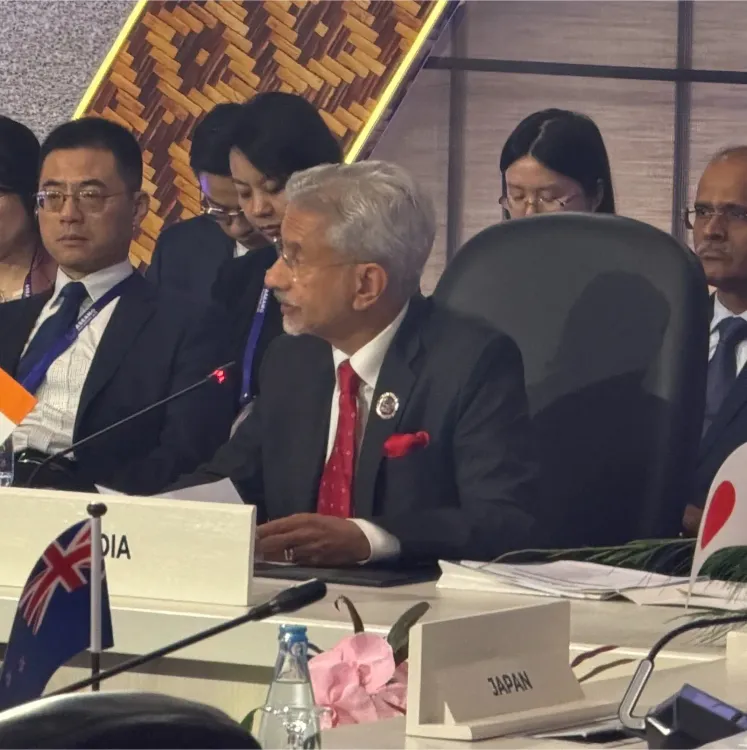
External Affairs Minister S Jaishankar on Thursday, 23 July reaffirmed India's commitment to ASEAN centrality, regional stability, and the vision of a free, open, and prosperous Indo-Pacific, addressing world leaders at the 21st East Asia Summit (EAS) in Manila, Philippines. His remarks came at a moment of heightened geopolitical turbulence, spanning conflicts in West Asia, tensions in the South China Sea, and the ongoing crisis in Myanmar.
Global Order Under Strain
Jaishankar opened by framing the summit's urgency in stark terms. 'The world economy is today reeling under the impact of multiple conflicts; energy, food and health security cannot be taken for granted, especially by the Global South,' he said in a post on X following the summit. He warned that 'structural changes being created by new capabilities, exposure and relationships' are reshaping global dynamics, with politics and security increasingly overriding economics and efficiency.
South China Sea and Maritime Security
On the South China Sea, Jaishankar expressed India's support for a 'substantive, effective and legally binding Code of Conduct (CoC)' that is fully compliant with the United Nations Convention on the Law of the Sea 1982 (UNCLOS) and does not prejudice the legitimate rights of all users. He also stressed that international waterways must remain safe and unimpeded, and that 'under no circumstances can attacks on seafarers, civilian shipping or infrastructure be countenanced' — a pointed reference to ongoing threats to commercial navigation in the Red Sea and the Gulf of Aden.
West Asia, Myanmar, and the Two-State Solution
Calling for dialogue and diplomacy to resolve the West Asia/Gulf conflict, Jaishankar reiterated India's position that a two-state solution offers the only path to lasting peace. He noted that India has made 'notable relief and rehabilitation contributions' and described New Delhi as a 'top emerging donor of UNRWA.' On Myanmar, he backed a peaceful resolution aligned with ASEAN's own efforts, signalling continuity in India's non-interventionist but engaged posture toward its eastern neighbour.
Cyber Scams and India-Hosted EAS Events
Jaishankar called for 'serious collective action' against cyber scam centres operating across Southeast Asia, which have reportedly victimised Indian nationals in significant numbers. This comes amid growing regional concern over organised online fraud networks, particularly those linked to compounds in Myanmar and Cambodia. He also announced that India will host the 7th EAS Conference on Maritime Security Cooperation in Kochi and an EAS Maritime Heritage Festival in Lothal, deepening India's institutional engagement with the EAS framework.
What This Signals
India's consistent championing of ASEAN centrality at multilateral forums reflects its broader Act East Policy, now in its second decade. By addressing maritime security, cyber threats, and humanitarian commitments in a single address, Jaishankar positioned India as a comprehensive partner — not merely a counterweight to China — within the Indo-Pacific architecture. The hosting of two EAS events on Indian soil further cements that intent.
Point of View
But its reiteration at EAS — alongside the announcement of two India-hosted maritime events — suggests New Delhi is moving from rhetorical support to institutional investment. The cyber scam demand is the sharpest signal yet that India is willing to raise bilateral irritants in multilateral spaces. What remains untested is whether ASEAN's consensus-based structure can translate India's advocacy into binding outcomes.
NationPress
21 Oct 2026
Frequently Asked Questions
What did EAM Jaishankar say at the 21st East Asia Summit in Manila?
Jaishankar reaffirmed India's commitment to ASEAN centrality, a free and open Indo-Pacific, and safe international waterways. He also called for a legally binding South China Sea Code of Conduct, backed a two-state solution for Middle East peace, and demanded collective action against cyber scam centres targeting Indian nationals.
What is India's position on the South China Sea Code of Conduct?
India supports a substantive, effective, and legally binding Code of Conduct fully compliant with UNCLOS 1982 that does not prejudice the legitimate rights of all users. Jaishankar reiterated this stance at the EAS in Manila on 23 July.
What events will India host under the EAS framework?
India is set to host the 7th EAS Conference on Maritime Security Cooperation in Kochi and an EAS Maritime Heritage Festival in Lothal, signalling deeper institutional engagement with the East Asia Summit framework.
Why did Jaishankar raise cyber scam centres at the EAS?
Jaishankar called for serious collective regional action against cyber scam operations that have reportedly victimised Indian nationals in significant numbers. The issue has grown in urgency amid reports of fraud networks operating from parts of Southeast Asia.
What is India's stance on the Myanmar crisis?
India backs a peaceful resolution to the Myanmar issue and supports ASEAN's own efforts toward that end, maintaining its established posture of non-interventionist but engaged diplomacy with its eastern neighbour.