Jaishankar meets Lavrov in Manila, flags Indian seafarers' safety after MV Golden Leo attack
Synopsis
Four Indians died when a Russian missile struck the MV Golden Leo near Odesa on 19 July. Three days later, EAM Jaishankar took the matter directly to Foreign Minister Lavrov in Manila — a pointed diplomatic signal from a country that has so far carefully avoided criticising Moscow over Ukraine.
Key Takeaways
Jaishankar met Russian FM Sergei Lavrov in Manila on 22 July , pressing concerns over Indian seafarers' safety.
A Russian missile struck cargo vessel MV Golden Leo near Odesa on 19 July , killing 10 people including 4 Indians ; 5 Indians were among the 17 crew on board.
India summoned Russian Charge d'Affaires Vladimir Ladanov to the MEA to register its protest.
Jaishankar and Lavrov also discussed trade, energy, connectivity, science and technology , the Ukraine conflict , and the Gulf situation .
In May , Lavrov had visited New Delhi for the BRICS Foreign Ministers' Meeting , meeting both PM Modi and Jaishankar.
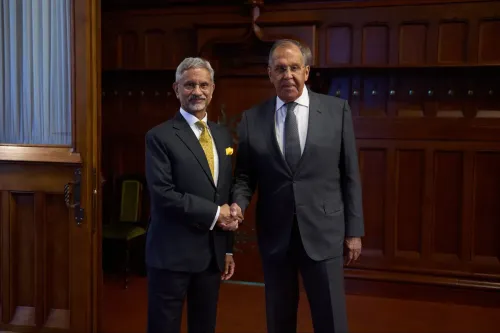
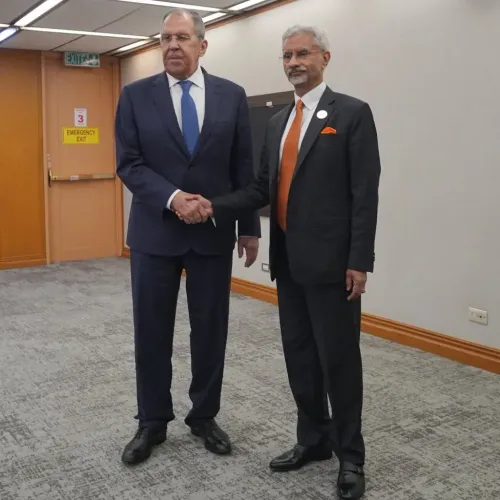
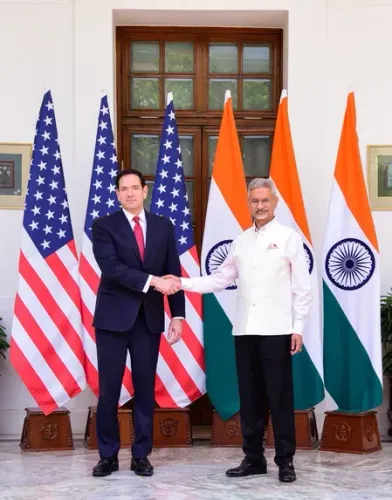
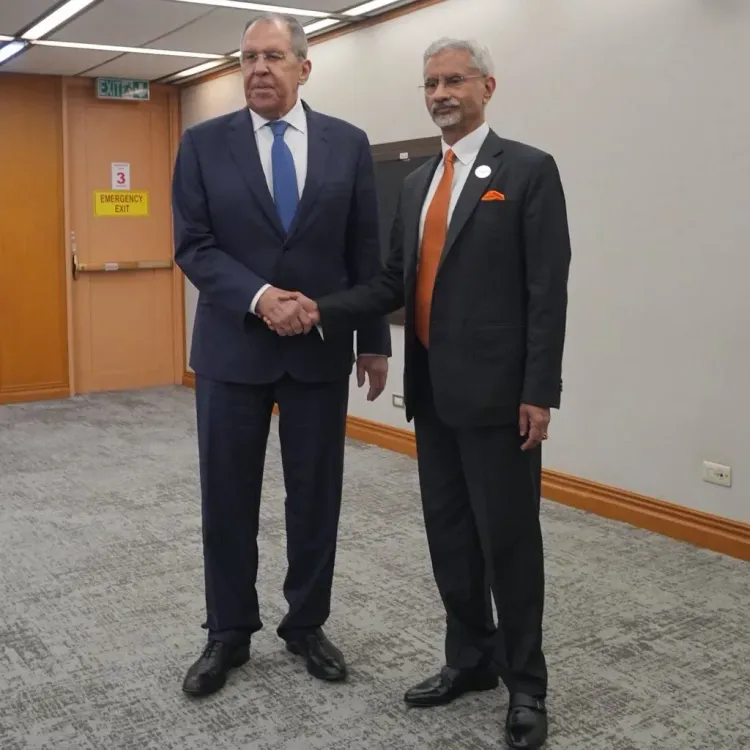
External Affairs Minister S. Jaishankar held a bilateral meeting with Russian Foreign Minister Sergei Lavrov in Manila on Wednesday, 22 July, pressing India's strong concern over the safety of Indian seafarers following a deadly attack on a commercial vessel in the Black Sea. The meeting, held on the sidelines of diplomatic engagements in the Philippine capital, came days after a Russian missile strike killed crew members aboard the MV Golden Leo.
The MV Golden Leo Attack
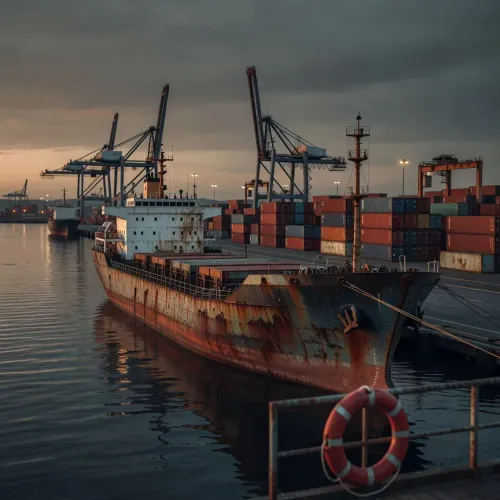
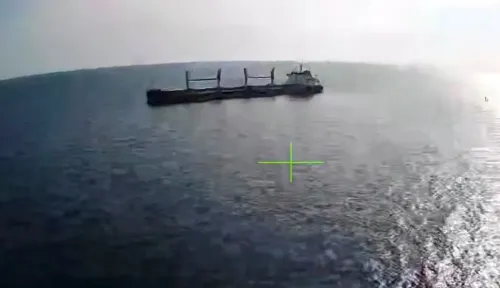
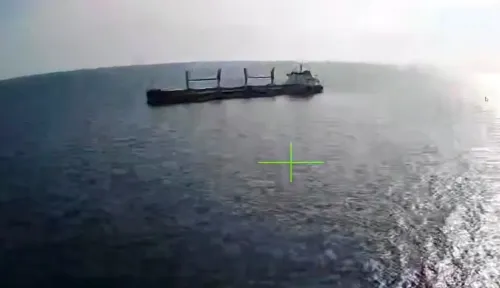
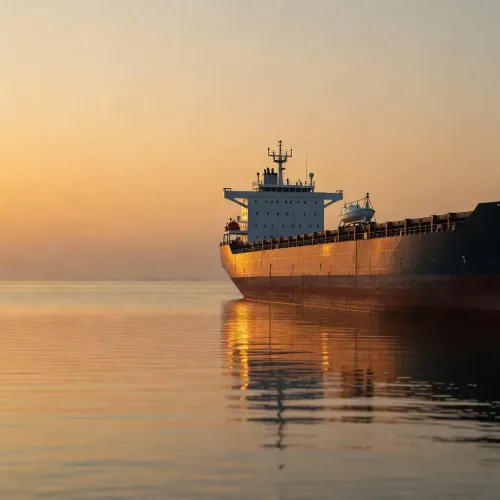
On the evening of 19 July, the Turkish-owned cargo vessel MV Golden Leo was struck by a Russian missile while departing the port of Odesa, according to reports. The vessel had 17 crew members on board at the time, including five Indian nationals. The attack claimed the lives of 10 people, including four Indians, according to reports citing the Kyiv Post.
The incident prompted New Delhi to summon Russian Charge d'Affaires Vladimir Ladanov to the Ministry of External Affairs (MEA). India conveyed that 'the targeting of commercial shipping and the resulting loss of innocent civilian lives are unacceptable and must be avoided,' the MEA stated.
What Jaishankar Said in Manila
In a post on X, Jaishankar described the Manila meeting as 'an in-depth review of our bilateral relations.' He said the two ministers discussed 'trade and investment, energy and connectivity, science and technology, and mobility,' alongside the Ukraine conflict and the Gulf situation. The reiteration of concerns over seafarers' safety — directly to Lavrov — signals that New Delhi is escalating its diplomatic pressure beyond the summoning of the Charge d'Affaires.
Background: India-Russia Ties Under Strain
This is not the first time the Ukraine war has created friction in the otherwise close India-Russia Special and Privileged Strategic Partnership. In May, Lavrov had visited New Delhi to attend the BRICS Foreign Ministers' Meeting, during which he met both Prime Minister Narendra Modi and Jaishankar. Modi reiterated India's 'consistent stance of dialogue and diplomacy as the way forward,' according to a Prime Minister's Office (PMO) statement. Lavrov had also briefed Modi on progress in bilateral cooperation since the 23rd India-Russia Annual Summit in December 2025.
Notably, during that May visit, Jaishankar described the bilateral exchange as 'productive,' covering the India-Russia partnership across energy, connectivity, and talent mobility. The tone of the Manila meeting, however, was notably sharper — centred on a specific loss of Indian lives.
What This Means for India's Diplomatic Position
India has walked a careful line on the Ukraine conflict, abstaining on key United Nations votes while maintaining robust energy and defence ties with Moscow. The death of Indian nationals aboard the MV Golden Leo adds a direct humanitarian dimension that complicates that balancing act. New Delhi's decision to publicly summon Russia's envoy — and for Jaishankar to personally raise the issue with Lavrov — represents a measurable shift in tone, even if India stops short of formal condemnation.
The Manila engagement underscores that India will continue engaging Russia bilaterally while making clear that civilian casualties involving Indian nationals carry diplomatic consequences. How Moscow responds to New Delhi's repeated concerns will be closely watched in the coming weeks.
Point of View
Followed by Jaishankar personally raising the issue with Lavrov, is a calibrated escalation — firm enough to signal domestic accountability, restrained enough to preserve the strategic partnership. But the optics are getting harder to manage: four Indian nationals killed by a Russian missile is not an abstraction, and New Delhi's traditional 'dialogue and diplomacy' framing will face mounting public scrutiny if Moscow does not respond with concrete assurances. The deeper question is whether India's leverage — as a major Russian energy buyer and non-aligned voice — is sufficient to extract a credible commitment on civilian shipping safety, or whether these diplomatic démarches remain largely performative.
NationPress
21 Oct 2026
Frequently Asked Questions
What happened to the MV Golden Leo and why does it involve India?
The MV Golden Leo, a Turkish-owned cargo vessel, was struck by a Russian missile on 19 July while departing the port of Odesa. Of the 17 crew members on board, five were Indian nationals, and four Indians were among the 10 people killed in the attack.
What did India do after the MV Golden Leo attack?
India summoned Russian Charge d'Affaires Vladimir Ladanov to the Ministry of External Affairs (MEA) to convey that targeting commercial shipping and causing civilian deaths is 'unacceptable.' EAM Jaishankar subsequently raised the matter directly with Foreign Minister Lavrov in Manila on 22 July.
What did Jaishankar and Lavrov discuss in Manila?
The two ministers held an in-depth review of India-Russia bilateral relations, covering trade and investment, energy, connectivity, science and technology, and talent mobility. They also exchanged views on the Ukraine conflict and the Gulf situation, with Jaishankar reiterating India's concern over the safety of Indian seafarers.
What is India's official position on the Ukraine conflict?
India has consistently called for dialogue and diplomacy as the path to resolution, a stance PM Modi reiterated when Lavrov visited New Delhi in May. India has abstained on key UN votes related to the conflict while maintaining strong bilateral ties with Russia.
When did Lavrov last visit India before the Manila meeting?
Lavrov visited New Delhi in May to attend the BRICS Foreign Ministers' Meeting, during which he met both PM Modi and EAM Jaishankar. He had also briefed Modi on progress in bilateral cooperation since the 23rd India-Russia Annual Summit in December 2025.