Jaishankar Protests US Navy Killings of Indian Mariners to Rubio
Synopsis
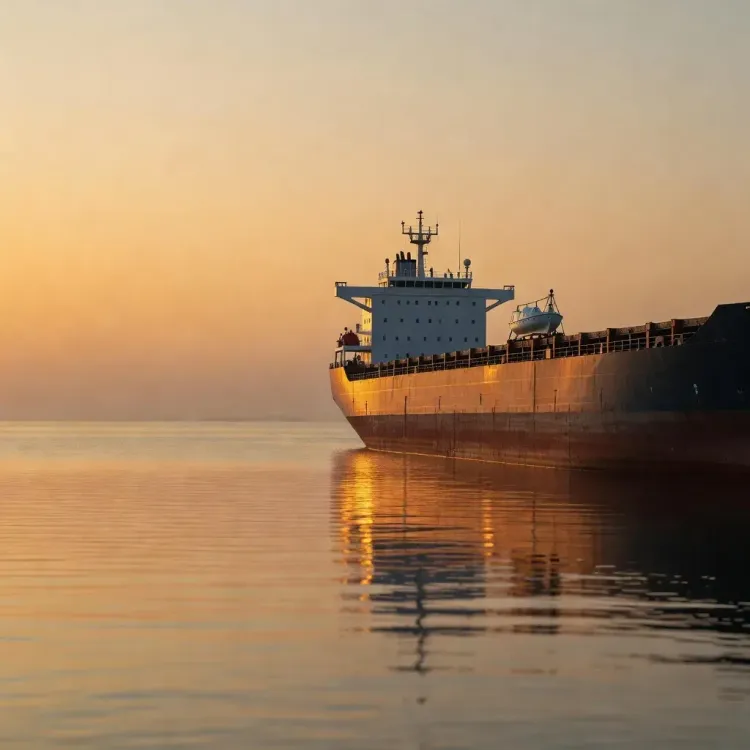
EAM Dr. S. Jaishankar called US Secretary of State Marco Rubio on June 13, 2026, reiterating India's strong protest over US Navy strikes in the Gulf that killed three Indian mariners, calling such lethal actions against commercial shipping unjustified.
Key Takeaways
Jaishankar spoke with US Secretary of State Marco Rubio on the evening of June 13, 2026 .
The minister 'reiterated' India's protest, indicating the issue had already been raised through prior diplomatic channels.
Three Indian mariners were killed in what Jaishankar described as US Navy attacks in the Gulf .
Jaishankar explicitly stated that 'lethal actions against commercial shipping are not justified.' India has one of the world's largest seafarer workforces, with significant numbers deployed on Gulf-transiting vessels.
The incident is expected to feature in upcoming India-US bilateral and Quad diplomatic engagements.
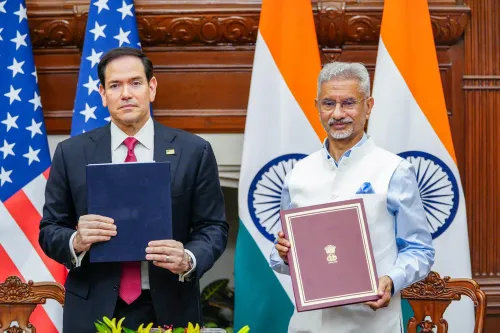
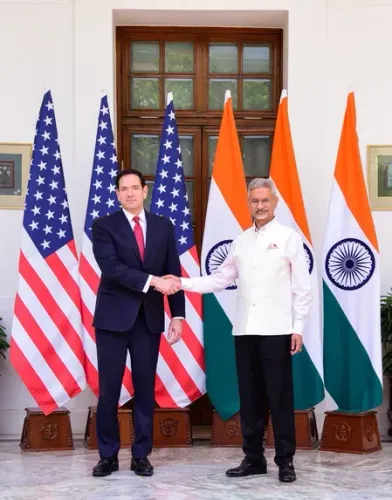
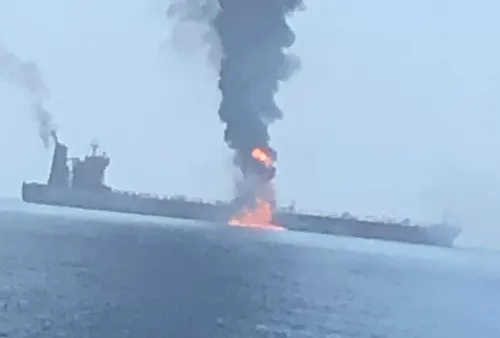
Union External Affairs Minister Dr. S. Jaishankar spoke with US Secretary of State Marco Rubio on the evening of Friday, June 13, 2026, lodging a strong formal protest over US Navy strikes in the Gulf that killed three Indian mariners aboard a commercial vessel. The minister described the lethal actions against commercial shipping as unjustified, marking one of the sharpest public rebukes New Delhi has directed at Washington in recent memory.
Context
In his post on X, Dr. Jaishankar stated: 'I reiterated India's strong protest at the attacks by the US Navy in the Gulf that killed three Indian mariners. Such lethal actions against commercial shipping are not justified.' The word 'reiterated' signals that New Delhi had already raised the matter through diplomatic channels before this call, and that the minister chose to elevate it to the Secretary of State level.
The loss of three Indian nationals at sea in what appears to be a military strike on a civilian vessel represents a grave consular and humanitarian concern for India, which fields one of the world's largest seafarer workforces. Indian mariners serve aboard commercial vessels across the Persian Gulf, Red Sea, and wider Indian Ocean region in large numbers.
Policy Backdrop
India has a documented history of pursuing accountability when its nationals are harmed at sea during military or enforcement operations. The 2013 Enrica Lexie case — in which Italian naval personnel shot and killed two Indian fishermen off the Kerala coast — set a precedent for sustained diplomatic and legal pressure by New Delhi over maritime civilian casualties.
India's position on freedom of navigation and the safety of commercial vessels in the Gulf has been consistently stated across successive governments. New Delhi has sought to balance its strategic partnership with Washington — including cooperation under the Quad framework — with frank bilateral exchanges when Indian citizens are directly harmed by US military action.
Marco Rubio, a former long-serving Republican Senator known for his focus on foreign policy and national security, now leads the US State Department. His engagement with Dr. Jaishankar at this level reflects the seriousness with which both sides are treating the incident.
Stakeholders and Impact
India's commercial shipping industry and the families of the three killed mariners are the most immediate stakeholders. With hundreds of thousands of Indian seafarers working on vessels transiting the Gulf at any given time, the incident raises urgent questions about the safety of civilian crews in waters where naval operations are active.
The broader shipping industry — including vessel operators, flag states, and maritime insurers — will be watching New Delhi's diplomatic response closely. Any formal demand for accountability or compensation from India could set a precedent for how civilian casualties from naval strikes on commercial vessels are handled internationally.
What's Next
The Ministry of External Affairs is expected to issue further statements, and consular access to the site or to survivors, if any, may be formally requested. The incident is likely to surface in upcoming India-US bilateral defence and diplomatic dialogues, including any scheduled Quad discussions.
Dr. Jaishankar's public framing of the call — unusually direct in naming the US Navy and calling the strikes unjustified — suggests New Delhi intends to keep pressure on Washington in the public domain, not merely through back-channel diplomacy. How the US State Department responds publicly will be closely watched by both governments and international maritime bodies.
Point of View
' New Delhi is signalling that domestic accountability for Indian civilian lives at sea overrides alliance optics. This fits a broader pattern in Indian foreign policy under the current government: frank transactional bilateralism, where strategic cooperation does not grant partners immunity from public censure when Indian nationals are harmed. The episode will test whether the India-US relationship, deepened through Quad and defence pacts, can absorb pointed friction at the level of lethal military conduct.
NationPress
13 Sept 2026
Frequently Asked Questions
Why did Jaishankar call Marco Rubio about the Gulf incident?
Dr. Jaishankar called Marco Rubio to formally reiterate India's protest over US Navy strikes in the Gulf that killed three Indian mariners aboard a commercial vessel, stating such lethal actions against commercial shipping are not justified.
How many Indian mariners were killed in the US Navy Gulf attack?
According to Dr. Jaishankar's post, three Indian mariners were killed in the attacks by the US Navy in the Gulf.
What is India's official position on the US Navy strikes on commercial shipping?
India's External Affairs Minister has stated that 'lethal actions against commercial shipping are not justified,' representing a formal and public protest against the strikes.
Has India protested against US military actions affecting Indian nationals before?
Yes. India has a precedent of sustained diplomatic pressure when its nationals are harmed at sea, most notably in the 2013 Enrica Lexie case involving the killing of two Indian fishermen.
What happens next after Jaishankar's call with Rubio?
The Ministry of External Affairs is expected to issue further statements. Consular access may be sought, and the matter is likely to be raised in upcoming India-US bilateral and Quad diplomatic talks.