Congress slams India's 'feeble' response after 3 Indian sailors killed in US Navy strike
Synopsis
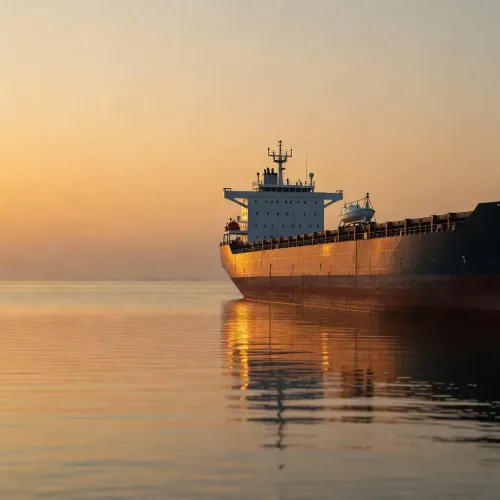
Three Indian sailors are dead after a US Navy strike on a Gulf of Oman oil tanker — and Congress is now attacking the government on two fronts: Washington's blunt, unapologetic response and New Delhi's own perceived diplomatic timidity. EAM Jaishankar's post on X protesting the strike has done little to silence critics who say India's response fell well short of the moment.
Key Takeaways
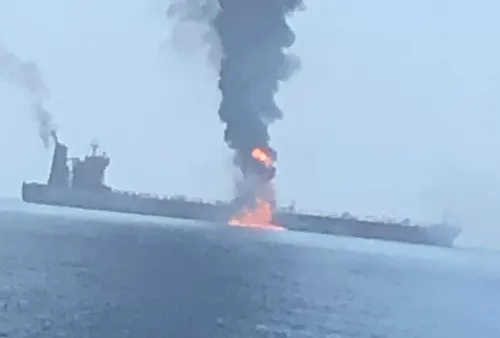
Three Indian seafarers were killed in a US Navy strike on an oil tanker in the Gulf of Oman .
Congress MP Manish Tewari called the US response a display of 'deep insensitivity' and said India's concerns had not registered with Washington.
Congress leader Pawan Khera accused EAM Jaishankar of using 'very mild words' and criticised PM Modi for not issuing a condolence message.
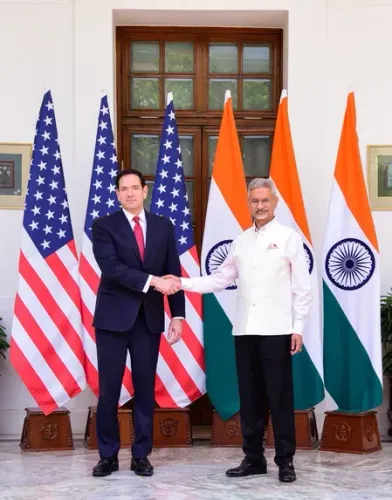
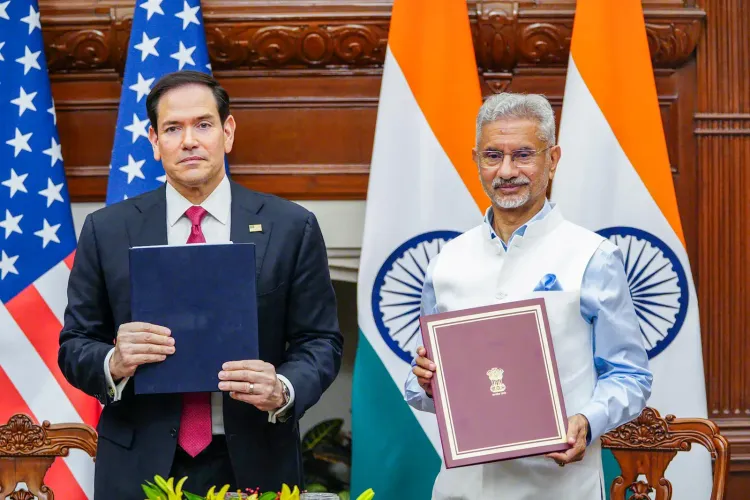
Jaishankar posted on X that he 'reiterated India's strong protest' to US Secretary of State Marco Rubio , calling the strikes 'not justified.' The MEA had earlier summoned US Charge d'Affaires Jason Meeks on Friday to register formal displeasure.
Congress invoked the Geneva Convention of 1949 , arguing commercial vessels cannot legally be attacked in this manner.
Congress on Sunday, 14 June sharply criticised both the United States government's response and what it described as India's 'feeble' diplomatic reaction to a US Navy strike on an oil tanker in the Gulf of Oman that killed three Indian seafarers. Opposition leaders also took aim at External Affairs Minister S. Jaishankar, accusing him of failing to present India's position firmly enough during his conversation with US Secretary of State Marco Rubio.
What Congress Said
Congress MP Manish Tewari called the incident 'extremely unfortunate,' saying it 'reflects deep insensitivity towards India's concerns.' He noted the absence of any regret or empathy from Washington, pointing instead to what he described as a blunt American message — that anyone violating US embargoes in the Strait of Hormuz would face consequences, implicitly framing the struck tanker as a violator of those embargoes.
'Given the fact that India had expressed strong concerns about how the three Indian nationals died in the airstrikes, there is no reflection of having that registered with the US government,' Tewari added. He asserted that Jaishankar should have 'stood up to this display of coarse behaviour by the US government.'
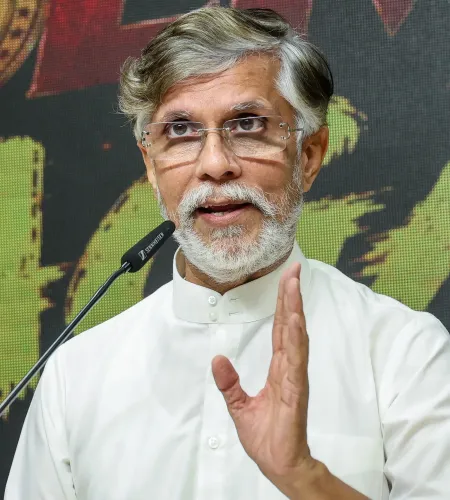
Congress leader Pawan Khera went further, saying: 'Yesterday, S. Jaishankar used very mild words and did not firmly present our position. We lost the lives of three of our citizens; in a way, the United States has killed three Indians.' Khera also noted that Prime Minister Narendra Modi had not issued a condolence message, and that 'not even a strong word of condemnation came from Mr. Jaishankar, nor was there any pressure on the US to apologise.'
The Geneva Convention Argument
Khera invoked the Geneva Convention of 1949, arguing that under its provisions, no commercial vessel can be attacked in the manner described. The argument adds a legal dimension to the political criticism, framing the US strike not merely as a diplomatic failure but as a potential violation of international humanitarian law.
What EAM Jaishankar Said
In a post on social media platform X, Jaishankar wrote: 'Spoke to US Secretary of State Marco Rubio this evening. I reiterated India's strong protest at the attacks by the US Navy in the Gulf that killed three Indian mariners. Such lethal actions against commercial shipping are not justified.'
Earlier on Friday, the Ministry of External Affairs (MEA) had summoned the US Charge d'Affaires (CDA), Jason Meeks, signalling New Delhi's formal displeasure. The summoning of a senior US diplomat is among the strongest routine tools of diplomatic protest available to the MEA.
Background and What Comes Next
The strike on the oil tanker in the Gulf of Oman is part of a broader pattern of heightened US military activity targeting vessels allegedly violating sanctions in the region. The deaths of three Indian nationals have placed New Delhi in a diplomatically delicate position — balancing its strategic partnership with Washington against domestic pressure to defend its citizens. All eyes are now on whether India escalates its diplomatic response beyond the summoning of the CDA, and whether the US offers any formal acknowledgement of the Indian casualties.
Point of View
' but the diplomatic record so far amounts to a summoned CDA and a social media statement, which falls short of what peer nations typically deploy when their citizens are killed in a military strike. The Modi government's silence on condolences is a political own-goal that Congress will exploit. More fundamentally, India's strategic dependency on the US partnership constrains its options in ways that opposition leaders conveniently ignore — but that constraint does not excuse the absence of a formal, public demand for accountability. The Geneva Convention argument raised by Khera, if legally substantiated, could give India a multilateral platform to press the case beyond bilateral channels.
NationPress
15 Sept 2026
Frequently Asked Questions
What happened to the three Indian sailors in the Gulf of Oman?
Three Indian seafarers were killed when the US Navy struck an oil tanker in the Gulf of Oman. The incident prompted India's Ministry of External Affairs to summon the US Charge d'Affaires and led EAM Jaishankar to raise a formal protest with US Secretary of State Marco Rubio.
What did EAM Jaishankar say to US Secretary of State Marco Rubio?
Jaishankar posted on X that he had spoken to Rubio and 'reiterated India's strong protest at the attacks by the US Navy in the Gulf that killed three Indian mariners,' adding that 'such lethal actions against commercial shipping are not justified.'
Why is Congress criticising EAM Jaishankar over this incident?
Congress leaders Manish Tewari and Pawan Khera argue that Jaishankar's language was too mild and that he failed to firmly present India's position. They also criticised PM Modi for not issuing a condolence message for the three Indian nationals who died.
What action has India's government taken so far?
India's MEA summoned US Charge d'Affaires Jason Meeks on Friday to register formal displeasure. EAM Jaishankar also spoke directly to Secretary of State Rubio and conveyed India's protest, calling the strikes on commercial shipping unjustified.
What is the Geneva Convention argument raised by Congress?
Congress leader Pawan Khera cited the Geneva Convention of 1949, arguing that it prohibits attacks on commercial vessels in the manner described. He used this to frame the US strike as a potential violation of international humanitarian law, not merely a diplomatic dispute.