Jaishankar at UNGA: India-Liberia launch seafarer safety group after Gulf, Black Sea attacks
Synopsis
After Indian sailors were killed in the Gulf of Oman and the Black Sea within days of each other, EAM Jaishankar used the UNGA stage to co-launch a new multilateral forum on shipping safety — backed by a Modi proposal for a global seafarers' emergency network. With $140 billion in daily trade at stake, India is staking a clear claim as the lead advocate for the world's two million merchant mariners.
Key Takeaways
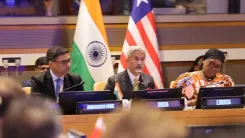
Jaishankar co-launched the Group of Friends on Safety and Security of Shipping and Seafarers with Liberia on 25 September 2026 on the sidelines of UNGA in New York .
An Indian sailor was killed aboard MV Cape Dove in the Gulf of Oman two days before the meeting; another went missing after the El Gaya tanker was struck in the Strait of Hormuz .
Four Indian seafarers died aboard MV Golden Leo near Odessa ; a chief officer was killed on MV Omorfi in the Black Sea on 18 July .
Global trade exceeds $140 billion a day , with oceans supporting more than 80 per cent of it and nearly two million seafarers at sea.
PM Modi proposed a seafarers' emergency support network at the BRICS summit two weeks earlier, linking maritime authorities and embassies for distress alerts and evacuations.
The forum's procedures and terms of reference are to be finalised by member nations; India holds the world's largest seafarer workforce and Liberia runs the world's largest ship registry.
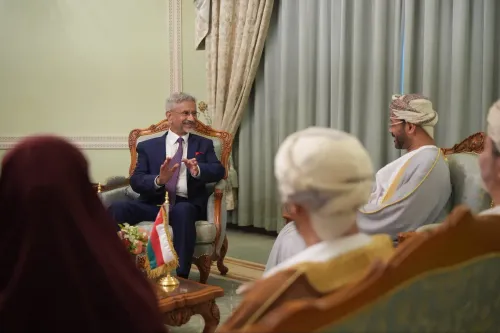
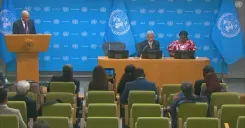
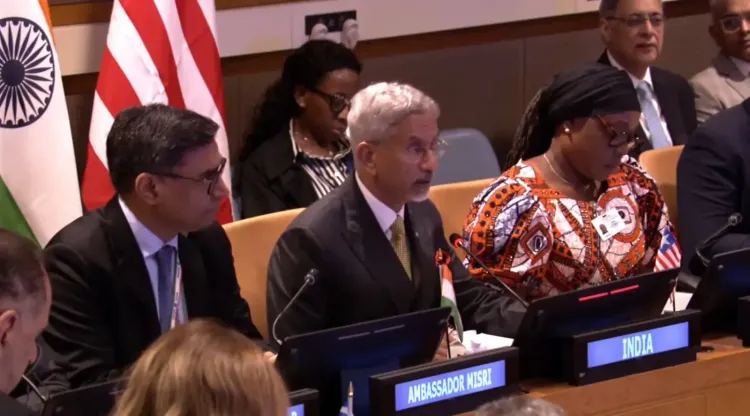
External Affairs Minister S. Jaishankar on 25 September 2026 spotlighted a string of deadly attacks on commercial vessels — including the killing of Indian sailors in the Gulf of Oman and the Black Sea — while co-launching the Group of Friends on Safety and Security of Shipping and Seafarers on the sidelines of the UN General Assembly (UNGA) in New York. The forum, proposed jointly by India and Liberia, brings together major ship-owning nations, large ship registries, and leading seafarer-supplying countries to coordinate a collective response to rising maritime violence.
Recent Attacks That Prompted Action
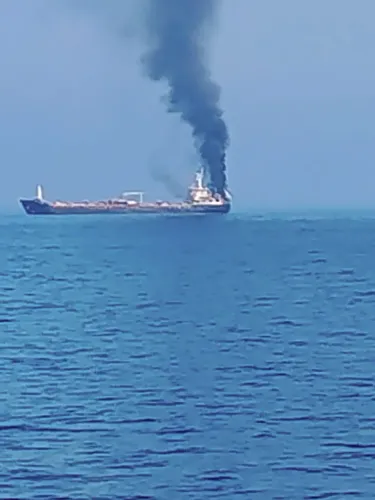
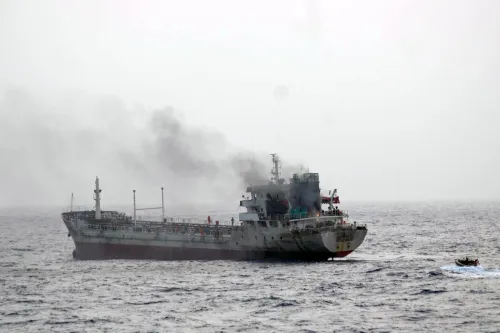
Jaishankar cited four recent incidents to underscore the urgency. Two days before the meeting, an Antigua and Barbuda-flagged bulk carrier, MV Cape Dove, was attacked in the Gulf of Oman, killing an Indian sailor. Ten days prior, a Panama-flagged oil tanker, El Gaya, was struck in the Strait of Hormuz, leaving an Indian crew member missing.
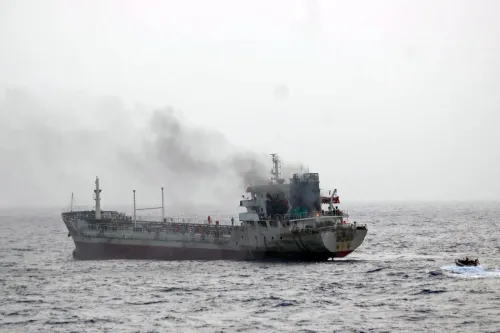
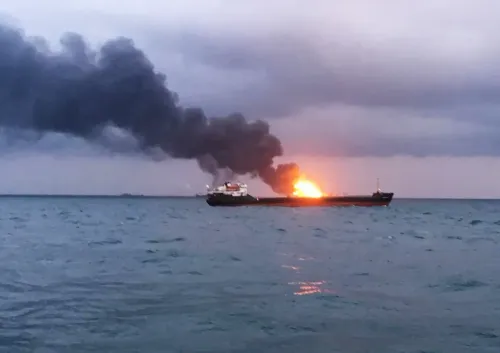
Two further incidents occurred in the Black Sea. The chief officer of the MV Omorfi — an Indian national — was killed when the vessel was hit in Russian territorial waters on 18 July. The following day, four Indian seafarers died after the MV Golden Leo was struck shortly after departing from Odessa. Jaishankar was unequivocal: 'These, regrettably, are no longer exceptional occurrences.'
Scale of the Maritime Stakes
Jaishankar framed maritime safety as a global economic imperative, noting that international trade exceeds $140 billion a day and that oceans underpin more than 80 per cent of it. Nearly two million seafarers serve aboard the world's merchant fleets, many enduring prolonged confinement, delayed crew changes, family separation, and psychological distress in addition to physical danger.
'From the Black Sea to the Red Sea to the Gulf, attacks on civilian shipping have become a growing cause of concern,' he told the inaugural gathering. 'These actions that disrupt maritime commerce and cost innocent lives are simply indefensible.' He noted that casualties this year had come from multiple nationalities, not only Indian.
Why India and Liberia Are Co-Leading
India is one of the world's largest sources of seafarers, contributing a significant share of the global merchant marine workforce. Liberia operates the world's largest ship registry. Together, the two countries argued that a flag state and a crew's home country are frequently different, making a multilateral forum essential — no single government can respond effectively acting alone.
Jaishankar noted that India had already raised maritime safety at the UN Security Council, co-organising a meeting with Greece and the Philippines in November 2025 on protecting seafarers, and participating in an April 2026 debate on waterway safety. The new group is designed to translate those concerns into a standing forum with real operational focus.
Modi's Seafarers Emergency Network Proposal
The maritime push has also been raised at the highest political level. Jaishankar said Prime Minister Narendra Modi had — at the BRICS summit India hosted two weeks earlier — proposed a seafarers' emergency support network linking maritime authorities and embassies worldwide. The network is intended to send distress alerts, arrange medical assistance, keep families informed, and support evacuations when required.
Jaishankar invited Group of Friends members to help shape the forum's procedures and terms of reference through their own discussions. He thanked participating nations and said he was keen to hear their perspectives on priorities.
What Comes Next
The Group of Friends is at its inaugural stage, and its formal terms of reference are yet to be finalised. Jaishankar indicated the structure would be built collaboratively among members. With India's diplomatic engagement spanning the Security Council, the BRICS platform, and now this UNGA-adjacent forum, maritime security has emerged as a consistent foreign-policy priority for New Delhi heading into the final months of 2026.
Point of View
Which controls the world's largest ship registry, New Delhi has found a structural ally that amplifies India's standing as the primary voice for seafarers globally. What mainstream coverage misses is the domestic political subtext: with India supplying a disproportionate share of the world's merchant mariners, each attack on a commercial vessel is also an Indian labour issue and a consular obligation. The BRICS emergency network proposal signals that Modi intends to weave maritime welfare into India's multilateral identity — but the Group of Friends remains nascent, and without enforceable norms or a secretariat, it risks becoming another well-intentioned forum that produces statements rather than protection.
NationPress
25 Sept 2026
Frequently Asked Questions
What is the Group of Friends on Safety and Security of Shipping and Seafarers?
It is a new multilateral forum co-proposed by India and Liberia, launched on 25 September 2026 on the sidelines of the UN General Assembly in New York. It brings together major ship-owning nations, large ship registries, and leading seafarer-supplying countries to coordinate responses to attacks on commercial vessels and improve protections for crews.
Which attacks on Indian seafarers did Jaishankar highlight at UNGA?
Jaishankar cited four recent incidents: an Indian sailor killed aboard MV Cape Dove in the Gulf of Oman; an Indian crew member missing after the El Gaya tanker was struck in the Strait of Hormuz; the chief officer of MV Omorfi killed in the Black Sea on 18 July; and four Indian seafarers killed aboard MV Golden Leo near Odessa the following day.
Why are India and Liberia co-leading this maritime safety initiative?
India is one of the world's largest sources of seafarers, while Liberia operates the world's largest ship registry. Because a vessel's flag state and its crew's home country are frequently different, Jaishankar argued that only a multilateral forum — rather than any single government acting alone — can mount an effective deterrent response.
What did PM Modi propose regarding seafarer safety at the BRICS summit?
Prime Minister Narendra Modi proposed a seafarers' emergency support network at the BRICS summit India hosted two weeks before the UNGA meeting. The network would link maritime authorities and embassies to send distress alerts, arrange medical assistance, keep families informed, and coordinate evacuations when needed.
What are the next steps for the Group of Friends?
The group is at its inaugural stage, and its formal procedures and terms of reference are yet to be finalised. Jaishankar invited member nations to shape the forum through their own discussions. India's broader multilateral push — spanning the UN Security Council, BRICS, and now this new forum — suggests maritime safety will remain a consistent diplomatic priority for New Delhi.