Jaishankar, Visegrad 4 launch first-ever joint meeting at UN, back India's UNSC bid
Synopsis
India and the four-nation Visegrad Group held their first-ever joint ministerial meeting at the UN General Assembly on 22 September, with all four Central European countries publicly backing India’s permanent UNSC membership. The sides agreed to an annual business forum and deeper defence, technology, and space cooperation — a structural upgrade in New Delhi’s Central European diplomacy.
Key Takeaways
EAM Jaishankar and the Visegrad 4 held their first-ever joint meeting at the UN General Assembly on 22 September 2026 .
All four V4 nations — Slovakia , Hungary , Poland , and the Czech Republic — publicly backed India’s bid for a permanent UN Security Council seat .
The two sides agreed to launch an annual business forum and hold annual foreign ministers’ meetings .
Key cooperation areas identified: defence , technology , innovation , and space .
Jaishankar held separate bilateral meetings with Hungary’s Anita Orban and Slovakia’s Juraj Blanár on the sidelines.
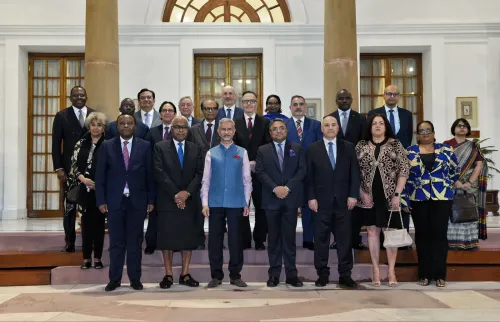
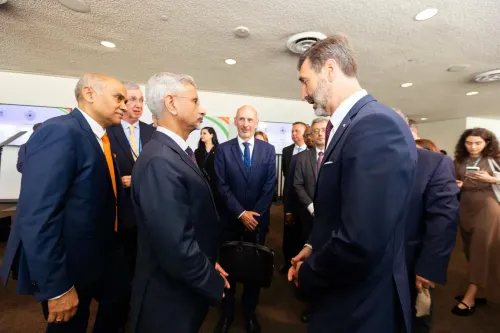
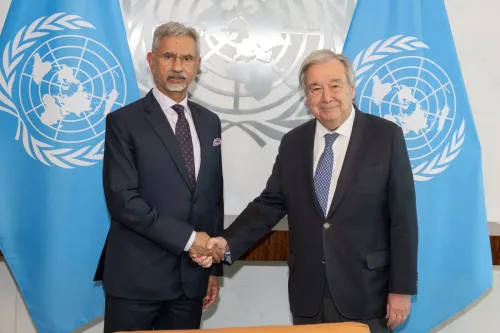
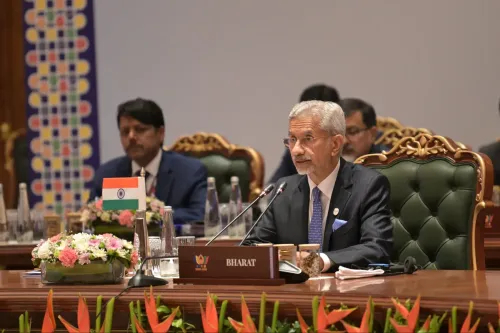
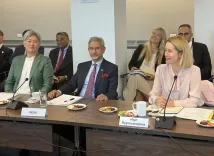
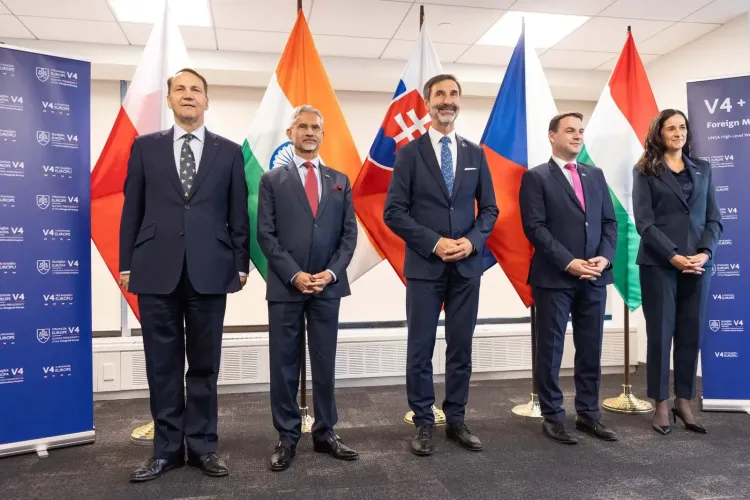
External Affairs Minister S. Jaishankar and the foreign ministers of the Visegrad 4 (V4) group — Slovakia, Hungary, Poland, and the Czech Republic — held their first-ever joint meeting on the sidelines of the United Nations General Assembly on 22 September 2026, marking what the bloc described as “a new historic occasion” that would deepen New Delhi’s engagement with Central Europe. Slovakia’s Foreign Minister Juraj Blanár, who convened the meeting, declared India an “upcoming superpower” and announced that all four V4 nations support India securing a permanent seat on the UN Security Council.
What Was Agreed
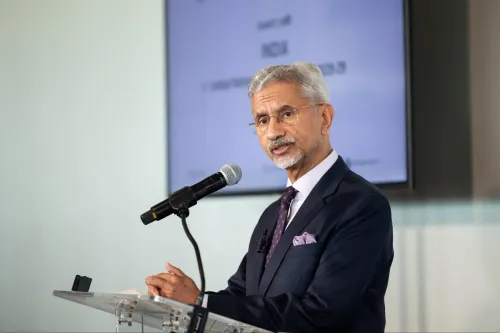
The meeting produced a set of concrete commitments. Speaking on the outcomes, Jaishankar said, “What we agreed was that since India’s relationship with the European Union itself is deepening, with the V4 we would take some special initiatives to create an annual business forum.” The foreign ministers also resolved to hold annual meetings going forward, institutionalising what had previously been informal ties. The two sides agreed to expand cooperation across technology, defence, innovation, and space.
Support for India's UNSC Permanent Membership
Blanár made the V4’s position on UN reform unambiguous. “We all agree, the four countries, that India, as a part of the Global South, upcoming superpower in the Indo-Pacific region, must be at the table as the permanent member of UN Security Council,” he told reporters. The endorsement from all four Central European nations adds diplomatic weight to India’s long-standing push for permanent membership in a reformed Security Council, and comes at a moment when multilateral reform is gaining renewed momentum at the UN.
Defence and Technology Cooperation in Focus
Jaishankar underscored the depth of India’s existing defence ties with the V4. “We have a very strong history with all the V4 countries in defense,” he said. “We want to refresh and take forward that record and that cooperation.” He described the group as “industrial economies, economies with great innovation and technology talent,” signalling that the partnership is evolving beyond its Cold War-era contours toward cutting-edge sectors including space and advanced manufacturing.
Bilateral Meetings on the Sidelines
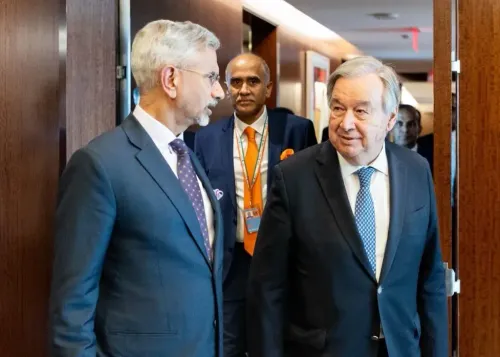
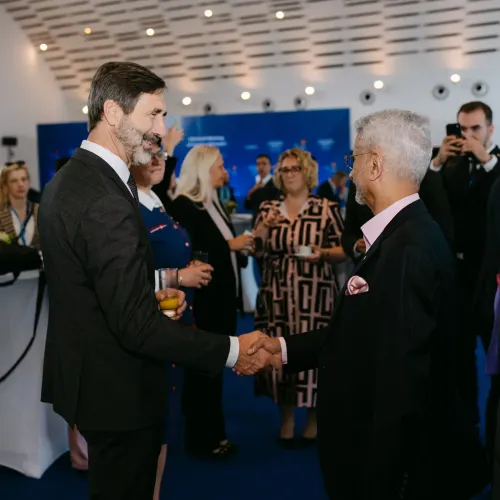
Beyond the joint session, Jaishankar held separate bilateral meetings with Hungarian Deputy Prime Minister Anita Orban and Slovak Foreign Minister Blanár. On his bilateral with Orban — Hungary being one of his early diplomatic postings — he posted on X that both sides “resolved to work together to deepen our ties, as well as advance the India-European Union Strategic Partnership.” After the meeting with Blanár, Jaishankar said they had “touched upon ways to deepen our multilateral cooperation” in addition to bilateral matters. Radek Sikorski represented Poland and Petr Macinka represented the Czech Republic at the joint meeting.
The V4: A Brief Background
The Visegrad Group takes its name from the Hungarian city of Visegrád, where the leaders of Hungary, Poland, and Czechoslovakia first convened in 1991 after emerging from Soviet-era constraints. The group expanded to four members when Czechoslovakia split into the Czech Republic and Slovakia. India has maintained decades of individual bilateral ties with each of the four nations, making this first collective meeting a structural upgrade rather than a fresh start.
With an annual business forum and regular ministerial meetings now on the calendar, the India-V4 framework is set to become a standing pillar of New Delhi’s broader European engagement strategy.
Point of View
Not bilateral platitudes. What’s underreported is the defence dimension: India’s legacy ties with Central European arms industries, built during the Soviet era through shared non-alignment adjacency, are now being reframed as a technology and innovation partnership, which aligns with New Delhi’s push to diversify defence supply chains away from Russia. The institutionalisation of annual meetings and a business forum suggests India is treating the V4 not merely as a subset of its EU relationship but as a distinct geopolitical lever. The real test will be whether the annual business forum generates tangible investment flows, or remains a diplomatic ritual.
NationPress
22 Sept 2026
Frequently Asked Questions
What happened at the India-Visegrad 4 meeting at the UN?
India and the Visegrad 4 group — Slovakia, Hungary, Poland, and the Czech Republic — held their first-ever joint ministerial meeting on 22 September 2026 at the United Nations General Assembly in New York. The two sides agreed to launch an annual business forum, hold yearly foreign ministers’ meetings, and expand cooperation in defence, technology, and space.
What is the Visegrad 4 group?
The Visegrad 4 (V4) is a political and cultural alliance of four Central European countries: Hungary, Poland, Slovakia, and the Czech Republic. The group was founded in 1991 in the Hungarian city of Visegrád after its members emerged from Soviet-era constraints, and it expanded from three to four when Czechoslovakia split.
Do the Visegrad 4 countries support India’s permanent UNSC membership?
Yes. All four V4 nations publicly declared their support for India gaining a permanent seat on the UN Security Council at the 22 September meeting. Slovak Foreign Minister Juraj Blanár, speaking on behalf of the group, said India ‘must be at the table as the permanent member of UN Security Council.’
What areas of cooperation did India and the V4 agree to pursue?
The two sides identified defence, technology, innovation, and space as priority areas. Jaishankar highlighted India’s strong historical defence ties with V4 countries and expressed intent to ‘refresh and take forward’ that cooperation into new domains.
How does the India-V4 meeting fit into India’s broader European diplomacy?
The meeting is part of India’s deepening engagement with the European Union and its member states. Jaishankar noted that as the India-EU Strategic Partnership expands, special initiatives with the V4 — such as the annual business forum — will serve as a dedicated track within that broader framework.