Lashkar-e-Taiba eyes water routes into J&K as land infiltration fails post-Op Sindoor
Synopsis
Blocked on land after Operation Sindoor, Lashkar-e-Taiba is reportedly pivoting to rivers and sea lanes — training recruits at the same dam where the 26/11 attackers prepared, with ISI naval officers at the helm. Intelligence agencies warn the outfit wants 50–100 active terrorists positioned inside J&K, ready to strike on command.
Key Takeaways
Lashkar-e-Taiba (LeT) , backed by Pakistan's ISI , is reportedly planning water-route infiltration into Jammu and Kashmir after land crossings were shut down post- Operation Sindoor .
Primary river targets are the Chenab and Tawi rivers in the Akhnoor sector; Sir Creek and Harami Nala are also under consideration for entry via Gujarat .
The ISI has reportedly assigned naval officials to train recruits at Mangala Dam — the same facility used to train the 26 November 2008 Mumbai attackers.
The stated objective is to position 50 to 100 active Pakistani terrorists inside J&K to await strike orders from dense forest cover.
The Ministry of Home Affairs (MHA) says borders are being patrolled with watercraft, speedboats, floating outposts, and hi-tech night-vision surveillance.
Officials say a major J&K attack would also serve as a strategic diversion from Pakistan's internal turmoil in Balochistan , PoK , and Khyber Pakhtunkhwa .
Lashkar-e-Taiba (LeT), facing near-total closure of land infiltration corridors into India, is now reportedly planning to use water routes to push terrorists across the border, according to the latest intelligence inputs. The Pakistan-based terror outfit, operating with the support of the Inter-Services Intelligence (ISI), is actively examining river and sea-based pathways to resume large-scale operations in Jammu and Kashmir.
Why Land Routes Have Failed
Following Operation Sindoor, multiple infiltration attempts along the Jammu and Kashmir and Punjab borders have been foiled. India has significantly reinforced its border security apparatus, making overland crossings, according to officials, next to impossible. It is this tightening that has driven LeT to revisit an older playbook — maritime and river-based entry.
Key Water Routes Under Scrutiny
Intelligence officials say the Chenab and Tawi rivers in the Jammu sector are the primary targets. The Akhnoor sector, in particular, has historically served as a critical infiltration corridor, with terror groups exploiting the river's dense surrounding vegetation and water bodies. Operatives reportedly attempt crossings under the cover of fog and darkness along the International Border.
A second route under consideration is the Sir Creek and Harami Nala — two notoriously difficult-to-patrol waterways that open into Gujarat. According to officials, if terrorists successfully enter via this route, LeT plans to move them overland to Jammu and Kashmir.
ISI-Backed Maritime Training at Mangala Dam
An Intelligence Bureau official said the ISI has assigned naval personnel to conduct maritime training for the new batch of LeT recruits — mirroring the preparation that preceded the Mumbai 26/11 attacks of 26 November 2008, when 10 terrorists entered India by sea. The training is reportedly being conducted at Mangala Dam, the same facility where Ajmal Kasab and his associates trained before the Mumbai operation.
Officials say the objective is to position between 50 and 100 active Pakistani terrorists inside Jammu and Kashmir. Once in the region, they would be instructed to take cover in dense forests and await orders before executing strikes.
India's Counter-Measures Already in Place
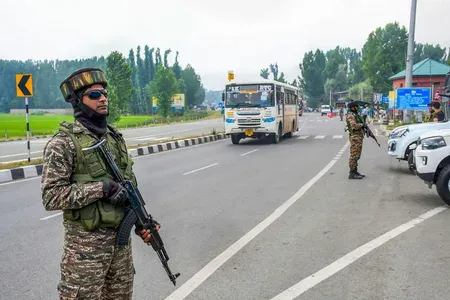
The Ministry of Home Affairs (MHA) has stated that international borders are being actively patrolled using watercraft, speedboats, and floating border outposts of the Border Guarding Forces (BGF). High-technology surveillance equipment, including day and night vision devices, has been deployed to strengthen border domination.
Officials acknowledge the plan is ambitious and operationally difficult, but warn that LeT is under pressure to demonstrate relevance. With Pakistan facing mounting internal turmoil in Balochistan, Pakistan-occupied Kashmir (PoK), and Khyber Pakhtunkhwa (KP), a major attack in Jammu and Kashmir would, according to officials, serve a dual purpose — reactivating LeT operations and deflecting global attention from Pakistan's domestic instability.
The Broader Strategic Picture
This is not the first time LeT has explored water-based infiltration. The 2008 Mumbai attacks demonstrated the group's capability to execute complex maritime operations. That the outfit is reportedly reverting to this method — now specifically targeting J&K rather than coastal cities — signals a tactical recalibration under sustained land-border pressure. Security agencies are expected to remain on heightened alert as intelligence inputs continue to be monitored.
Point of View
And the outfit needs a visible win to justify its existence and Pakistan's continued investment in it. The Mangala Dam training detail is the most alarming signal: it suggests institutional ISI involvement, not just passive support. What mainstream coverage underplays is the dual utility of a J&K strike for Islamabad — it would simultaneously revive a flagging proxy and redirect global scrutiny away from Balochistan and PoK unrest. India's floating border outposts and night-vision grid are the right response, but the 26/11 precedent is a reminder that maritime preparedness has historically lagged land-border security.
NationPress
16 Jul 2026
Frequently Asked Questions
Why is Lashkar-e-Taiba shifting to water routes for infiltration into India?
Land infiltration routes into Jammu and Kashmir and Punjab have been effectively sealed following Operation Sindoor, with multiple overland attempts foiled. According to intelligence officials, LeT believes water-based routes — rivers and sea lanes — offer a better chance of evading security forces.
Which water routes is Lashkar-e-Taiba reportedly targeting?
Intelligence inputs point to the Chenab and Tawi rivers in the Akhnoor sector of Jammu as the primary targets. The Sir Creek and Harami Nala waterways, which border Gujarat, are also under consideration as an alternate entry point, with terrorists then moving overland to J&K.
What is the significance of Mangala Dam in this plan?
Mangala Dam is reportedly the site where the current batch of LeT recruits is undergoing ISI-supervised maritime training. It is the same facility where Ajmal Kasab and the other nine attackers trained before carrying out the Mumbai 26/11 attacks on 26 November 2008.
How many terrorists is Lashkar-e-Taiba reportedly trying to position in J&K?
According to officials, the target is to have between 50 and 100 active Pakistani terrorists inside Jammu and Kashmir. Once in position, they would be instructed to shelter in dense forests and await orders before launching strikes.
What steps has India taken to counter water-route infiltration?
The Ministry of Home Affairs has stated that international borders are being patrolled with watercraft, speedboats, and floating border outposts of the Border Guarding Forces. High-technology surveillance equipment, including day and night vision devices, has also been deployed along these routes.