Joe Kent Resigns as Counterterrorism Chief Amid Iran War Controversy
Synopsis
In a bold move, Joe Kent resigns as Director of the National Counterterrorism Center, challenging the Trump administration's rationale for the Iran war. His departure highlights significant internal tensions regarding the conflict's justification.
Key Takeaways
Joe Kent's resignation reflects deep-seated concerns over U.S. military involvement in Iran.
His departure signals potential divisions within the Trump administration regarding foreign policy.
Kent emphasized the lack of imminent threat from Iran, challenging the justification for war.
Political responses highlight ongoing debates about intelligence politicization.
The NCTC's role is vital in assessing terrorism and coordinating intelligence.
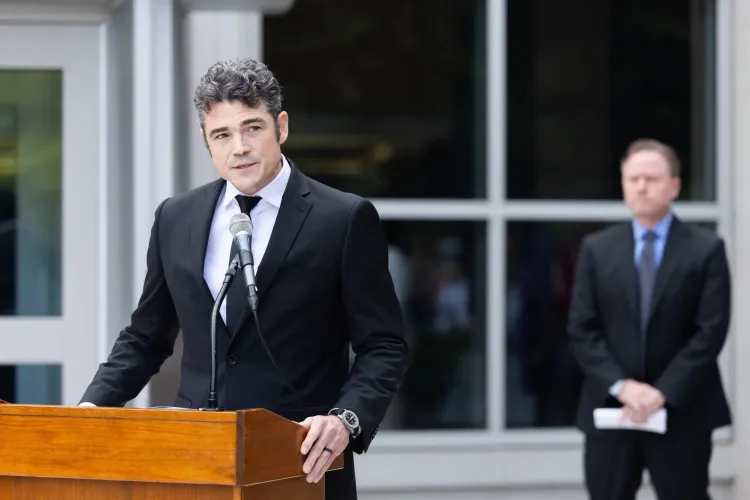
Washington, March 17 (NationPress) In a notable move, Joe Kent, the Director of the US National Counterterrorism Center (NCTC), has promptly resigned, marking a significant challenge for President Donald Trump and becoming the first senior official to exit the administration in opposition to the ongoing conflict with Iran.
“Following considerable thought, I have chosen to step down from my role as Director of the National Counterterrorism Center, effective immediately,” Kent stated in a public declaration on Tuesday.
He openly questioned the justification for the military action, stating, “I cannot, in good faith, endorse the continuing war in Iran. Iran did not present any imminent danger to our country, and it is evident that our involvement in this war is primarily influenced by pressure from Israel and its influential American lobby.”
Kent also reflected on his service, saying, “It has been a privilege to serve under @POTUS and @DNIGabbard, leading the dedicated professionals at NCTC. May God bless America.”
The White House has yet to comment on his resignation.
In a letter directed to President Trump, Kent elaborated on his concerns, reiterating that Iran “did not pose an immediate threat to our nation” and warned against repeating historical strategic errors in the Middle East.
He cautioned that the United States risks being entangled in another expensive conflict based on faulty assumptions. “We cannot allow ourselves to make this mistake again,” Kent emphasized, warning against decisions influenced by external pressures and misinformation.
Drawing from his personal experiences, Kent stated he could not support sending “the next generation into combat for a war that offers no advantage to the American public and does not justify the sacrifice of American lives.”
This resignation incited a swift political reaction, including remarks from Senate Intelligence Committee Vice Chair Mark R. Warner, who criticized Kent’s record but validated his primary assertion regarding Iran.
“Joe Kent’s history is concerning, and I believe he should never have been appointed to head the National Counterterrorism Center,” Warner commented.
“I fundamentally disagree with many positions he has taken over the years, particularly those that risk politicizing our intelligence community.”
Nonetheless, Warner added: “On this matter, he is correct: there was no substantial evidence of an imminent threat from Iran that would justify hastily dragging the United States into another optional war in the Middle East.”
He cautioned that decisions driven by politics could lead to dire consequences. “Disregarding the facts to pursue a predetermined conflict jeopardizes American lives and undermines our national security,” Warner stated.
“The United States must not be led into war based on political motivations, rash impulses, or a president’s desire for confrontation. We have seen the outcomes of this path before.”
Kent’s resignation underscores rising tensions within the Trump administration regarding the approach and justification of the conflict in Iran, especially concerning intelligence evaluations and decision-making.
The National Counterterrorism Center plays a pivotal role in assessing terrorism threats and coordinating intelligence across various agencies, making the resignation of its leader quite significant and politically charged.
Frequently Asked Questions
What prompted Joe Kent's resignation?
Joe Kent resigned due to his opposition to the ongoing war in Iran, stating it posed no imminent threat to the U.S. and was influenced by external pressures.
How has the White House responded to Kent's resignation?
As of now, the White House has not provided a public response to Joe Kent's resignation.
What are the implications of Kent's departure?
Kent's resignation highlights internal tensions within the Trump administration regarding the justification of the Iran conflict and raises concerns about the direction of U.S. foreign policy.
Who is Mark R. Warner and what did he say about Kent?
Mark R. Warner is the Vice Chair of the Senate Intelligence Committee. He criticized Kent's record but agreed with his assertion that there was no credible threat from Iran.
What role does the NCTC play in U.S. security?
The National Counterterrorism Center is crucial for analyzing terrorism threats and coordinating intelligence across U.S. agencies.