White House Responds to NCTC Chief's Iran War Assertions
Synopsis
The White House has strongly countered Joe Kent's claims that Iran is not an imminent threat, following his resignation from the NCTC. This marks a significant dissent within the Trump administration regarding military actions against Iran.
Key Takeaways
The White House firmly rejected claims by Joe Kent regarding Iran not posing an immediate threat.
Kent's resignation marks a significant dissent within the Trump administration concerning military actions.
The NCTC is crucial for analyzing terrorism threats and coordinating intelligence.
The U.S. has faced scrutiny over the intelligence used for military interventions in the past.
Kent's departure raises questions about U.S. foreign policy and military engagement strategies.
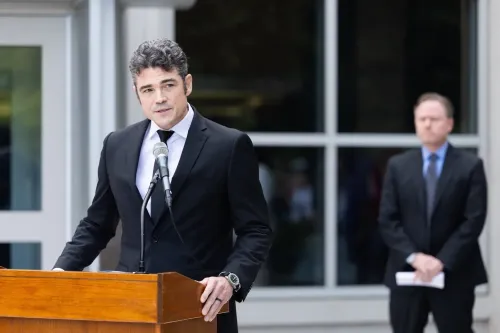
Washington, March 17 (NationPress) The White House vigorously disputed assertions made by the departing Director of the National Counterterrorism Center (NCTC), Joe Kent, claiming that Iran does not present an immediate danger. His resignation represents the first significant departure from the Trump administration in opposition to the conflict.
Press Secretary Karoline Leavitt stated, “There are numerous inaccuracies in this letter, but I will address one particularly: that ‘Iran posed no imminent threat to our nation.’”
“This assertion is merely a repetition of the same false narrative propagated by Democrats and segments of the liberal media,” she continued.
Kent’s resignation came shortly after he announced, “After considerable thought, I have chosen to step down from my position as Director of the National Counterterrorism Center, effective immediately.”
He openly questioned the justification for the ongoing war, stating, “I cannot, in good conscience, endorse the current conflict in Iran. Iran posed no imminent threat to our nation, and it is evident that we initiated this war due to the influence of Israel and its powerful American lobby.”
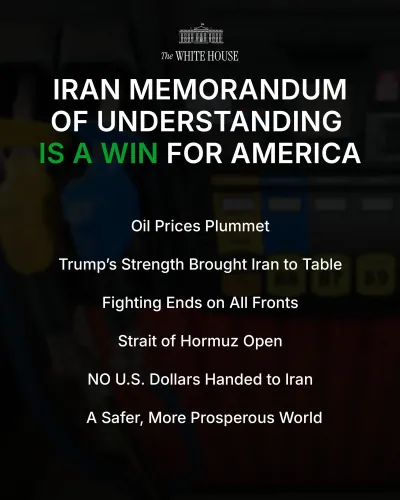
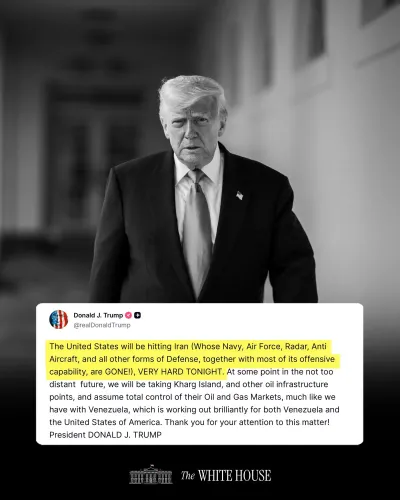
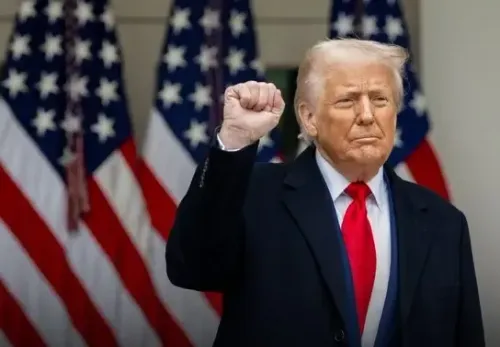
The White House defended the intelligence supporting the military action. “As President Trump has clearly indicated, he possessed strong and compelling evidence that Iran intended to strike the United States first,” Leavitt asserted.
“This evidence was gathered from multiple sources and considerations. President Trump would never decide to deploy military forces against a foreign adversary without substantial justification.”
Kent, however, cautioned against repeating past errors. In his resignation letter, he reiterated that Iran “posed no imminent threat to our nation” and warned that “we must not allow this mistake to happen again.”
He expressed concerns that the United States could become embroiled in another expensive conflict based on flawed premises and external pressures.
Kent, drawing from his own experiences, stated he could not support sending “the next generation to fight and die in a war that provides no advantage to the American public or justifies the loss of American lives.”
Leavitt characterized Iran as a significant and evolving threat, labeling it “the world’s foremost state sponsor of terrorism.”
“The Iranian regime is malevolent. It has proudly killed Americans, waged war against our country, and openly threatened us leading up to the launch of Operation Epic Fury,” she added.
She emphasized that the administration had sought diplomatic solutions before resorting to military measures. “However, they refused to agree to peace as their primary objective was acquiring nuclear weapons.”
Leavitt concluded that the President acted to avert a larger assault. “President Trump ultimately determined that a coordinated strike with Israel would significantly reduce the risk to American lives posed by a potential initial attack from the terrorist Iranian regime and address this imminent threat to America’s national security interests.”
“The Commander-in-Chief decides what constitutes a threat,” she affirmed.
Kent also reflected on his time in office, stating, “It has been an honor to serve under @POTUS and @DNIGabbard while leading the talented professionals at NCTC. God bless America.”
His resignation provoked a strong political reaction, including from Senate Intelligence Committee Vice Chair Mark R. Warner, who criticized Kent’s record but aligned with his fundamental assertion.
“Joe Kent’s record is concerning, and I believe he should never have been confirmed to lead the National Counterterrorism Center,” Warner remarked.
Nevertheless, he added, “On this matter, he is correct: there was no credible evidence of an imminent threat from Iran that would warrant hastily involving the United States in another conflict in the Middle East.”
“Disregarding the facts to pursue a predetermined war jeopardizes American lives and undermines our national security,” Warner stated.
The National Counterterrorism Center plays a crucial role in evaluating terrorism threats and synchronizing intelligence across various agencies, rendering the resignation of its director particularly unusual and politically sensitive.
The United States has faced scrutiny regarding the intelligence employed to justify military actions in the Middle East, especially during the Iraq war when claims about weapons of mass destruction were later debunked.
Point of View
The resignation of NCTC Director Joe Kent raises critical questions about the justification for military action against Iran. While the White House defends its stance, Kent's departure signals significant internal dissent, warranting further scrutiny of U.S. foreign policy.
NationPress
24 Sept 2026
Frequently Asked Questions
What prompted Joe Kent's resignation?
Joe Kent resigned from his position as NCTC Director to protest against the ongoing war in Iran, stating he could not support military actions based on flawed assumptions.
How did the White House respond to Kent's claims?
The White House, represented by Press Secretary Karoline Leavitt, strongly refuted Kent's assertion that Iran posed no imminent threat, labeling it as false.
What are the implications of Kent's resignation?
Kent's resignation highlights internal dissent within the Trump administration regarding military actions and raises questions about the intelligence used to justify such actions.
What is the role of the NCTC?
The National Counterterrorism Center plays a vital role in analyzing terrorism threats and coordinating intelligence across various government agencies.
What previous controversies have arisen regarding U.S. military actions?
The U.S. has faced criticism for the intelligence used to justify military actions in the Middle East, particularly during the Iraq War, where claims about weapons of mass destruction were later discredited.