Kenya seeks South Korea tie-up on rare earth refining, nuclear energy
Synopsis
Kenya is no longer content with aid — it wants technology. Foreign Minister Musalia Mudavadi's pitch to South Korea on rare earth refinement and nuclear energy, timed to a 50-nation Korea-Africa summit, signals Nairobi's ambition to climb the value chain and reshape a 60-year-old partnership built largely on development assistance.
Key Takeaways
Kenyan Foreign Minister Musalia Mudavadi has expressed interest in South Korean cooperation on rare earth refinement and nuclear energy .
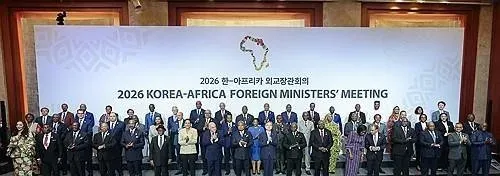
Mudavadi is attending the Korea-Africa Foreign Ministers' Meeting in Seoul alongside more than 50 African foreign ministers.
South Korea and Kenya marked 60 years of diplomatic relations, with ties historically focused on development assistance and technology transfer.
Recent cooperation milestones include the planned Export-Import Bank of Korea office in Nairobi and the Konza Technopolis smart city project.
Seoul has designated Kenya a priority partner country under its official development assistance (ODA) programme.
Kenyan Foreign Minister Musalia Mudavadi has signalled Nairobi's intent to pursue cooperation with South Korea in rare earth mineral refinement and nuclear energy, marking a deliberate push to move bilateral ties beyond traditional development assistance. The remarks were made ahead of the Korea-Africa Foreign Ministers' Meeting scheduled for Monday in Seoul.
Rare Earth Refinement at the Centre of Kenya's Pitch
In a written interview, Mudavadi identified value-added processing of Kenya's mineral wealth as a priority area. 'The real potential in rare earth elements lies in their refinement,' he said. 'We are open to partnering with our development partners to acquire the appropriate and necessary technologies to help us exploit their potential.'
Kenya holds deposits of rare earth elements, but like many African resource economies, has historically exported raw or minimally processed material. Securing refining technology from South Korea — a global leader in advanced manufacturing — would represent a significant step up the value chain.
Nuclear Energy and the Diversification Drive
Mudavadi also pointed to nuclear energy as a prospective area of collaboration, framing it within Kenya's broader effort to diversify its energy mix and address climate-related pressures. 'Kenya also looks forward to collaborating with Korea to develop our nuclear energy program,' he said.
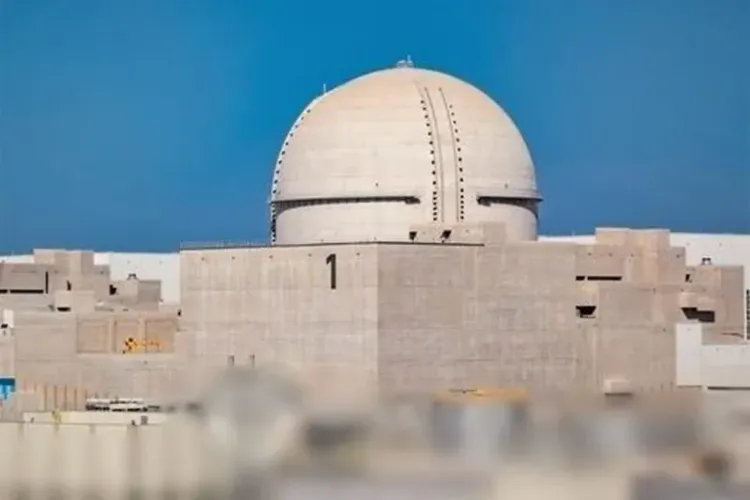
South Korea operates one of Asia's most established civilian nuclear programmes and has previously exported nuclear plant construction expertise to the United Arab Emirates. Kenya's interest positions it among a growing group of African nations exploring nuclear power as a long-term baseload option alongside renewables.
60 Years of Bilateral Ties — and a New Ambition
South Korea and Kenya established diplomatic relations 60 years ago, with cooperation historically concentrated in development assistance, technology transfer, digital infrastructure, and education. Mudavadi described South Korea as a 'strategic and economic partner' and acknowledged the value of Seoul's knowledge-sharing efforts. 'Kenya has much to learn from Korea's growth trajectory, and Korea has been gracious and helpful in the way of knowledge sharing and technology transfer,' he said.
Recent milestones include the envisioned establishment of an office of the Export-Import Bank of Korea in Nairobi and ongoing collaboration on the Konza Technopolis smart city project — both indicators of a relationship moving toward deeper economic integration.
Korea-Africa Forum and Kenya's Broader Role
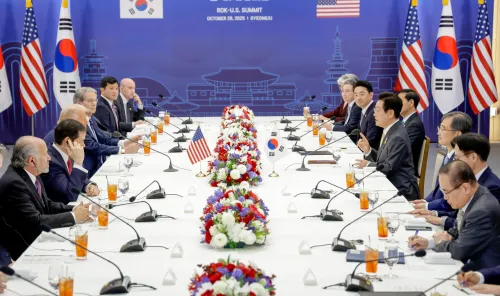
Mudavadi is among more than 50 African foreign ministers attending the Korea-Africa Foreign Ministers' Meeting in Seoul on Monday. The forum is expected to address joint responses to global challenges and pathways for shared growth — a multilateral backdrop that amplifies Kenya's bilateral asks.
Seoul recently designated Kenya as a priority partner country under South Korea's official development assistance (ODA) programme. Mudavadi welcomed the designation, saying: 'Kenya does not take this designation for granted. We are deeply grateful and see this as a welcome opportunity to enhance the scope of development cooperation to fulfill our national aspirations.'
Kenya as a Gateway to Africa
Looking beyond bilateral interests, Mudavadi encouraged South Korean companies to use Kenya as a hub for wider African market access. This pitch aligns with Nairobi's longstanding positioning as East Africa's commercial and logistics centre, and reflects a broader Kenyan strategy of attracting investment by leveraging its regional connectivity.
With the Korea-Africa meeting providing diplomatic momentum, how quickly the two governments translate Mudavadi's signals into concrete frameworks — particularly on rare earth processing and nuclear cooperation — will be closely watched.
Point of View
Rather than locking in another extraction-and-export arrangement with a new partner. South Korea's own rare earth supply chain anxieties — heightened by US-China tensions — give Nairobi genuine leverage, but only if Kenya negotiates processing partnerships with binding localisation requirements. On nuclear, the ambition is real but the timeline is long; Kenya has no operating reactor and limited grid infrastructure to absorb baseload nuclear output in the near term. The more immediately consequential signal is the Exim Bank office and the ODA priority designation — those are the mechanisms through which the broader agenda will either materialise or stall.
NationPress
25 Sept 2026
Frequently Asked Questions
What cooperation is Kenya seeking from South Korea?
Kenya is seeking South Korean partnership in rare earth mineral refinement and nuclear energy development, according to Foreign Minister Musalia Mudavadi. Mudavadi also highlighted ongoing collaboration in digital infrastructure, including the Konza Technopolis smart city project.
What is the Korea-Africa Foreign Ministers' Meeting?
It is a diplomatic forum held in Seoul bringing together South Korea and more than 50 African foreign ministers to discuss joint responses to global challenges and avenues for shared growth. Kenya's Musalia Mudavadi is among the participating ministers.
Why is rare earth refinement significant for Kenya?
Kenya holds rare earth mineral deposits but has historically exported them with minimal processing, capturing limited economic value. Securing refining technology would allow Kenya to move up the value chain and generate greater returns from its natural resources.
What is South Korea's ODA designation for Kenya?
South Korea has designated Kenya a priority partner country under its official development assistance programme, signalling an intent to deepen and broaden development cooperation. Mudavadi described the designation as a significant opportunity to advance Kenya's national development goals.
How long have South Korea and Kenya maintained diplomatic relations?
South Korea and Kenya have maintained diplomatic relations for 60 years, with cooperation spanning development assistance, technology transfer, digital infrastructure, and education. The relationship is now being repositioned toward higher-value economic and industrial collaboration.