Khartoum power outages: Heat and war push Sudan capital to brink
Synopsis
Khartoum's war-damaged power grid is failing its residents at the worst possible time — in peak summer heat, with outages lasting up to 48 hours. Insulin is spoiling, clinics are shutting mid-procedure, and grocers are absorbing losses they cannot afford. With generation capacity still well below demand, there is no quick fix in sight.
Key Takeaways
Power outages in southern Khartoum are lasting up to 48 hours , compounding hardships from the ongoing war.
Residents with chronic illnesses — including diabetics dependent on refrigerated insulin — face acute health risks.
A dental clinic reported daily outages of up to 18 hours , forcing suspension of procedures and sharp rises in operating costs.
Health expert Osama Awadallah warned of rising risks of heatstroke, dehydration, and heat exhaustion, especially for children and the elderly.
Sudan's Ministry of Energy and Petroleum said over 260 megawatts have been restored, with capacity expected to exceed 600 megawatts after ongoing rehabilitation.
Energy expert Essam El-Din Al-Zein said stable supply will require rehabilitation of power stations and repairs to damaged grid infrastructure.
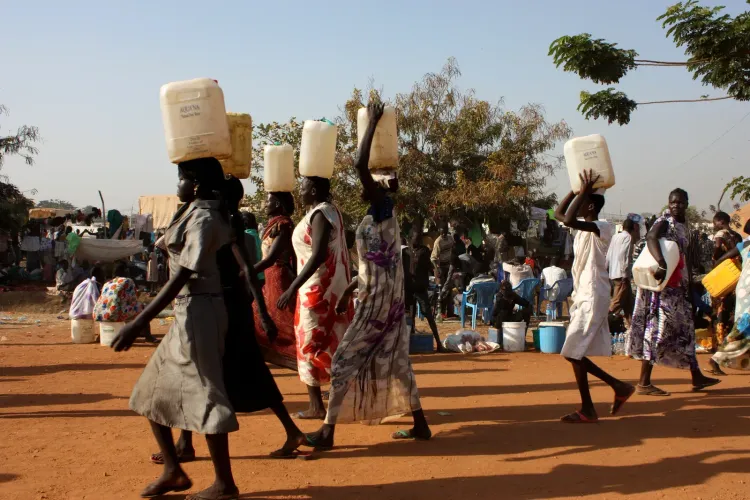
Residents of Khartoum, Sudan's war-battered capital, are enduring a deepening humanitarian crisis as prolonged electricity outages — sometimes stretching up to 48 hours — combine with scorching summer heat to disrupt food storage, healthcare services, and livelihoods across the city. The situation is particularly acute in southern Khartoum, where families, clinics, and small businesses are struggling to cope with daily life under near-total power failure.
How Families Are Coping
In one neighbourhood in southern Khartoum, homemaker Kawthar Ahmed described how her household has restructured its entire day around the unpredictable electricity schedule. 'We charge our phones, run the water pump and try to preserve food whenever power returns, but the supply lasts only a few hours and alternatives are limited,' she said. Her brother, who is ill and requires a cool environment, is among the most directly affected — outages lasting two days at a stretch, she said, only worsen his condition.
Fellow resident Ruaa Omer, who has diabetes, faces a more acute danger: prolonged outages spoil refrigerated food and jeopardise the storage of insulin, placing an additional financial and medical burden on an already stretched household. Abdul-Aleem Mohamed, another southern Khartoum resident, said, 'There is no cold water, you cannot keep food fresh for long, and everything in the house is affected whenever the electricity goes out.'
Impact on Businesses and Healthcare
At a grocery store in southern Khartoum, owner Mohamed Ahmed Bashir said spoiled goods translate into direct financial losses, while running generators has become prohibitively expensive due to soaring fuel prices. Solar power, he noted, remains unaffordable for most small businesses. The crisis is equally severe in healthcare settings: dentist Ruaa Adil Mustafa, who runs a clinic in the area, said daily outages of up to 18 hours have forced her to suspend procedures or postpone cases until power is restored. 'Running generators has sharply increased operating expenses because of high fuel prices,' she said.
Health Warnings as Temperatures Rise
Health expert Osama Awadallah has warned of mounting risks of skin rashes, dehydration, heat exhaustion, and heatstroke, particularly for children, older adults, and people with chronic illnesses. He urged residents to drink adequate water, avoid direct sun exposure, and stay in well-ventilated spaces. This comes amid a broader public health fragility in Khartoum, where the ongoing conflict has already severely degraded medical infrastructure.
What Experts and Officials Say
Energy expert Essam El-Din Al-Zein attributed the sustained outages to declining generation capacity, the shutdown of power plants, and damage to transmission and distribution networks. He said restoring stable supply will require increased generation capacity, rehabilitation of power stations, and repairs to damaged grid infrastructure. Sudan's Ministry of Energy and Petroleum, for its part, cited rising demand driven by high temperatures, the return of displaced residents, and increased agricultural and industrial consumption, alongside maintenance shutdowns. The ministry said more than 260 megawatts have been restored to the national grid through maintenance work, with available generation capacity expected to exceed 600 megawatts following ongoing rehabilitation efforts. Whether that will be sufficient to meet demand in the near term remains unclear.
Point of View
Displacement, and a degraded health system. What is striking is how the burden falls hardest on those least able to absorb it: diabetics who cannot store insulin, small business owners who cannot afford generators, and clinics that cannot run equipment. The government's claim of restoring 260 megawatts sounds significant until you consider that demand has surged with returning residents and summer heat — the gap between supply and need may actually be widening. International attention on Sudan has largely focused on frontline conflict; the slow-burn catastrophe of collapsing urban infrastructure deserves equal urgency.
NationPress
15 Sept 2026
Frequently Asked Questions
How long are power outages lasting in Khartoum?
Power outages in southern Khartoum are reportedly lasting up to 48 hours at a stretch, with some areas experiencing daily cuts of up to 18 hours. The situation is described as among the worst-hit in the capital.
Why is Khartoum facing prolonged electricity cuts?
Energy expert Essam El-Din Al-Zein attributed the outages to declining generation capacity, shutdown of power plants, and damage to transmission and distribution networks caused by the ongoing conflict. Sudan's Ministry of Energy and Petroleum also cited rising demand from returning residents, high temperatures, and maintenance shutdowns.
Who is most at risk from the power outages and heat?
Health expert Osama Awadallah identified children, older adults, and people with chronic illnesses as the most vulnerable. Diabetics face the additional danger of insulin spoilage due to lack of refrigeration during outages.
What is Sudan's government doing to fix the electricity crisis?
Sudan's Ministry of Energy and Petroleum said more than 260 megawatts have been restored to the national grid through maintenance work. Available generation capacity is expected to exceed 600 megawatts after ongoing rehabilitation, though no firm timeline has been given.
How are businesses in Khartoum affected by the power cuts?
Grocery stores are reporting direct financial losses from spoiled goods, while the high cost of fuel has made running generators increasingly expensive. Healthcare providers, including dental clinics, have been forced to suspend services during outages, further straining an already fragile urban economy.