South Korea, Japan agree to boost supply chain and energy cooperation
Synopsis
Seoul and Tokyo aren't just talking energy — they're building a bilateral swap framework for crude oil and LNG while quietly cooperating on wartime DNA identifications. The Andong summit is the fourth Lee-Takaichi meeting in seven months, and the most substantive yet on both economic security and historical reconciliation.
Key Takeaways
President Lee Jae Myung and PM Sanae Takaichi met in Andong, South Korea on 19 May 2025 for their fourth summit in seven months.
Both leaders agreed to expand bilateral supply chain cooperation and deepen coordination on LNG and crude oil amid Middle East instability.
Japan and South Korea agreed to explore a bilateral swap arrangement on crude oil, petroleum products, and LNG.
Upcoming DNA tests on remains from the wartime Chosei coal mine in Ube, Japan — where over 100 Korean forced labourers are believed to have died in 1942 — mark a first step on historical issues.
Both sides reaffirmed trilateral cooperation with Washington and joint efforts to secure freedom of navigation in the Strait of Hormuz .
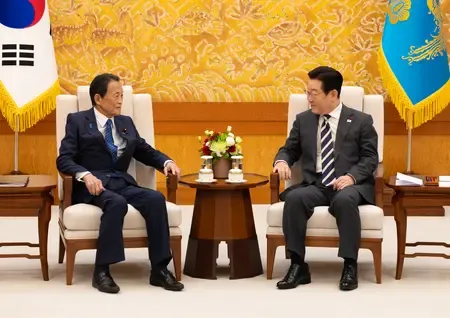
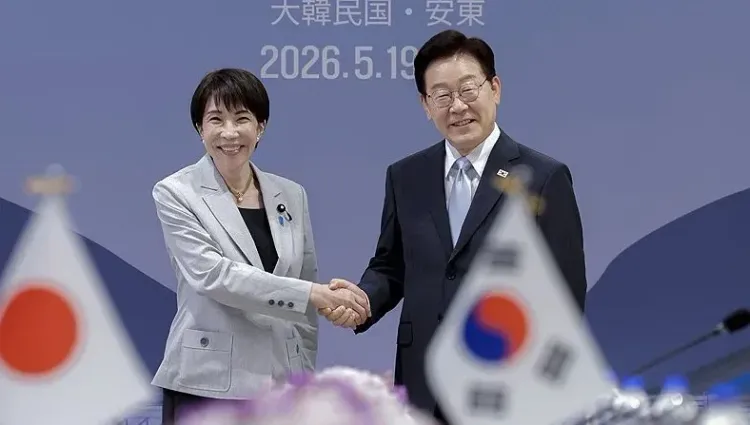
South Korean President Lee Jae Myung and Japanese Prime Minister Sanae Takaichi on Tuesday, 19 May agreed to significantly deepen bilateral cooperation on supply chains, crude oil, and Liquefied Natural Gas (LNG) supplies, as both nations grapple with mounting energy market instability stemming from the ongoing conflict in the Middle East. The two leaders announced the outcomes of their summit held in Andong, approximately 190 kilometres southeast of Seoul.
Key Agreements from the Andong Summit
'We agreed that close bilateral cooperation is needed more than ever amid the instability in supply chains and energy markets arising from the recent situation in the Middle East,' President Lee said at a live-televised joint press event. Both leaders also concurred on the urgent need to restore peace in the region.
Prime Minister Takaichi separately confirmed that the two countries agreed to explore a bilateral swap arrangement covering crude oil, petroleum products, and LNG — a significant structural step that would give both nations greater flexibility in managing energy emergencies. The two leaders also reaffirmed their commitment to 'mutually beneficial' cooperation across artificial intelligence, the economy, and security.
Energy Security at the Core
Both South Korea and Japan are among Asia's largest importers of crude oil and LNG, making Middle East supply disruptions acutely consequential for their economies. Lee described LNG and crude oil as 'key energy sources for both countries,' and said the two sides agreed to 'expand bilateral LNG cooperation while further strengthening channels for information sharing and communication regarding crude oil supply and stockpiling.'
Notably, the proposed swap arrangement, if formalised, would mark a rare instance of direct bilateral energy-security coordination between Seoul and Tokyo — two neighbours whose relationship has historically been complicated by wartime-era disputes.
Historical Issues: A Humanitarian First Step
Beyond economics, President Lee raised a significant historical matter — upcoming DNA tests on remains found at the site of the wartime Chosei coal mine in Ube, Japan, where the collapse of an underground tunnel in 1942 is believed to have killed more than 100 Korean forced labourers, along with others. The two countries have reportedly worked together to outline procedures and methods for the DNA analysis.
'This will be a small but meaningful first step for both countries in cooperating on historical issues, starting with humanitarian matters,' Lee said. The move signals a cautious but deliberate willingness by both sides to address one of the most sensitive fault lines in their bilateral history.
Shuttle Diplomacy Firmly Established
Tuesday's summit marked the fourth meeting between Lee and Takaichi in just seven months, following Lee's earlier visit to Takaichi's hometown of Nara Prefecture in January. Takaichi arrived in South Korea on a two-day trip, reciprocating that visit as part of the two countries' ongoing shuttle diplomacy framework.
Lee said the frequency of high-level engagement confirms that shuttle diplomacy between Seoul and Tokyo has 'completely been established.' The two leaders also reaffirmed the importance of trilateral cooperation with Washington to ensure regional peace and stability, citing joint efforts to safeguard freedom of navigation in the Strait of Hormuz and coordinated evacuations of nationals from the Middle East.
With sectoral follow-through expected in the coming weeks, the Andong summit sets the stage for what could be one of the most substantive phases of South Korea-Japan engagement in recent memory.
Point of View
And coordination at this level is rare. What mainstream coverage underplays is the DNA testing agreement, which represents a politically costly concession from both sides on wartime history — the very issue that derailed Korea-Japan ties for decades. The shuttle diplomacy cadence — four meetings in seven months — signals institutional momentum that outlasts any single administration, and that is the more durable story here.
NationPress
20 Sept 2026
Frequently Asked Questions
What did South Korea and Japan agree to at the Andong summit?
At their summit in Andong on 19 May 2025, President Lee Jae Myung and Prime Minister Sanae Takaichi agreed to expand bilateral supply chain cooperation and deepen coordination on LNG and crude oil supplies amid Middle East tensions. They also agreed to explore a bilateral swap arrangement covering crude oil, petroleum products, and LNG.
Why are South Korea and Japan focused on energy security right now?
Both South Korea and Japan are major importers of crude oil and LNG, and the ongoing conflict in the Middle East has heightened risks to supply chains and energy markets. The two leaders said close bilateral cooperation is 'needed more than ever' given this instability.
What is the significance of the Chosei coal mine DNA tests mentioned at the summit?
The Chosei coal mine in Ube, Japan, is the site of a 1942 tunnel collapse believed to have killed more than 100 Korean forced labourers. The upcoming DNA tests on remains found there, developed through bilateral procedural cooperation, represent a rare humanitarian step on one of the most sensitive historical disputes between the two countries.
How often have South Korea and Japan's leaders been meeting?
The Andong summit was the fourth meeting between President Lee and Prime Minister Takaichi in just seven months, following Lee's visit to Takaichi's hometown of Nara Prefecture in January 2025. Lee said the frequency confirms that shuttle diplomacy between Seoul and Tokyo has been 'completely established.'
What role does the United States play in Korea-Japan cooperation?
Both leaders reaffirmed the importance of trilateral cooperation with Washington to ensure peace and stability in the region. They cited joint efforts to safeguard freedom of navigation in the Strait of Hormuz and coordinated evacuations of nationals from the Middle East as examples of this three-way partnership in action.