Korean War veteran Han Hee-na, 96, donates handwritten wartime records to South Korea Army
Synopsis
At 96, Korean War veteran Han Hee-na returned to South Korea's Army headquarters not to receive honours — but to give something back. His handwritten battlefield memories, compiled over decades, are now helping the Army restore records of a war that claimed nearly 138,000 lives. One of his accounts has already helped identify a fallen comrade missing from official records for over 70 years.
Key Takeaways
Han Hee-na , a 96-year-old Korean War veteran, donated handwritten wartime records to the South Korean Army Archives Management Group on 24 June in Gyeryong .
His accounts helped identify Msg.
Kim Byung-chil , a fallen comrade whose death on 5 June 1951 matched Han's battlefield descriptions.
Han served with the armoured regiment of the Capital Division and fought in the Battle of Hyangnobong in June 1951 .
The South Korean Army has restored 49,040 of 81,420 Korean War records since launching a preservation project in 2020 .
The Korean War (1950–53) killed 137,899 people, with nearly 98% of those deaths involving Army troops.
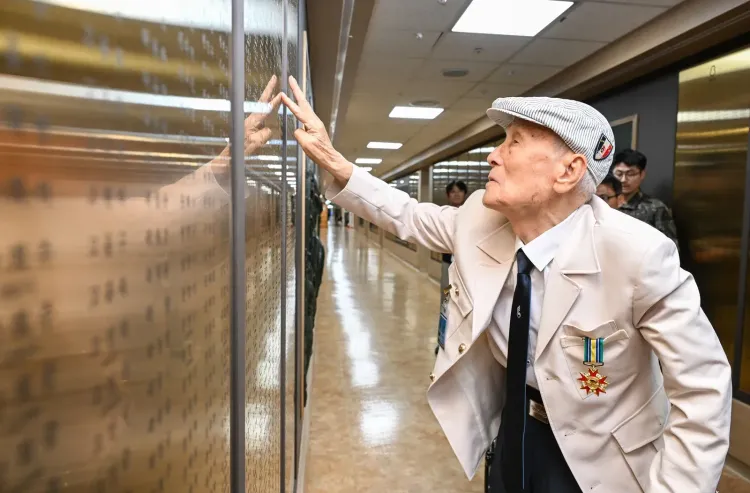
A 96-year-old Korean War veteran, Han Hee-na, donated his handwritten wartime memories to the South Korean Army Archives Management Group at the Army headquarters in Gyeryong on Monday, 24 June, in a deeply personal act of remembrance more than seven decades after the conflict ended. Han, who volunteered as a university student during the 1950–53 Korean War, wept as he traced the name of a fallen comrade engraved on the hall of fame at the military headquarters.
The Donation and Its Significance
Han was invited to the Army headquarters in Gyeryong, approximately 145 kilometres south of Seoul, to hand over handwritten records he had compiled from personal memory. The Army Archives Management Group, responsible for restoring and preserving military artefacts, received the documents as part of an ongoing effort to reconstruct the historical record of the Korean War.
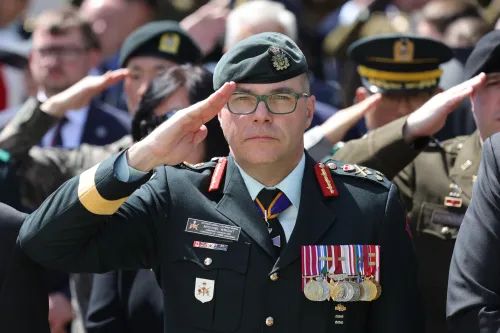
An Army official matched one of Han's accounts to a specific casualty: Msg. Kim Byung-chil, whose recorded date of death — 5 June 1951 — aligned with the last battle Han described fighting alongside him in early June. Helped out of his wheelchair, Han silently saluted his fallen superior, whom he described as a 'caring and compassionate' man whose death he witnessed firsthand.
Han's Battlefield Record
Born in North Hamgyong Province in 1930, Han served with the armoured regiment of the Capital Division and participated in several significant engagements. Among them was the Battle of Hyangnobong in June 1951, during which South Korean troops repelled communist forces from Mount Seorak and the peak of Hyangno.
He also recalled battles near Hajinbu-ri and Sokasa-ri in Pyeongchang County, roughly 130 kilometres east of Seoul, which unfolded in March 1951. 'I remember the sight of troops climbing the mountain, their silhouettes stark against the snow-covered slopes,' Han said. Army officials confirmed that his descriptions closely matched the military's official wartime records.
Han began writing down his memories in his 30s, and some of those accounts later formed the basis of his book, titled 'The student ID card left behind by the war.'
The Army's Preservation Mission
In 2020, the South Korean Army launched a project to restore key military records from the Korean War, covering 81,420 pieces in total. As of the latest update, 49,040 of those records have been restored. The restoration process involves removing surface pollutants such as tape and paper, cleaning documents, filling holes, and applying conservation treatments to ensure long-term durability.
The Army also digitises all Korean War-era historical materials using microfilm and high-resolution scanning. 'We have been preserving paper records that are over 50 years old,' an Army official said. 'This is to preserve and pass down the records to future generations in order to remember the seniors who sacrificed themselves for the country.'
The Human Cost of the Korean War
The Korean War remains the deadliest conflict in South Korea's modern history. Of the 137,899 deaths recorded over the three-year conflict, nearly 98 per cent involved Army troops. Han, who survived multiple near-death encounters throughout the war, described his survival as a 'miracle.'
'Not once, twice or thrice, but many times I faced death but came out alive,' he said. He expressed hope that his story would inspire future generations to embrace selfless service and dedication. 'More than 70 years after the war, the sacrifices of my comrades remain etched in my heart,' Han said. 'I am grateful that the Army has continued to honour their sacrifices and pass their legacy on to future generations.'
Point of View
And civilian accounts like Han's are filling gaps that institutional records cannot. As the generation of Korean War veterans approaches extinction, the window for this kind of first-person corroboration is closing rapidly. South Korea's approach — cross-referencing personal memoirs with official casualty data — offers a model worth noting for other nations still reconciling incomplete wartime records.
NationPress
24 Jun 2026
Frequently Asked Questions
Who is Han Hee-na and why is he significant?
Han Hee-na is a 96-year-old South Korean veteran who volunteered to fight in the Korean War as a university student during the 1950–53 conflict. He is significant for donating decades of handwritten personal wartime records to the South Korean Army Archives, helping restore and verify official military history.
What records did Han Hee-na donate to the South Korean Army?
Han donated handwritten accounts of his battlefield experiences during the Korean War, which he began writing in his 30s. Army officials confirmed his descriptions closely matched official military records, and one account helped identify a fallen comrade, Msg. Kim Byung-chil, who died on 5 June 1951.
What is the South Korean Army's Korean War records restoration project?
Launched in 2020, the project aims to restore 81,420 Korean War-era military records. As of the latest figures, 49,040 records have been restored. The process includes surface cleaning, hole-filling, and digitisation via microfilm and scanning.
How deadly was the Korean War for South Korea's Army?
The Korean War (1950–53) resulted in 137,899 deaths, with nearly 98% of those casualties being Army troops. It remains the deadliest conflict in South Korea's modern history.
What battles did Han Hee-na participate in during the Korean War?
Han served with the armoured regiment of the Capital Division and fought in several engagements, including the Battle of Hyangnobong in June 1951, where South Korean troops repelled communist forces from Mount Seorak, and battles near Hajinbu-ri and Sokasa-ri in Pyeongchang County in March 1951.