Latvia storm 2024: 1,60,000 lose power in worst hit since 2005
Synopsis
Latvia's worst storm since January 2005 swept in from the south on Saturday evening, knocking out power for 1,60,000 customers, tearing roofs off buildings in Daugavpils, crushing cars in Jekabpils, and overwhelming emergency services — all while the grid operator warned some areas could stay dark for more than 24 hours.
Key Takeaways
A powerful cyclone struck Latvia on Saturday, 23 August , entering from the south with torrential rain and damaging winds.
More than 1,60,000 customers were without power as of 9 pm local time , according to grid operator Sadales tikls .
Latvian news agency LETA called it the most destructive storm to hit Latvia since January 2005 .
The LEGMC issued a red warning for heavy rainfall in central and western Latvia and an orange warning for wind gusts across almost the entire country.
Damage was reported in Daugavpils (roof torn off a building) and Jekabpils (vehicles crushed by fallen trees); train services were also delayed.
Some customers could remain without power for more than 24 hours , the grid operator warned.
A powerful cyclone swept across Latvia on Saturday, 23 August, felling large numbers of trees, severely damaging the electricity distribution network, and cutting power to more than 1,60,000 customers. Latvian news agency LETA described it as the most destructive storm to strike the country since January 2005.
How the Storm Unfolded
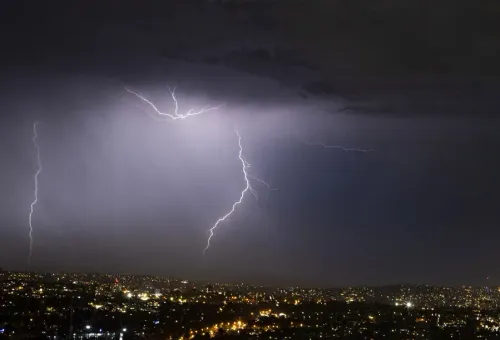
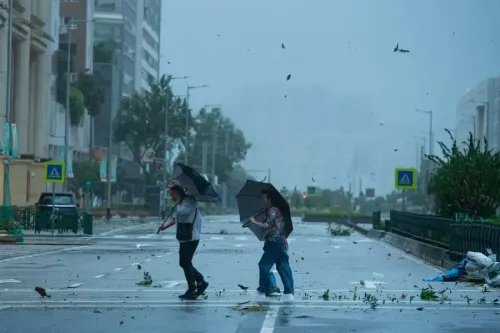
The cyclone entered Latvia from the south during Saturday evening, bringing torrential rain and damaging wind gusts across the country. In parts of central Latvia, rainfall recorded during the day had already reached roughly half the local monthly average before the worst of the storm arrived. The Latvian Environment, Geology and Meteorology Centre (LEGMC) had issued a red warning for heavy rainfall across central and western Latvia and an orange warning for strong wind gusts covering almost the entire country. Warnings for heavy rain and strong winds had in fact been issued for Riga and the wider country from Friday, prompting the cancellation of several outdoor events. On Saturday, local authorities repeatedly pushed cell broadcast alerts urging residents to stay cautious.
Scale of the Power Outage
Electricity distribution system operator Sadales tikls confirmed that approximately 1,60,000 customers were without power as of 9 pm local time on Saturday. The operator described damage to the electricity network as extensive and complex, cautioning that some customers could remain without power for more than 24 hours. Emergency crews were deployed and working to restore supply as quickly as conditions allowed.
Damage on the Ground
Latvia's State Fire and Rescue Service (VUGD) reported a rapid surge in weather-related emergency calls through the evening, with the majority involving trees brought down by strong winds and blocking roads. According to local media reports, strong winds tore the roof off a building in Daugavpils, while a falling tree damaged a residential structure in the same city. In Jekabpils, several vehicles were reportedly crushed by fallen trees. Latvia's rail operator also confirmed that multiple train services faced delays on Saturday evening due to the severe weather conditions.
Context and Historical Comparison
The August 2024 storm is being compared to the devastating cyclone that struck Latvia in January 2005, which remains the benchmark for destructive weather events in the country's recent history. This comes amid a broader pattern of increasingly intense storm systems affecting the Baltic region in summer months, a trend that meteorologists have linked to shifting weather patterns over northern Europe. The scale of the outage — affecting the equivalent of a significant share of Latvia's roughly 2 million population — underscores the vulnerability of the country's electricity distribution infrastructure to extreme weather.
What Comes Next
Restoration work is ongoing, with Sadales tikls crews prioritising the most affected areas. Authorities have not yet provided an estimated timeline for full restoration, and residents in the worst-hit zones have been advised to prepare for extended outages. The LEGMC is expected to issue updated weather assessments as conditions evolve.
Point of View
60,000 customers in a country of roughly 2 million — points to a structural vulnerability in Latvia's electricity distribution network that extreme weather is exposing with increasing regularity. LETA's comparison to the January 2005 storm is significant: nearly two decades on, the grid's resilience to high-wind events appears largely unchanged. The 24-plus-hour restoration warning from Sadales tikls is not just a logistical footnote; in late August, with temperatures still elevated, it has real humanitarian implications for elderly and vulnerable residents. Baltic states have invested in energy independence from Russian supply, but the parallel investment in storm-hardening distribution infrastructure has received far less scrutiny.
NationPress
24 Aug 2026
Frequently Asked Questions
How many people lost power in the Latvia storm on 23 August 2024?
More than 1,60,000 customers were without power as of 9 pm local time on Saturday, 23 August, according to electricity distribution operator Sadales tikls. The operator warned that some customers could remain without power for more than 24 hours due to the extensive and complex nature of the damage.
How severe was the Latvia storm compared to past events?
Latvian news agency LETA described the 23 August storm as the most destructive to hit Latvia since January 2005, making it a near-20-year benchmark event. Rainfall in parts of central Latvia had already reached around half the local monthly average before the worst of the storm arrived.
What warnings did authorities issue before the storm?
The Latvian Environment, Geology and Meteorology Centre (LEGMC) issued red, orange, and yellow warnings for heavy rain and strong winds across Latvia from Friday. On Saturday, a red warning remained in place for central and western Latvia, and an orange warning for wind gusts covered almost the entire country. Local authorities also pushed cell broadcast alerts to residents throughout Saturday.
What damage was reported on the ground in Latvia?
Strong winds tore the roof off a building in Daugavpils and a falling tree damaged a residential building there, according to local media reports. In Jekabpils, several vehicles were reportedly crushed by fallen trees. Latvia's State Fire and Rescue Service (VUGD) said emergency calls surged rapidly during the evening, mostly involving trees blocking roads.
When will power be restored after the Latvia storm?
Sadales tikls said emergency crews were working to restore electricity as quickly as possible, but cautioned that the damage was extensive and complex. Some customers could remain without power for more than 24 hours. No full restoration timeline had been announced as of the latest reports.