Lavrov tells Japan to mind its own business over Putin's Kuril visit
Synopsis
Putin's first-ever visit to the disputed Iturup Island has ignited a fresh diplomatic flare-up — with Moscow's top diplomat accusing Japan of using the row to mask its own constitutional violations and military ambitions. The ambassador standoff, complete with a convenient health recovery, adds a sharp edge to a dispute that has blocked a Russia-Japan peace treaty for nearly 80 years.
Key Takeaways
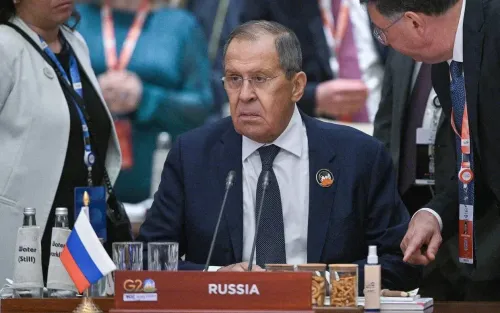
Russian FM Sergei Lavrov on 18 August told Japan to 'mind its own business' after Tokyo protested Putin 's Kuril visit.
President Putin made his first-ever visit to Iturup Island on 13 August , triggering a 'strong protest' from Japanese PM Sanae Takaichi .
Lavrov accused Japan of eroding its own three non-nuclear principles and pushing its military toward overseas operations.
Japanese Ambassador Akira Muto initially skipped a summons to the Russian Foreign Ministry , citing health; spokesperson Maria Zakharova said he 'suddenly felt much better' and would attend on Tuesday .
The Southern Kuril Islands dispute has prevented a formal Russia-Japan peace treaty since the end of World War II .
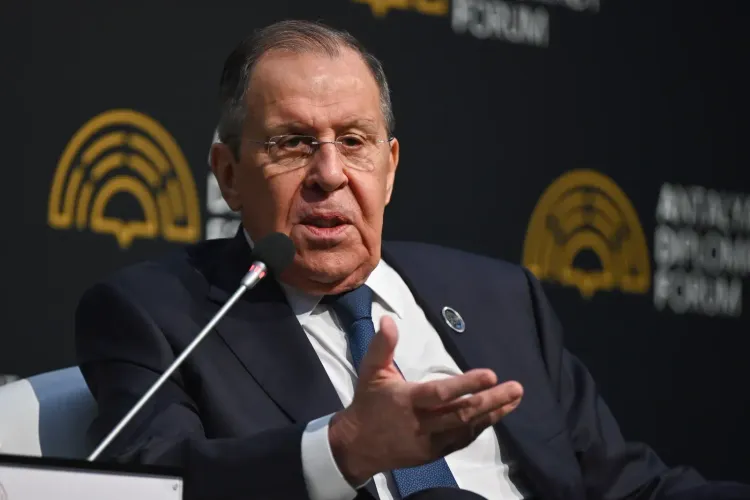
Russian Foreign Minister Sergei Lavrov on 18 August sharply rebuked the Japanese government, advising its leadership to focus on domestic affairs rather than directing what he called rhetorical attacks at Russia. The remarks came in direct response to Tokyo's protests over Russian President Vladimir Putin's visit to Iturup Island — known as Etorofu in Japan — one of the disputed Southern Kuril Islands, which Japan refers to as the Northern Territories.
What Lavrov Said
Lavrov levelled a pointed accusation at Tokyo, alleging that Japan was attempting to reshape international law to suit itself and its ally, the United States, while simultaneously eroding its own three non-nuclear principles and pushing its military toward overseas operations previously barred under the Japanese Constitution.
'If they hope to divert attention from this plainly aggressive militaristic course by launching such, excuse my blunt choice of words, rhetorical broadsides against Russia and accusing us of violating international law, I would advise them to mind their own business. They have plenty of such problems at home,' Lavrov said.
Putin's Visit and Japan's Protest
President Putin made his first-ever visit to the disputed island on 13 August, a move that drew an immediate and strong reaction from Tokyo. Japanese Prime Minister Sanae Takaichi 'strongly protested' the visit at a press conference, underscoring the enduring sensitivity of the territorial dispute that has prevented the two countries from signing a formal peace treaty since the end of World War II.
The Ambassador Standoff
The diplomatic friction deepened when the Russian Foreign Ministry summoned Japanese Ambassador to Russia Akira Muto over the row. Muto initially did not confirm his appearance at the ministry, citing personal health reasons. However, Russian Foreign Ministry spokesperson Maria Zakharova subsequently disclosed that Muto had 'suddenly felt much better' and would proceed to the Russian Foreign Ministry on Tuesday.
Broader Context
The Southern Kuril Islands dispute is one of the longest-running territorial standoffs in post-war Asia. Russia has administered the islands since 1945, while Japan has consistently claimed sovereignty. The dispute has blocked a formal peace treaty between the two nations for nearly eight decades. Putin's visit to Iturup — the first by a sitting Russian president — signals Moscow's intent to assert its presence on the islands more visibly, particularly at a time when Russia-Japan relations have deteriorated sharply over the war in Ukraine. Lavrov's remarks suggesting Japan is pursuing an 'aggressive militaristic course' reflect a broader Russian narrative framing Western-aligned nations as the aggressors in the current global order.
With the Japanese ambassador now set to meet Russian officials, diplomatic channels remain open — though a resolution to the underlying territorial dispute appears as distant as ever.
Point of View
Accusing Japan of constitutional violations and militarism, is a classic deflection tactic, but it lands on real ground: Japan has quietly expanded its defence posture in recent years, and that tension is genuine. What mainstream coverage misses is the ambassador episode — a diplomat citing illness to dodge a summons, then recovering in time, is a minor diplomatic theatre that reveals how neither side wants a full rupture. The two countries are locked in a frozen conflict where neither escalation nor resolution is on the immediate menu.
NationPress
2 Oct 2026
Frequently Asked Questions
Why did Lavrov criticise Japan over the Kuril Islands?
Lavrov criticised Japan after Tokyo strongly protested President Putin's first-ever visit to Iturup Island on 13 August. He accused Japan of using the dispute to distract from its own alleged constitutional violations and military expansion, and advised Japanese leaders to focus on domestic issues instead.
What is the Southern Kuril Islands dispute between Russia and Japan?
The Southern Kuril Islands — called the Northern Territories by Japan — have been administered by Russia since 1945, but Japan claims sovereignty over them. The unresolved dispute has prevented the two countries from signing a formal peace treaty since the end of World War II.
What happened with Japanese Ambassador Akira Muto and the Russian Foreign Ministry?
The Russian Foreign Ministry summoned Ambassador Akira Muto following Tokyo's protest over Putin's Iturup visit. Muto initially did not confirm attendance, citing personal health reasons. Russian Foreign Ministry spokesperson Maria Zakharova later said he had 'suddenly felt much better' and would appear at the ministry on Tuesday.
What did Japanese PM Sanae Takaichi say about Putin's visit?
Japanese Prime Minister Sanae Takaichi 'strongly protested' Putin's visit to Iturup Island at a press conference, reaffirming Japan's longstanding position that the Southern Kuril Islands are Japanese territory.
What accusations did Lavrov make about Japan's military posture?
Lavrov alleged that Japan was eroding its three non-nuclear principles and that its military was already seeking to conduct overseas operations — activities he said were previously prohibited under Japan's pacifist Constitution. He framed Tokyo's criticism of Russia as an attempt to divert attention from this course.