US Lawmakers Propose Tax on Major Oil Firms Amid Price Surge
Synopsis
As fuel prices soar following the conflict in Iran, US lawmakers are pushing for a tax on major oil companies. This legislative action aims to address rising costs faced by American consumers and redirect profits back to them.
Key Takeaways
US lawmakers are proposing a tax on major oil companies due to rising fuel prices linked to the Iran conflict.
The proposed legislation aims to redistribute excess profits back to consumers.
Estimated revenue from the tax could reach around $33 billion annually.
Individual filers may receive up to $216, and joint filers could get about $324.
Supporters argue it addresses profits gained during geopolitical crises.
Washington, March 18 (NationPress) - In response to a sharp increase in fuel prices linked to the conflict in Iran, US lawmakers are taking steps to impose taxes on major oil corporations. Democrats are criticizing energy companies for benefiting while American consumers grapple with escalating costs.
Senator Sheldon Whitehouse and Congressman Ro Khanna, both key figures in this legislative push, have reintroduced the Big Oil Windfall Profits Tax Act. They highlighted the significant surge in petrol prices experienced in recent weeks.
“In just a few weeks since the onset of the war in Iran, gas prices have surged by 80 cents per gallon, with oil barrel prices rising by 50 percent since the start of the year,” the lawmakers stated, noting the pressures on global oil markets due to supply interruptions and instability in crucial shipping lanes.
Whitehouse emphasized, “American consumers are feeling the pinch at the gas pump due to President Trump’s chosen conflict in Iran, which is driving gas prices up and benefitting his Big Oil backers.”
He further expressed that any unexpected gains should be redirected back to consumers and advocated for a transition to renewable energy sources to mitigate future price spikes.
Khanna remarked, “Trump’s decisions in Iran represent not only a moral failure but also a significant economic mistake that is causing working Americans to pay exorbitantly at the pump.”
The proposed legislation would place a tax on large oil companies that produce or import a minimum of 300,000 barrels per day. This tax would amount to 50% of the difference between current oil prices and last year's average, during which these companies were already reporting high profits.
Funds generated from this tax will be returned to consumers through quarterly rebates. If oil prices stabilize around $100 per barrel, this measure could potentially generate approximately $33 billion annually. Individual taxpayers may receive around $216 per year, while couples filing jointly could expect about $324.
Supporters of the bill argue that it addresses excessive profits reaped during times of geopolitical unrest.
Leah Donahey from the League of Conservation Voters stated, “It is essential that when oil executives are profiting handsomely, these profits should be returned to the American consumers who are suffering.”
Mahyar Sorour from the Sierra Club added, “We must break this harmful and expensive cycle. We commend Senator Whitehouse and Representative Khanna for introducing this vital legislation and urge Congress to act swiftly on the windfall profits tax.”
Cassidy DiPaola from the Make Polluters Pay Campaign remarked, “Each time oil prices surge due to geopolitical tensions, American families bear the financial burden while the largest oil companies reap billions in unexpected profits.”
In a separate critique, Democrat Frank Pallone condemned the administration’s approach to the crisis.
“Oil prices have shown extreme volatility, with gasoline prices rising nearly 75 cents per gallon since the beginning of the year,” Pallone stated during a congressional hearing.
He also pointed out that “no one in the Trump Administration seemed to have a strategy regarding oil prices or any plan to conclude a war that should never have been initiated.”
Pallone echoed the President’s earlier comments: “when oil prices rise, we generate significant profits.”
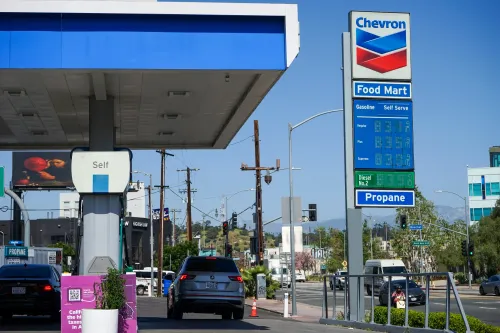
Market data indicates increasing strain on consumers, with US petrol prices climbing to nearly $3.72 per gallon, the highest level since October 2023. Since the onset of the war, prices have surged by approximately 74 cents, marking the largest monthly rise since Hurricane Katrina.
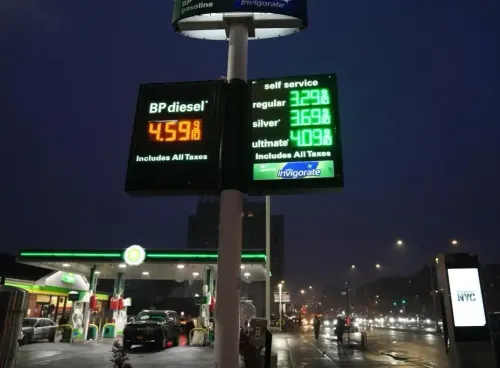
Diesel prices have experienced an even steeper increase, rising by $1.24 to nearly $5 per gallon. Brent crude prices remain above $100 per barrel, with supply disruptions intensifying following assaults on oil facilities and shipping routes.
The Strait of Hormuz, which facilitates about 20% of the world’s oil supply, has been heavily impacted by the ongoing conflict. Analysts have cautioned that sustained disruptions could lead to significantly higher prices.
The International Energy Agency has announced that its member nations will release 400 million barrels from emergency reserves to help stabilize markets, although some of these supplies may not reach the market until later this month.
Point of View
The proposed Big Oil Windfall Profits Tax Act reflects a growing concern among US lawmakers about energy companies' profits at the expense of consumers. This legislation aims to address economic inequalities and promote a shift towards cleaner energy solutions, emphasizing the need for accountability in times of crisis.
NationPress
29 Sept 2026
Frequently Asked Questions
What is the Big Oil Windfall Profits Tax Act?
The Big Oil Windfall Profits Tax Act is a proposed legislation that seeks to impose a tax on major oil companies, targeting those that produce or import at least 300,000 barrels of oil per day, aiming to redistribute excess profits back to consumers.
Why are lawmakers proposing this tax?
Lawmakers are proposing this tax in response to significant fuel price increases following the conflict in Iran, with accusations that energy companies are profiting at the expense of American consumers.
How much revenue could this tax generate?
At an oil price of $100 per barrel, the proposed tax is estimated to generate around $33 billion annually, which would be returned to consumers through quarterly rebates.
Who would benefit from the rebates?
Individual taxpayers could receive approximately $216 per year, while couples filing jointly might receive around $324 from the quarterly rebates funded by the tax.
What has been the response from environmental groups?
Environmental groups have generally supported the proposed tax, arguing that it targets excess profits during geopolitical crises and emphasizes the need for accountability in the oil industry.