Oil Prices Approach $90 Amid Iran Conflict Turmoil
Synopsis
Oil prices are nearing $90 per barrel as the conflict in Iran disrupts global energy markets. U.S. lawmakers are stepping in to propose measures aimed at alleviating rising fuel costs for consumers. The situation remains volatile, with analysts warning of potential global energy shocks.
Key Takeaways
Oil prices have approached $90 per barrel due to the Iranian conflict.
U.S. lawmakers are proposing measures to reduce fuel costs for consumers.
The Strait of Hormuz is a critical point for oil transport, and its disruption could have global implications.
Analysts are concerned about potential global energy shocks.
Suspending federal gas tax may provide temporary relief for consumers.
Washington, March 10 (NationPress) Oil prices approached $90 per barrel on Tuesday as the ongoing conflict in Iran sent ripples through international energy markets, intensifying concerns about extended supply interruptions via the crucial Strait of Hormuz. This turmoil has prompted U.S. lawmakers to consider emergency initiatives to manage soaring fuel prices.
Brent crude, the global standard, was trading around $91.94 a barrel, while U.S. crude dipped to approximately $88.87 following a week of erratic trading, as reported by CNBC and CNN.
The energy market has experienced significant fluctuations with the escalating conflict threatening tanker operations through the Strait of Hormuz, a vital passage for global oil exports from Gulf nations like Saudi Arabia, Iraq, and the United Arab Emirates.
Amin Nasser, CEO of Saudi Aramco, cautioned that the ramifications for global energy markets could be dire if disruptions continue. He stated, “There will be catastrophic consequences for the world’s oil market. While we have faced disruptions in the past, this one is by far the biggest crisis the region’s oil and gas industry has encountered.”
Initially, markets reacted positively as fears mounted that the conflict could obstruct supply routes through the strait. Oil prices nearly hit $120 earlier in the week before retracting after comments from U.S. President Donald Trump indicated the conflict might resolve soon.
“I think the war is very complete, pretty much,” Trump commented during a phone interview referenced by CNN.
Nevertheless, the overall perspective remains uncertain. Analysts warn that even momentary disruptions could spark a global energy crisis.
The Wall Street Journal highlighted a significant slowdown in shipping through the Strait of Hormuz due to security fears, marking it as one of the gravest threats to global oil transportation in decades. The ongoing conflict has led to instability in crude markets and raised concerns that oil prices could soar even higher if disruptions persist, according to the financial daily.
Trump has also cautioned Iran that any attempt to obstruct passage would provoke a fierce U.S. response. “If Iran does anything that stops the flow of Oil within the Strait of Hormuz, they will be hit by the United States of America TWENTY TIMES HARDER than they have been hit thus far,” Trump stated in a Truth Social post referenced by CNBC.
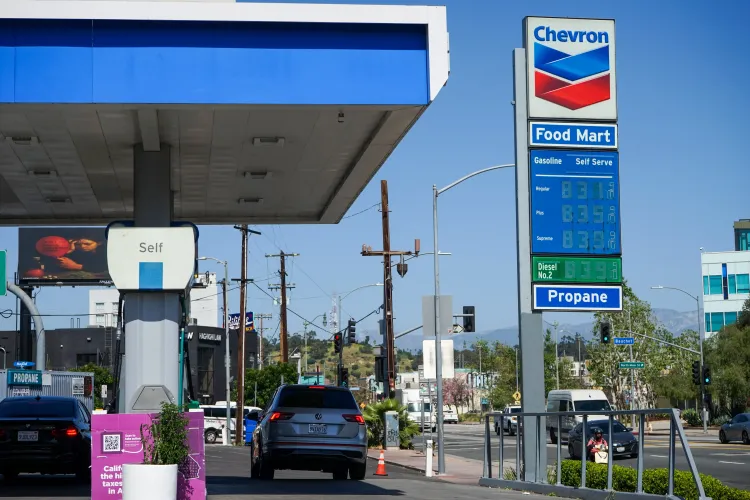
The economic repercussions of the conflict are already manifesting in the United States, with gasoline prices climbing sharply.
In response, a coalition of U.S. lawmakers has proposed legislation aimed at alleviating fuel costs for consumers. Senators Mark Kelly and Richard Blumenthal, alongside Representative Chris Pappas, introduced the Gas Prices Relief Act, which seeks to temporarily suspend the federal gasoline tax to alleviate pressure on households.
This proposal would halt the 18.4-cent-per-gallon federal gas tax until October 1, 2026, aiming to lower the prices motorists face at the gas station amid ongoing global energy market instability.
“Suspending the federal gas tax would help bring prices down and offer families some much-needed relief,” Kelly noted.
Under this plan, the U.S. Treasury Department would oversee fuel prices to ensure oil companies pass on the tax savings to consumers rather than retaining them as profits.
Energy experts argue that while such policy measures could provide temporary respite, they may not fully mitigate global market shocks if tensions in the Middle East escalate further.
Point of View
The situation surrounding oil prices and the Iran conflict is critical. As the potential for prolonged supply disruptions looms, it raises significant concerns for consumers and the overall economy. Lawmakers' responses highlight the urgency of the situation, but the uncertainty in the market reflects deeper geopolitical tensions that could have lasting effects.
NationPress
21 Sept 2026
Frequently Asked Questions
What is causing the rise in oil prices?
The ongoing conflict in Iran has raised concerns about supply disruptions through the Strait of Hormuz, a crucial oil transport route.
How have U.S. lawmakers responded to rising fuel costs?
U.S. lawmakers have proposed the Gas Prices Relief Act, which seeks to temporarily suspend the federal gasoline tax to help consumers.
What are the implications of the conflict for global energy markets?
Analysts warn that the conflict could lead to significant disruptions in oil supply, potentially triggering a global energy crisis.
What measures are being considered to stabilize fuel prices?
Proposals include suspending the federal gasoline tax to alleviate financial pressure on consumers during this unstable period.
How is the situation affecting gasoline prices in the U.S.?
Gasoline prices in the U.S. are beginning to rise sharply due to the conflict's impact on global oil supply.