South Korea's Lee reiterates December 3 as People's Sovereignty Day
Synopsis
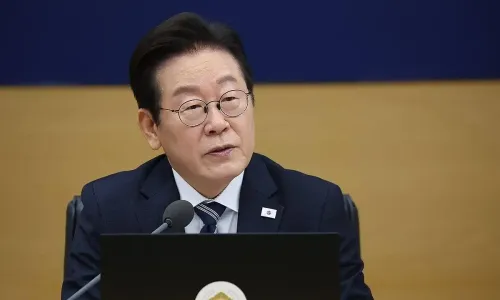
South Korean President Lee Jae Myung is pushing to turn December 3 — the night citizens blocked Yoon Suk Yeol's martial law — into a permanent public holiday. Speaking on Constitution Day, he also unveiled a 'Committee of Light' to honour democracy's defenders, framing South Korea's civic resistance as a global model.
Key Takeaways
President Lee Jae Myung reiterated on Constitution Day (18 July 2025) his plan to designate December 3 as a legal public holiday marking people's sovereignty.
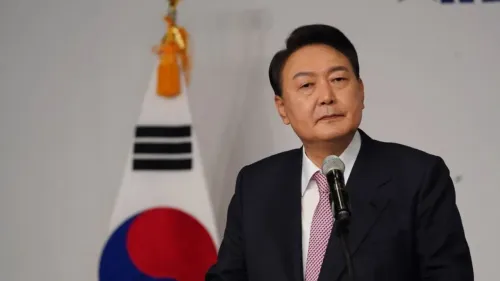
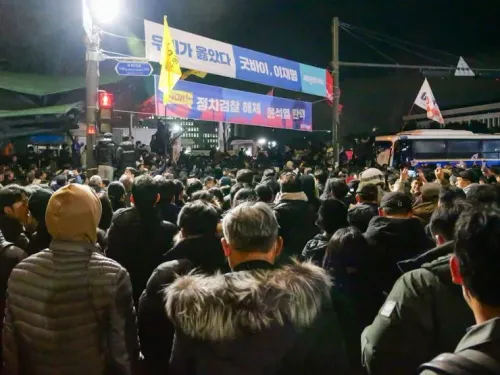
The date commemorates the night citizens mobilised to resist former President Yoon Suk Yeol's unexpected martial law declaration in 2024 .
Lee described the public response as a 'revolution of light' and said it proved popular sovereignty is a living constitutional value.
The presidential 'Committee of Light' , comprising up to 35 members , was launched to honour those who defended democracy during the crisis.
The committee will issue certificates of recognition and help promote 'Korean-style participatory democracy' globally.
Legislative approval will be needed before December 3 can formally become a public holiday.
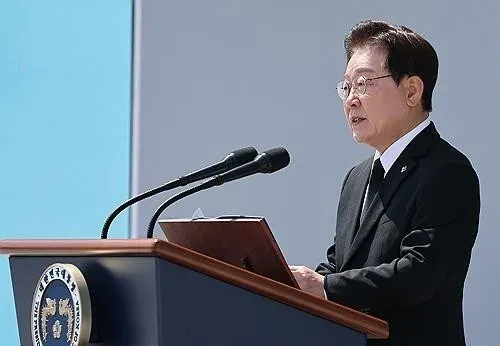
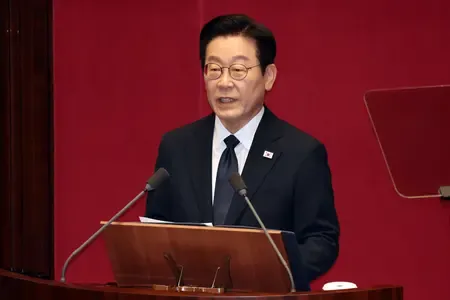
South Korean President Lee Jae Myung on Friday, 18 July 2025, reiterated his intention to designate December 3 as a national day of people's sovereignty, marking the anniversary of former President Yoon Suk Yeol's failed attempt to impose martial law in 2024. The announcement came in a Facebook post issued on the occasion of South Korea's 78th Constitution Day.
What Lee Proposed
Lee pledged to make December 3 a legal public holiday, arguing that the date — when ordinary citizens spontaneously mobilised to resist an unexpected declaration of martial law — carries a constitutional significance that must be preserved for future generations. He described the public response as a 'revolution of light', saying it demonstrated that the spirit of popular sovereignty is alive in the daily lives of South Korean citizens.
This is not the first time Lee has floated the proposal. He made a similar call last year to mark the first anniversary of the political crisis triggered by Yoon's martial law declaration.
Lee's Words on the Night of December 3
'On December 3, 2024, the martial law declared in the middle of the night reminded all of us that the threat to democracy is by no means a thing of the past, but a reality that could happen again at any time in today's Republic of Korea,' Lee said in the post, using the country's official name.
He added that South Korea had shown the world, through its citizens' response, that the constitutional principle of popular sovereignty is not merely a legal abstraction but a living force.
The 'Committee of Light'
Lee also drew attention to the presidential 'Committee of Light', launched earlier in the week to honour individuals who contributed to protecting the Constitution and democracy during the martial law episode. The committee comprises up to 35 members, including experts in constitutional law and democratic governance.
Its mandate includes establishing directions for promoting what Lee termed 'Korean-style participatory democracy' and issuing certificates of recognition to those who defended democratic institutions during the crisis. Lee shared a photo of a certificate of appreciation to be presented at a citizens' event marking the committee's launch, scheduled at Cheong Wa Dae — the former presidential palace — later that day.
Broader Significance
'We will systematically collect and preserve records of the Light Revolution so that K-democracy can spread widely around the world as a model for democracy,' Lee said. The framing positions South Korea's civic resistance not merely as a domestic political episode but as a potential export — a template for democratic resilience in an era of democratic backsliding globally.
With the proposal now reiterated on Constitution Day, the push to formally institutionalise December 3 as a public holiday appears to be gaining political momentum, though legislative approval will be required for it to take effect.
Point of View
He anchors his presidency to the moment that ended Yoon's — a powerful symbolic contrast. The 'Committee of Light' and the 'K-democracy' framing suggest Lee is also building an international narrative around South Korea's democratic resilience, which serves diplomatic as well as domestic purposes. The harder question is whether a public holiday, however well-intentioned, translates into the structural safeguards — legislative, judicial, military — that would actually prevent a future martial law attempt. Ceremony and commemoration are not the same as constitutional reform.
NationPress
15 Oct 2026
Frequently Asked Questions
What is South Korea's proposed December 3 public holiday?
It is a proposed legal public holiday championed by President Lee Jae Myung to mark the anniversary of former President Yoon Suk Yeol's failed martial law declaration on 3 December 2024, when citizens mobilised to block it. Lee calls it a day of 'people's sovereignty' to honour the constitutional principle that power rests with the public.
Who is the 'Committee of Light' and what does it do?
The 'Committee of Light' is a presidential body launched in July 2025, comprising up to 35 members including constitutional law experts. It will recognise individuals who helped protect democracy during the 2024 martial law episode and will work to promote Korean-style participatory democracy both domestically and internationally.
Has Lee made this proposal before?
Yes. Lee made a similar proposal last year to mark the first anniversary of the December 3, 2024 political crisis. His reiteration on Constitution Day 2025 signals the push is becoming a sustained policy priority rather than a one-off gesture.
What needs to happen for December 3 to become a public holiday?
Legislative approval from South Korea's National Assembly is required before December 3 can be formally designated a legal public holiday. Lee's announcement sets out the political intent, but the proposal must clear the parliamentary process.
Why does Lee call the citizens' response a 'revolution of light'?
Lee used the phrase to describe the spontaneous, peaceful mass mobilisation by ordinary South Koreans who gathered to physically and politically resist Yoon's midnight martial law declaration. He argues it demonstrated to the world that popular sovereignty — enshrined in South Korea's Constitution — is a living, active principle rather than a theoretical one.