South Korea's President Lee Advocates for Workers' Acceptance in Labor Market Flexibility
Synopsis
In a recent meeting, South Korean President Lee Jae Myung highlighted the need for workers' acceptance when adopting labor market flexibility, rejecting the idea of unilateral sacrifices amidst workplace policy changes. He calls for a stronger social safety net and dialogue to build trust between labor and management.
Key Takeaways
President Lee emphasizes the need for workers' acceptance in labor market changes.
He opposes unilateral sacrifices by laborers during policy adjustments.
Strengthening the social safety net is essential for worker security.
Dialogue between labor and management is crucial for trust-building.
The Economic, Social, and Labour Council plays a key role in facilitating discussions.
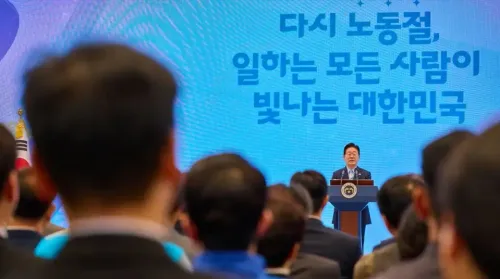
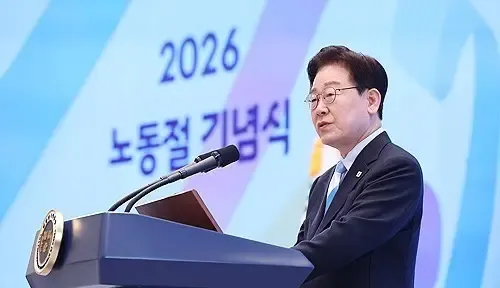
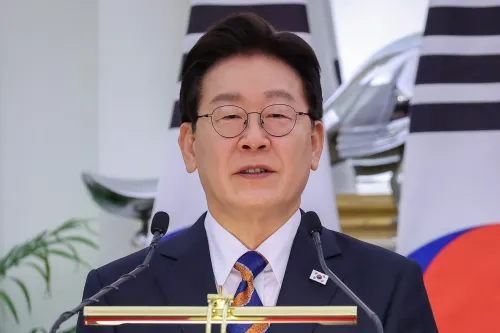
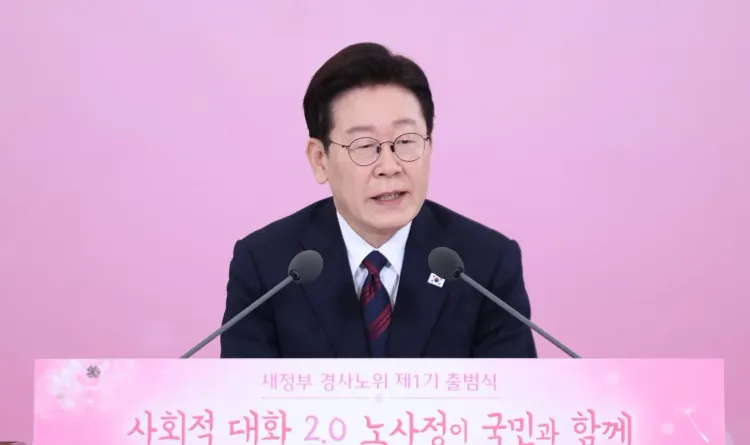
Seoul, March 19 (NationPress) President Lee Jae Myung of South Korea emphasized the significance of ensuring that workers are receptive to the adoption of labor market flexibility. He voiced his disagreement with the notion of requiring unilateral sacrifices from workers as companies modify their workplace policies.
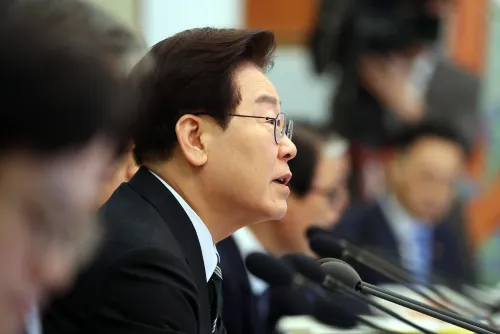
These comments were made during a discussion with the Economic, Social, and Labour Council, which includes representatives from labor organizations and government officials.
"Creating conditions that allow workers to embrace the employment flexibility companies desire is crucial. It cannot be imposed, as that would be unjust," Lee stated at Cheong Wa Dae.
He highlighted the necessity of strengthening the social safety net to assist workers navigating a transforming job landscape, urging companies benefiting from enhanced labor flexibility to shoulder a larger portion of the responsibility.
"It is inappropriate to proceed in a manner that requires workers to make unilateral sacrifices. We must foster a reasonable environment that all parties can accept," he mentioned. "Establishing a robust social safety net is vital to alleviate workers' insecurities."
Lee suggested that achieving a beneficial cycle of job creation hinges on securing labor flexibility while bolstering the social safety net, underscoring the need for dialogue to restore trust between labor and management and achieve compromise.
"It would be advantageous for labor representatives to compromise on labor flexibility while enhancing the social safety net to make up for it, with the costs borne by companies that receive benefits from increased labor flexibility," he added.
"Instead of allowing one side to endure unilateral losses, we should aim for a balanced agreement through social compromise."
Lee urged the council to take a more active role in facilitating social dialogue to help reconcile the differences between management's desire to reduce labor costs and workers' concerns regarding job security, as reported by Yonhap news agency.
"We need to invest significant effort into rebuilding trust between labor and management," Lee stated. "The initial step is for them to engage in sincere discussions."
Prior to the debate session, the council ratified a joint declaration focused on tackling social polarization and fostering sustainable growth.
Point of View
President Lee's remarks reflect a balanced approach to labor market reforms, emphasizing the necessity of mutual respect and compromise between workers and management. The focus on enhancing the social safety net indicates a commitment to protecting workers' rights while adapting to changing economic conditions.
NationPress
21 Sept 2026
Frequently Asked Questions
What is labor market flexibility?
Labor market flexibility refers to the ability of businesses to adapt their workforce in response to changing market conditions, which can include adjusting working hours, wages, and employment contracts.
Why is workers' acceptance important?
Workers' acceptance is crucial for successful implementation of labor market reforms, as it ensures that changes are fair and equitable, fostering a cooperative relationship between employees and employers.
What role does the social safety net play?
The social safety net provides protection for workers during transitions in the job market, offering support in times of unemployment or economic instability, thus reducing insecurity.
What was the outcome of the council meeting?
The council adopted a joint declaration aimed at addressing social polarization and promoting sustainable growth, highlighting the importance of dialogue between labor and management.
How can labor and management rebuild trust?
Rebuilding trust can occur through open communication, transparency in negotiations, and a commitment to compromise that considers the interests of both workers and employers.