Bangladesh's Leftist Groups Rally Against US Trade Deal, Call It a 'Treaty of Servitude'
Synopsis
A coalition of left-wing organizations in Bangladesh vehemently protested against a recent trade deal with the United States, deeming it unequal and demanding its cancellation. The agreement's controversial timing and implications have ignited public outrage, raising concerns over national sovereignty.
Key Takeaways
Leftist organizations in Bangladesh oppose the U.S. trade agreement.
They label it a 'treaty of servitude' and demand its cancellation.
The agreement was signed shortly before national elections, raising concerns.
Protesters warn of foreign control over national assets.
Public mobilization is called for to pressure the government for withdrawal.
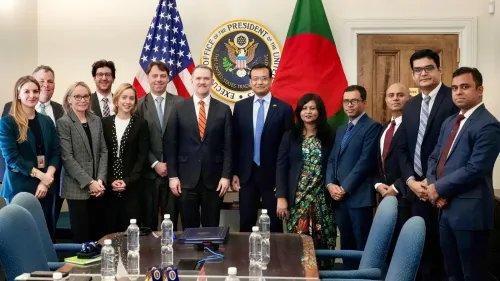
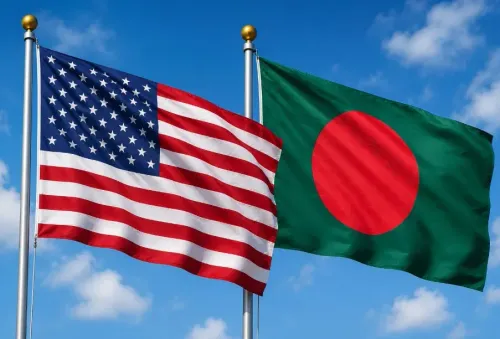
Dhaka, April 11 (NationPress) A coalition of leftist groups in Bangladesh has strongly denounced the trade agreement with the United States, labeling it as "unjust and detrimental to national interests" and demanding its immediate annulment, according to local media reports on Saturday.
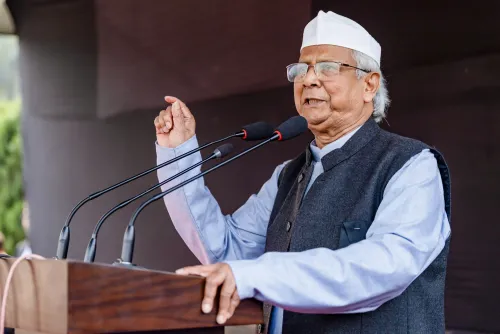
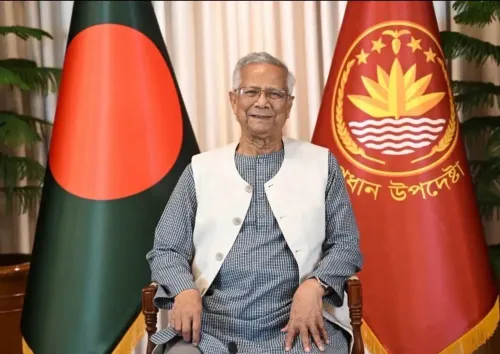
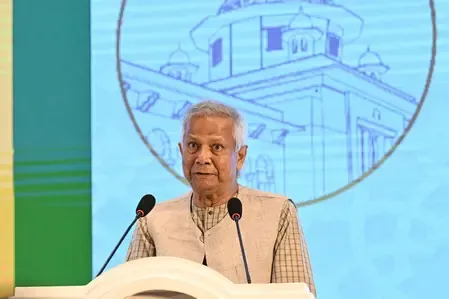
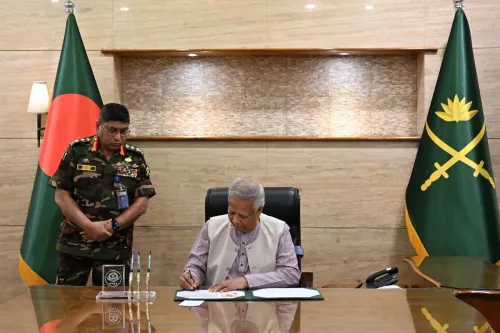
This controversial deal was finalized on February 9, just three days prior to the national elections under the leadership of the previous interim government led by Muhammad Yunus, igniting widespread public outrage.
Leftist organizations, including the Bangladesh Chhatra Union, Bangladesh Jubo Union, and Bangladesh Udichi Shilpigosthi, convened a joint protest rally on Friday afternoon outside the National Museum in Dhaka, denouncing the agreement as a "treaty of servitude" and demanding its prompt withdrawal.
They also cautioned against a potential "conspiracy" to outsource the nation’s key assets—particularly its ports—to foreign powers and urged citizens to resist such actions, as reported by the Dhaka Tribune.
Bahauddin Shuvo, the central secretary general of Chhatra Union, raised concerns regarding Bangladesh's recent oil imports from Russia during the ongoing global energy crisis, questioning whether there was U.S. approval, but noting the absence of a clear response.
He emphasized that it is intolerable for a sovereign nation to permit another country to exert control over its trade and foreign policy.
Shuvo called for public mobilization against this "unfair and one-sided" agreement, urging citizens to pressure the government for its withdrawal through mass action—warning that failure to do so could plunge Bangladesh into a deeper economic, commercial, and diplomatic crisis.
Khan Asaduzzaman Masum, the president of Jubo Union, accused Yunus of ascending to power after a "violent mass uprising" in 2024, which was initially hailed as a "blessing", yet he has since prioritized U.S. interests upon taking office.
Masum claimed it took Yunus about 18 months to fully align with those interests.
He further alleged that shortly after taking office, Yunus facilitated a significant tax exemption for his New York-based nonprofit microfinance organization, and before his departure from Bangladesh, the organization signed agreements that compromised the nation’s sovereignty.
“We reject this treaty of subjugation with complete disdain,” the Dhaka Tribune quoted Masum.
Amit Ranjan Dey, the general secretary of Udichi, stated that the interim government entered into 14 agreements during its 18-month rule, all of which purportedly contradicted the interests of the Bangladeshi populace.
Accusing Yunus of prioritizing foreign interests, he asserted that the trade agreement was Yunus’s final act of undermining the country’s sovereignty.
“We are compelled to purchase inferior-quality wheat at inflated prices, and now we hear that even fuel imports necessitate American approval. What is that, if not enslavement?” Dey questioned.
He warned that the trade agreement would negatively impact the everyday lives of citizens across Bangladesh.
Point of View
The recent protests by left-wing groups highlight a significant public sentiment regarding national sovereignty and fairness in international agreements. The outcry against the trade deal with the U.S. reflects broader concerns about foreign influence in domestic affairs, warranting serious attention from both the government and citizens.
NationPress
20 Sept 2026
Frequently Asked Questions
What are the main concerns of the leftist organizations regarding the trade deal with the U.S.?
The leftist organizations are primarily concerned that the trade deal is unequal, detrimental to national interests, and may compromise the sovereignty of Bangladesh by allowing foreign control over key assets.
When was the trade agreement signed?
The trade agreement was signed on February 9, just three days before the national elections.
What actions have the leftist groups taken against the trade agreement?
The leftist groups held a protest rally demanding the immediate cancellation of the trade agreement, labeling it a 'treaty of servitude.'
Who are some of the organizations involved in the protest?
Key organizations involved in the protest include Bangladesh Chhatra Union, Bangladesh Jubo Union, and Bangladesh Udichi Shilpigosthi.
What potential consequences do the protesters foresee from this trade deal?
Protesters warn that failure to address the trade agreement could lead to a deeper economic, commercial, and diplomatic crisis in Bangladesh.