Bangladesh-US defence deals risk sovereignty, warns advocacy group
Synopsis
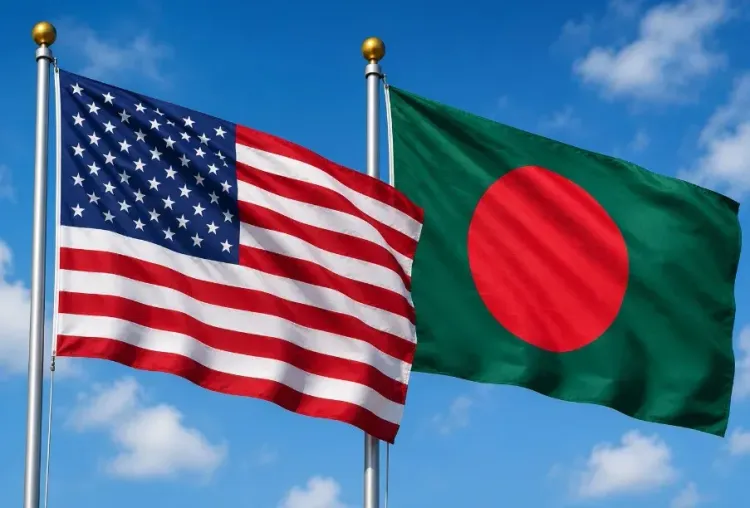
A Canada-based advocacy group is sounding the alarm over Bangladesh reportedly moving to sign two US defence pacts — GSOMIA and ACSA — without parliamentary oversight or public debate. The GCDG argues the deals would compromise Bangladesh's non-aligned foreign policy and hand the BNP government a lifeline of foreign legitimacy it has not earned domestically.
Key Takeaways
The Global Centre for Democratic Governance (GCDG) , based in Ottawa , raised alarm on 21 May over Bangladesh 's reported defence deals with the US .
The two agreements under negotiation are the General Security of Military Information Agreement (GSOMIA) and the Acquisition and Cross-Servicing Agreement (ACSA) .
The GCDG warned the deals could draw Bangladesh into great-power rivalries and undermine its non-aligned foreign policy.
The group said the BNP government lacks the 'moral and political mandate' to sign long-term security commitments without public or parliamentary consultation.
Concerns were also raised that the agreements may be tied to trade and diplomatic leverage, amounting to an exchange of sovereignty for economic concessions.
A Canada-based international advocacy group has raised serious alarm over reports that Bangladesh is moving toward signing two major defence agreements with the United States, cautioning that the deals could fundamentally undermine the country's strategic autonomy and draw it into great-power rivalries. The warning was issued on 21 May by the Global Centre for Democratic Governance (GCDG), headquartered in Ottawa.
The Agreements in Question
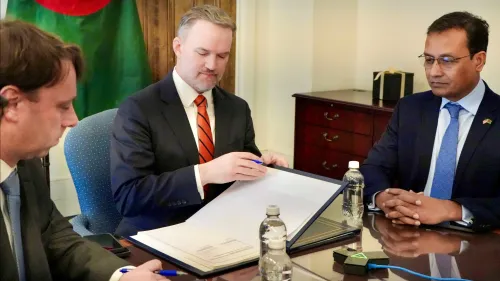
According to local media reports, Bangladesh and the United States have reached a political-level understanding to deepen defence cooperation, with negotiations reportedly advancing on two long-discussed frameworks — the General Security of Military Information Agreement (GSOMIA) and the Acquisition and Cross-Servicing Agreement (ACSA). The GSOMIA is designed to facilitate intelligence sharing and military integration, while the ACSA would expand logistical access for foreign military operations.
GCDG's Core Concerns
The GCDG argued that both agreements risk pulling Bangladesh into the military and strategic orbit of a global power, weakening the country's independent decision-making capacity and compromising sovereign control over defence and security matters. The group said finalising such pacts without public consultation, parliamentary scrutiny, or national consensus would mark a 'dangerous' departure from Bangladesh's long-held foreign policy principle of 'friendship to all and malice toward none.'
'Bangladesh has historically pursued a balanced and non-aligned foreign policy, maintaining constructive relations with all major global and regional powers. Entering into binding military arrangements under foreign pressure risks increasing regional tensions in South Asia and the Bay of Bengal and could entangle Bangladesh in broader geopolitical rivalries,' the organisation stated.
Sovereignty vs. Economic Leverage
The GCDG also raised concern over claims that the agreements may be linked to ongoing trade and diplomatic negotiations with the US. It warned that any attempt to exchange economic or political support for strategic and military concessions would run contrary to Bangladesh's national interest. This comes amid a broader pattern across South Asia, where smaller nations face mounting pressure to align defence postures with major powers as part of wider geopolitical competition in the Indo-Pacific.
Political Mandate Under Scrutiny
Amid growing public demands for democracy, accountability, economic relief, and free political participation, the GCDG contended that the ruling Bangladesh Nationalist Party (BNP) government lacks the 'moral and political mandate' to enter 'secretive' long-term security commitments that could fundamentally alter the country's strategic posture.
The group was pointed in its criticism: 'These reported moves also expose the political weakness and growing unpopularity of the BNP-led government, which appears increasingly willing to compromise Bangladesh's sovereignty and national interests in order to secure foreign backing and political legitimacy from external powers.'
Broader Implications for the Region
Analysts have long flagged the Bay of Bengal as an emerging theatre of strategic competition, with both China and the US seeking influence over littoral states. Bangladesh's geographic position — bordering India, Myanmar, and the Bay of Bengal — makes any shift in its defence alignment a matter of regional consequence. Whether Dhaka proceeds with the agreements, and under what terms, is expected to shape its relationships with neighbouring powers and multilateral partners in the months ahead.
Point of View
But the broader issue it surfaces is structural: small states in strategically contested regions face a near-impossible bind — economic dependence on major powers increasingly comes bundled with security asks. Bangladesh's non-aligned posture has historically been its diplomatic insurance policy; abandoning it, even partially, changes its calculus with India, China, and ASEAN simultaneously. The absence of parliamentary scrutiny is the sharpest red flag here — not the agreements themselves, but the process. If Dhaka signs without domestic consensus, it hands critics a legitimacy weapon that outlasts any trade concession the US might offer.
NationPress
26 Sept 2026
Frequently Asked Questions
What are the GSOMIA and ACSA agreements Bangladesh is reportedly signing with the US?
The General Security of Military Information Agreement (GSOMIA) facilitates intelligence sharing and military integration between the two countries, while the Acquisition and Cross-Servicing Agreement (ACSA) expands logistical access for foreign military operations. Bangladesh and the US reportedly reached a political-level understanding to advance both agreements, according to local media reports.
Why is the GCDG concerned about these defence deals?
The Global Centre for Democratic Governance (GCDG) argues that the agreements risk drawing Bangladesh into the military orbit of a global power, weakening its independent foreign policy and sovereign decision-making. The group also raised concern that the deals are being negotiated without public consultation or parliamentary oversight.
Does the BNP government have the mandate to sign these agreements?
The GCDG contends that the ruling Bangladesh Nationalist Party (BNP) government lacks the 'moral and political mandate' to enter long-term security commitments, citing growing public demands for democracy, accountability, and economic relief. The group described the negotiations as 'secretive.'
Could these deals affect Bangladesh's relations with India and China?
Analysts note that any shift in Bangladesh 's defence alignment carries regional consequences given its position bordering India , Myanmar , and the Bay of Bengal — an emerging zone of strategic competition between major powers. The GCDG warned the deals could increase regional tensions in South Asia .
What is Bangladesh's traditional foreign policy stance?
Bangladesh has historically maintained a non-aligned foreign policy guided by the principle of 'friendship to all and malice toward none,' preserving balanced relations with all major global and regional powers. The GCDG warned that signing binding military agreements under foreign pressure would represent a significant departure from this posture.