LeT, JeM, SFJ using dead-drop tactics to funnel arms and funds into India
Synopsis
India's top terror outfits — LeT, JeM, BKI and SFJ — have quietly shifted to dead-drop tradecraft, using fragmented courier chains, drone deliveries, and draft-folder email tricks to move arms, cash and orders without handlers ever meeting operatives. The arrest of Preetpal Singh, paid ₹1.5 lakh via a highway drop on the Amritsar-Faridkot road, shows the method is already operational inside India.
Key Takeaways
Lashkar-e-Taiba , Jaish-e-Mohammed , Babbar Khalsa International , and Sikhs for Justice are reportedly using dead-drop techniques to move funds, weapons, and instructions into India .
Operatives in the chain do not know the identity of the supplier or the final recipient, making it harder for investigators to map the network.
A digital variant uses a shared anonymous email account where messages are saved as drafts and never sent, evading conventional interception.
Designated terrorist Gurpatwant Singh Pannun of SFJ allegedly used the dead-drop method to pay operative Preetpal Singh ₹1.5 lakh , with cash left on the Amritsar-Faridkot highway .
Drones are being extensively used to drop arms and drug consignments across the border as part of narco-terrorism operations.
The National Investigation Agency (NIA) is deploying forensic tools to recover deleted drafts and raw disk data to counter the method.
Terror outfits targeting India have increasingly adopted covert dead-drop techniques to move funds, weapons, and operational instructions without direct contact between handlers and local operatives, intelligence officials have revealed. Groups including Lashkar-e-Taiba (LeT), Jaish-e-Mohammed (JeM), Babbar Khalsa International (BKI), and the proscribed Sikhs for Justice (SFJ) are reportedly deploying these non-contact logistics methods to conceal the identity of Pakistan-based handlers.
What the Dead-Drop Method Involves
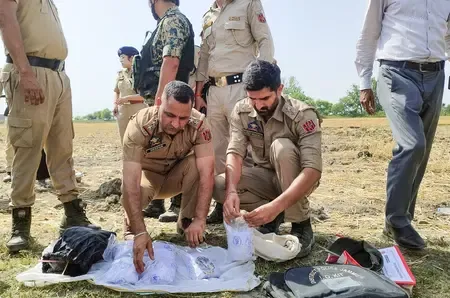
Unlike traditional physical handovers — which intelligence agencies can surveil and trace — dead-drop operations involve leaving consignments of arms, cash, or narcotics at pre-designated isolated locations such as remote fields, rural stretches, or unmarked points along highways. The couriers involved at each stage reportedly have no knowledge of who supplied the consignment upstream or who will collect it downstream.
'The arms and ammunition pass through multiple hands before being collected and eventually dropped at a designated location. Those involved in moving the consignments do not know who supplied them initially or who will ultimately collect them,' an official said, according to reports.
This deliberate fragmentation of the supply chain means that even if one courier is arrested, investigators face significant difficulty establishing the full network. Officials noted that apart from physical drops, drones are being used extensively to deliver arms and drug consignments across the border.
Digital Dead Drops: The Draft-Folder Communication Trick
Beyond physical contraband, terror operatives are also reportedly using a digital variant of the dead-drop method for covert communications. According to intelligence officials, all operatives involved in a plot share the login credentials of a single anonymous email account. One operative composes a message and saves it as a draft — crucially, never pressing send. A second operative logs in separately, reads the draft, deletes it, and posts a fresh message in the draft folder.
Because the message never travels across the internet as a sent email, conventional interception tools used by security agencies are unable to flag it. Officials described this as one of the more difficult communication channels to monitor in real time.
SFJ's Pannun Linked to Dead-Drop Instructions
Intelligence officials specifically flagged the proscribed SFJ, led by designated terrorist Gurpatwant Singh Pannun, as a recent adopter of the dead-drop technique. According to officials, Pannun allegedly uses this method to relay instructions to operatives inside Punjab, directing acts of vandalism and pro-Khalistan activity.
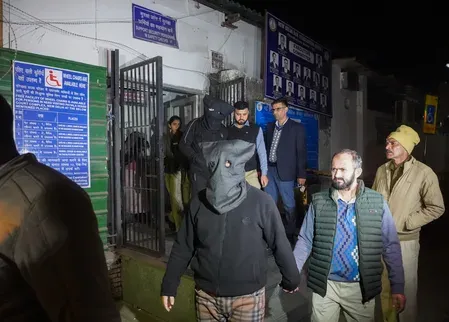
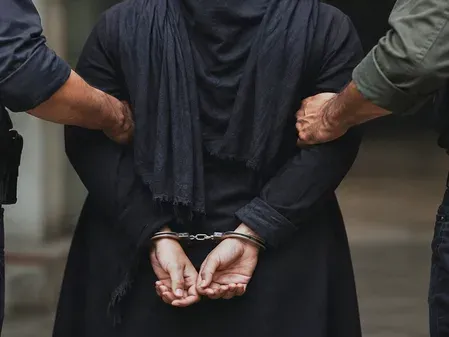
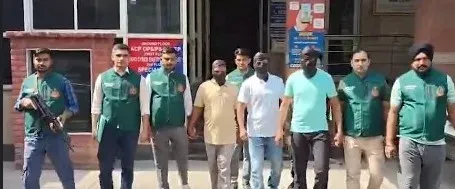
In one documented case, agencies arrested Preetpal Singh and associates after they spray-painted anti-BRICS and pro-Khalistan slogans in Delhi and Punjab. Investigators found that both the operational instructions and the payment — reportedly ₹1.5 lakh — were delivered via the dead-drop method. The cash was reportedly left at a pre-determined location on the Amritsar-Faridkot highway.
Narco-Terrorism and the Rise of Covert Drug Drops
Indian security agencies are also tracking a sharp rise in narco-terrorism linked to dead-drop logistics. The traditional practice of direct handovers of narcotics has been largely replaced by drone drops and covert relay chains, officials said. Drop-off coordinates are communicated to designated collectors, who are then instructed to leave the consignment at a secondary pre-determined location — again without knowing the identity of the final recipient.
Officials said the layered separation built into this system makes it substantially harder to trace the supply chain back to its origin, which they believe is rooted in Pakistan-based networks.
How Agencies Are Responding
The National Investigation Agency (NIA) has adapted its investigative approach in response. Rather than relying solely on email inbox checks, the NIA is reportedly using sophisticated forensic tools to extract raw disk data, recover deleted text drafts, and retrieve temporary cloud links. The agency is also working in close coordination with state police to intercept local operatives before they can retrieve drops.
Officials acknowledged that while Indian agencies have successfully cracked several such cases, the dead-drop model continues to pose a significant and evolving challenge — one that is expected to intensify as terror groups refine their tradecraft further.
Point of View
These groups have effectively turned every arrest into a dead end. What is particularly alarming is the dual-use of the method: the same tradecraft that moves a Kalashnikov across the border also moves ₹1.5 lakh to a vandal in Punjab, suggesting a scalable, low-cost model for sustained low-intensity disruption. The NIA's forensic pivot is encouraging, but the real gap is in real-time coordination between central agencies and district-level police — the layer most likely to intercept a drop before it is collected.
NationPress
29 Sept 2026
Frequently Asked Questions
What is the dead-drop technique used by terror groups targeting India?
The dead-drop technique involves leaving funds, weapons, or instructions at a pre-designated covert location for collection by another operative, without the two parties ever meeting. This creates multiple layers of separation, making it difficult for investigators to trace the full network back to Pakistan-based handlers.
Which terror groups are using dead-drop methods against India?
Intelligence officials have identified Lashkar-e-Taiba (LeT), Jaish-e-Mohammed (JeM), Babbar Khalsa International (BKI), and the proscribed Sikhs for Justice (SFJ) as groups actively using dead-drop logistics. The method is reportedly being used to channel funds, weapons, and operational instructions into India.
How does the digital dead-drop email trick work?
Operatives share login credentials for a single anonymous email account. One operative writes a message and saves it as a draft without sending it; another logs in, reads the draft, deletes it, and posts a fresh one. Because the message never travels across the internet, conventional interception tools cannot detect it.
What is the Preetpal Singh case linked to the SFJ dead-drop operation?
Preetpal Singh and associates were arrested after spray-painting anti-BRICS and pro-Khalistan slogans in Delhi and Punjab. Investigators found that both operational instructions and a payment of ₹1.5 lakh were delivered via the dead-drop method, with cash left at a location on the Amritsar-Faridkot highway, allegedly on instructions from SFJ chief Gurpatwant Singh Pannun.
How is the NIA countering the dead-drop threat?
The National Investigation Agency (NIA) is using advanced forensic tools to extract raw disk data, recover deleted email drafts, and retrieve temporary cloud links rather than relying on conventional inbox monitoring. It is also coordinating closely with state agencies to intercept operatives before they can collect drops.