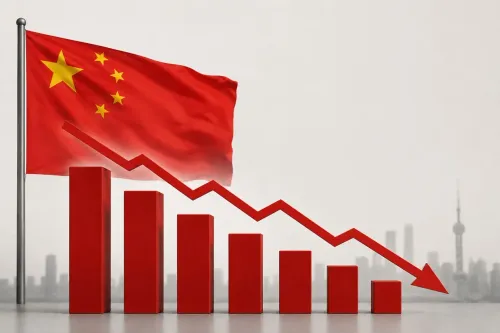
China investment retreat: Sovereign wealth funds shift billions to US tech, AI

Synopsis
The world's biggest long-term investors — sovereign wealth funds and pension funds — are quietly but systematically stepping back from China. With the property crisis showing no signs of a quick fix and regulatory uncertainty persisting, billions are being rerouted toward US-linked AI, semiconductor, and digital infrastructure plays. It is not a collapse of confidence, but a recalibration that could define where global capital settles for the next decade.
Key Takeaways
Sovereign wealth funds , pension funds , and institutional investors are increasingly reluctant to invest in China , citing lost confidence in its growth story.
China's property sector crisis is the primary driver of negative sentiment, with analysts describing it as a long-term structural adjustment rather than a short-term correction.
Major state-backed funds are reportedly redirecting capital toward artificial intelligence , semiconductors , cloud computing , and digital infrastructure , primarily in the United States .
Investors are prioritising markets with stronger regulatory clarity , legal protections , and financial market transparency .
The report emphasises that China's economy is not collapsing — the shift represents a risk-reward recalibration rather than an outright exit.
Several major long-term investors — including sovereign wealth funds, pension funds, and large institutional investors — are increasingly pulling back from China, according to a report published 12 November 2026. The retreat reflects a broad erosion of confidence in China's growth narrative, with capital being redirected toward markets perceived as more predictable and structurally stable.
The End of a Three-Decade Love Affair
For nearly three decades, China was widely regarded as the world's most compelling growth story. Foreign manufacturers set up factories, global banks expanded aggressively, and investors poured billions into what was then the world's fastest-growing major economy. Many analysts even projected that China would eventually overtake the United States as the world's largest economy.
That consensus has now fractured. Some of the world's largest state-backed investment vehicles are increasingly directing capital toward markets they consider more transparent and less exposed to structural economic risk.
Property Crisis at the Heart of Investor Concern
China's prolonged property sector downturn remains the single most cited drag on investor sentiment. Analysts describe the housing correction not as a temporary dip but as a long-term structural adjustment — a characterisation that makes institutional investors with decades-long mandates particularly cautious.
The real estate sector, once described as one of the primary engines of Chinese economic growth, has become a persistent source of uncertainty rather than opportunity. Several major sovereign wealth funds have reportedly reduced or deferred their exposure to Chinese assets in response.
Where Capital Is Flowing Instead
The report notes a sharp contrast with the investment environment in the United States. While China attempts to stabilise its property market, sovereign wealth funds are reportedly channelling billions toward sectors linked to artificial intelligence, digital infrastructure, semiconductors, cloud computing, and other advanced technologies.
'The attraction is not simply about technology itself. Investors are gravitating toward environments where they believe innovation, regulation, financial markets, and legal protections provide greater certainty for long-term returns. The growing concentration of sovereign wealth fund investments in a smaller number of trusted markets reflects this changing calculation,' the report observes.
Not a Collapse — A Recalibration
The report is careful to avoid overstating the shift. China's economy, it notes, is not collapsing, nor is it losing global relevance. Rather, investors appear to be systematically reassessing the balance between opportunity and risk. That reassessment has real consequences because capital is acutely sensitive to uncertainty — particularly the kind that stems from regulatory unpredictability and structural imbalances.
Notably, this dynamic marks a significant departure from the prevailing consensus of even five years ago, when China's integration into global supply chains was seen as effectively irreversible.
What This Means Going Forward
As sovereign wealth funds concentrate allocations in a narrower set of trusted markets, China faces the dual challenge of restoring confidence in its domestic financial system while competing for the same pool of long-term capital against markets offering stronger institutional safeguards. The trajectory of its property sector recovery and the pace of regulatory reform are likely to be the two most closely watched variables by global institutional investors in the near term.
Point of View
Mandate-driven reassessment by fiduciaries who cannot afford regulatory surprises. What mainstream coverage underweights is that sovereign funds operate on 20-to-30-year horizons; when they move, they rarely reverse quickly. China's property overhang is the proximate cause, but the deeper issue is institutional trust — the sense that the rules of engagement can shift without notice. The pivot toward US AI and semiconductor ecosystems is also a bet on where the next decade of compounding growth lives. For emerging markets including India, this recalibration creates a genuine opportunity to position as a credible alternative destination — but only if governance and regulatory consistency improve at pace.
NationPress
12 Nov 2026
Frequently Asked Questions
Why are sovereign wealth funds reducing investments in China?
Sovereign wealth funds are pulling back from China primarily due to the country's prolonged property sector crisis and concerns about regulatory unpredictability. Analysts describe the housing downturn as a long-term structural adjustment, which makes it particularly risky for investors with decades-long mandates.
Where are long-term investors redirecting capital instead of China?
Many sovereign wealth funds are redirecting billions toward the United States, particularly into sectors linked to artificial intelligence, semiconductors, cloud computing, and digital infrastructure. Investors cite stronger regulatory clarity and legal protections as key reasons for preferring these markets.
Is China's economy collapsing due to this investor retreat?
No. The report explicitly states that China's economy is not collapsing nor losing its global importance. The shift reflects a recalibration of risk-reward calculations by institutional investors rather than a wholesale exit from Chinese markets.
What is the role of China's property crisis in this shift?
China's real estate sector, once a primary engine of economic growth, has become a source of prolonged uncertainty. Analysts characterise the downturn as a long-term adjustment rather than a short-lived correction, prompting several major state-backed funds to reduce or delay exposure to Chinese assets.
What does this mean for global capital flows in the long term?
As sovereign wealth funds concentrate allocations in fewer trusted markets, China faces the dual challenge of rebuilding institutional confidence while competing for the same pool of long-term capital. The trajectory of its property recovery and pace of regulatory reform will be the most closely watched variables by global investors.